Institute for Medical Engineering and Science, Massachusetts Institute of, Technology, Cambridge, MA, USA.
Department of Biomedicine, School of Medicine, University of Barcelona, Barcelona, Spain.
Biomater Sci. 2023 May 16;11(10):3695-3708. doi: 10.1039/d3bm00035d.
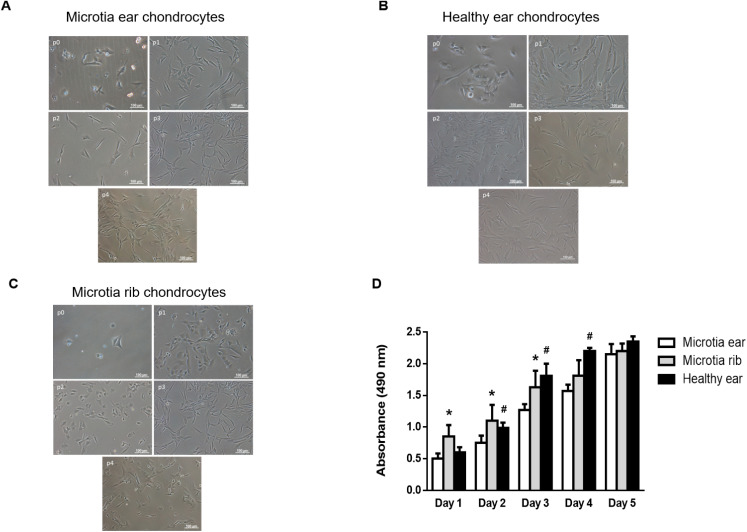
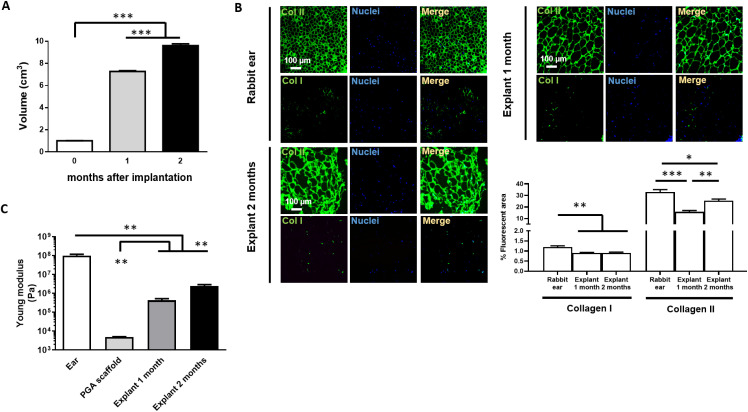
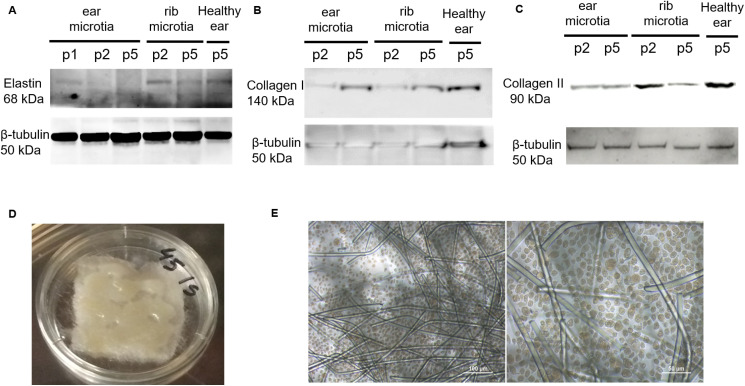
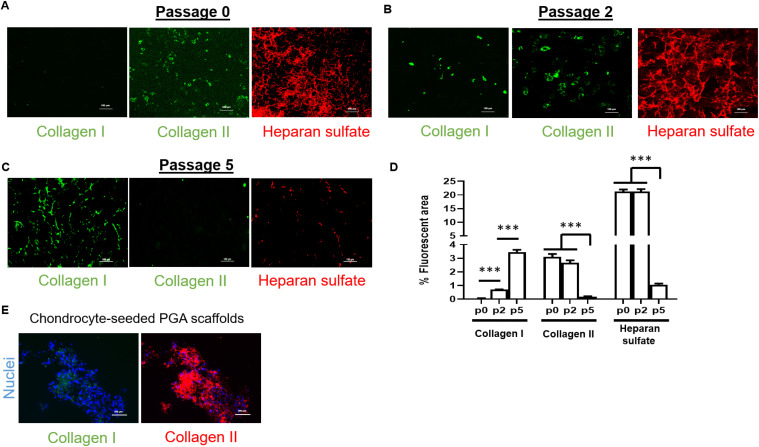
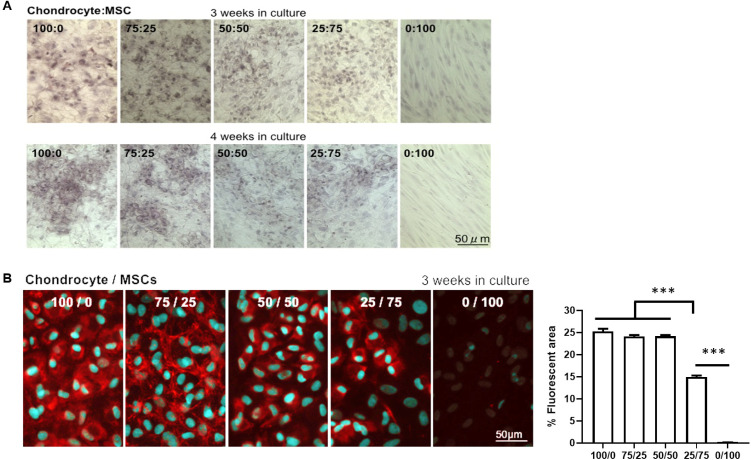
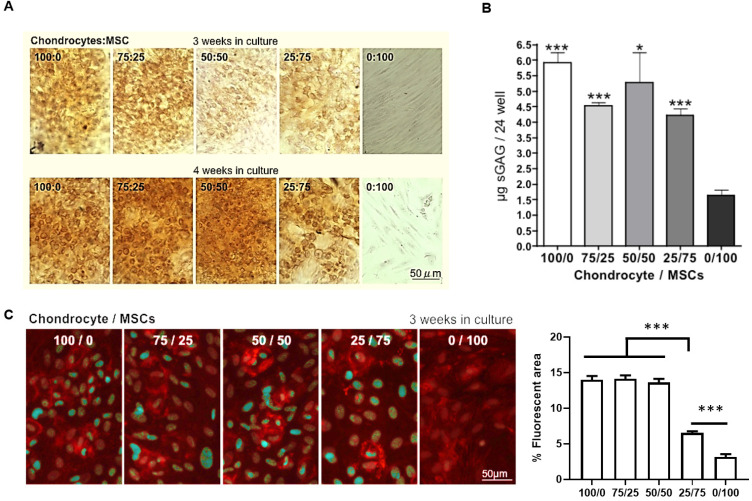
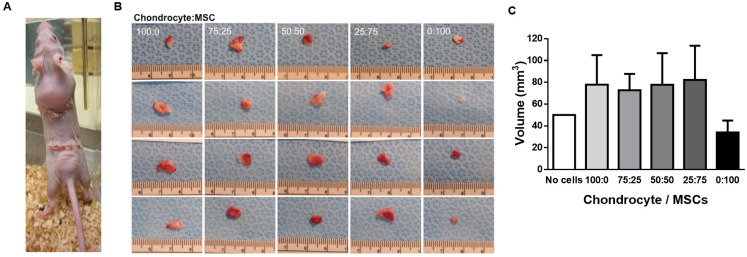
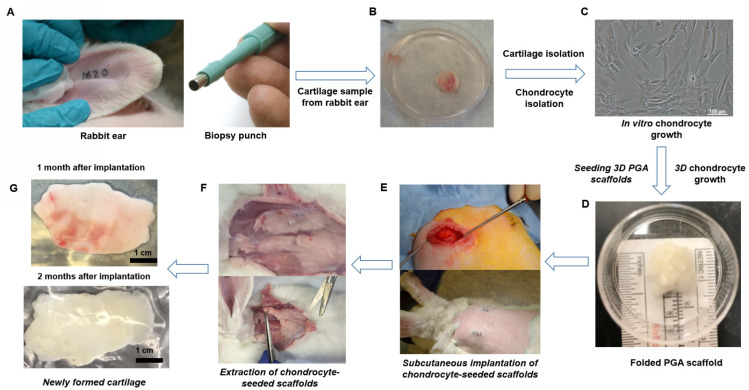
Auricular reconstruction in children with microtia is one of the more complex procedures in plastic surgery. Obtaining sufficient native material to build an ear requires harvesting large fragments of rib cartilage in children. Herein, we investigated how to optimize autologous chondrocyte isolation, expansion and re-implantation using polyglycolic acid (PGA) scaffolds for generating enough cartilage to recapitulate a whole ear starting from a small ear biopsy. Ear chondrocytes isolated from human microtia subjects grew slower than microtia rib or healthy ear chondrocytes and displayed a phenotypic shift due to the passage number. Rabbit ear chondrocytes co-cultured with mesenchymal stem cells (MSC) at a 50 : 50 ratio recapitulated the cartilage biological properties . However, PGA scaffolds with different proportions of rabbit chondrocytes and MSC did not grow substantially in two months when subcutaneously implanted in immunosuppressed mice. In contrast, rabbit chondrocyte-seeded PGA scaffolds implanted in immunocompetent rabbits formed a cartilage 10 times larger than the original PGA scaffold. This cartilage mimicked the biofunctional and mechanical properties of an ear cartilage. These results indicate that autologous chondrocyte-seeded PGA scaffolds fabricated following our optimized procedure have immense potential as a solution for obtaining enough cartilage for auricular reconstruction and opens new avenues to redefine autologous cartilage replacement.
儿童小耳畸形的耳廓再造是整形外科中较为复杂的手术之一。为了构建耳朵,需要从儿童身上采集大量肋软骨。在此,我们研究了如何使用聚乙二醇酸(PGA)支架优化自体软骨细胞的分离、扩增和再植入,以便从小耳活检中获得足够的软骨来重现整个耳朵。从小耳畸形患者中分离出的耳软骨细胞比小耳肋软骨或健康耳软骨细胞生长得更慢,并且由于传代数的增加而表现出表型转变。与间充质干细胞(MSC)以 50 :50 的比例共培养的兔耳软骨细胞再现了软骨的生物学特性。然而,当将不同比例的兔软骨细胞和 MSC 种植到 PGA 支架中并植入免疫抑制小鼠的皮下时,在两个月内并没有显著生长。相比之下,将兔软骨细胞接种到 PGA 支架中并植入免疫功能正常的兔子体内,形成的软骨是原始 PGA 支架的 10 倍大。这种软骨模仿了耳朵软骨的生物功能和机械性能。这些结果表明,我们优化后的自体软骨细胞 PGA 支架具有巨大的潜力,可以作为获得足够的软骨进行耳廓再造的解决方案,并为重新定义自体软骨替代开辟了新途径。