Li Haojiang, Shen Shi, Fu Haitao, Wang Zhenyong, Li Xu, Sui Xiang, Yuan Mei, Liu Shuyun, Wang Guiqin, Guo Quanyi
Institute of Orthopedics, Chinese PLA General Hospital, Beijing Key Lab of Regenerative Medicine in Orthopedics, Key Laboratory of Musculoskeletal Trauma War Injuries, PLA, No. 28 Fuxing Road, Haidian District, Beijing 100853, China.
Department of Microbiology and Immunology, Shanxi Medical University, Taiyuan, China.
Stem Cells Int. 2019 Jan 13;2019:9671206. doi: 10.1155/2019/9671206. eCollection 2019.
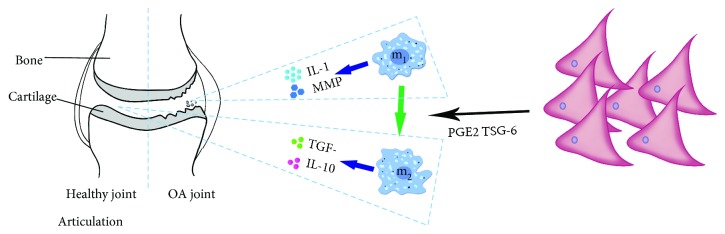
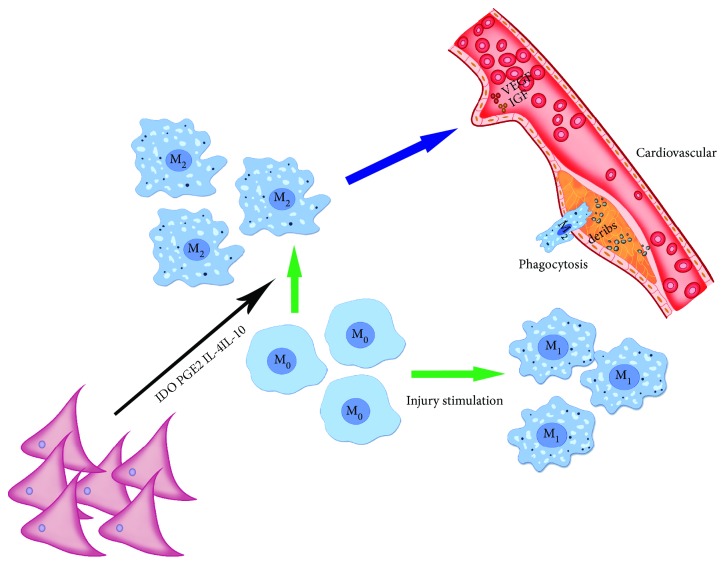
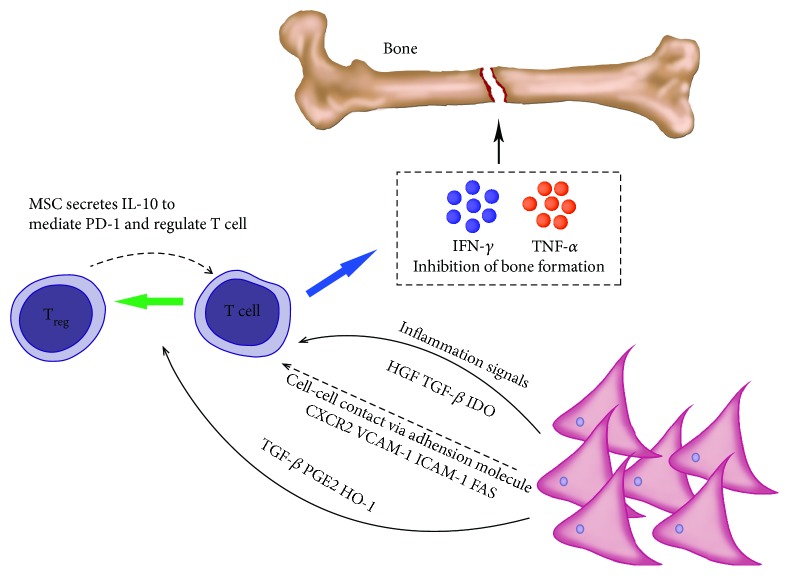
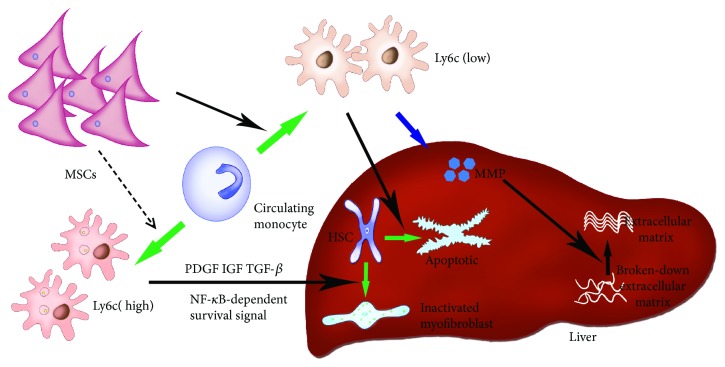
The inflammatory response to chronic injury affects tissue regeneration and has become an important factor influencing the prognosis of patients. In previous stem cell treatments, it was revealed that stem cells not only have the ability for direct differentiation or regeneration in chronic tissue damage but also have a regulatory effect on the immune microenvironment. Stem cells can regulate the immune microenvironment during tissue repair and provide a good "soil" for tissue regeneration. In the current study, the regulation of immune cells by mesenchymal stem cells (MSCs) in the local tissue microenvironment and the tissue damage repair mechanisms are revealed. The application of the concepts of "seed" and "soil" has opened up new research avenues for regenerative medicine. Tissue engineering (TE) technology has been used in multiple tissues and organs using its biomimetic and cellular cell abilities, and scaffolds are now seen as an important part of building seed cell microenvironments. The effect of tissue engineering techniques on stem cell immune regulation is related to the shape and structure of the scaffold, the preinflammatory microenvironment constructed by the implanted scaffold, and the material selection of the scaffold. In the application of scaffold, stem cell technology has important applications in cartilage, bone, heart, and liver and other research fields. In this review, we separately explore the mechanism of MSCs in different tissue and organs through immunoregulation for tissue regeneration and MSC combined with 3D scaffolds to promote MSC immunoregulation to repair damaged tissues.
对慢性损伤的炎症反应会影响组织再生,已成为影响患者预后的重要因素。在以往的干细胞治疗中发现,干细胞不仅在慢性组织损伤中具有直接分化或再生的能力,还对免疫微环境具有调节作用。干细胞可在组织修复过程中调节免疫微环境,为组织再生提供良好的“土壤”。在本研究中,揭示了间充质干细胞(MSC)在局部组织微环境中对免疫细胞的调节作用以及组织损伤修复机制。“种子”和“土壤”概念的应用为再生医学开辟了新的研究途径。组织工程(TE)技术凭借其仿生和细胞能力已应用于多种组织和器官,支架现在被视为构建种子细胞微环境的重要组成部分。组织工程技术对干细胞免疫调节的影响与支架的形状和结构、植入支架构建的炎症前微环境以及支架的材料选择有关。在支架应用方面,干细胞技术在软骨、骨、心脏和肝脏等研究领域有重要应用。在本综述中,我们分别探讨了MSC在不同组织和器官中通过免疫调节促进组织再生的机制以及MSC与3D支架结合以促进MSC免疫调节修复受损组织的机制。