Sharma S, Baran J, Chug N, Curceanu C, Czerwiński E, Dadgar M, Dulski K, Eliyan K, Gajos A, Gupta-Sharma N, Hiesmayr B C, Kacprzak K, Kapłon Ł, Klimaszewski K, Konieczka P, Korcyl G, Kozik T, Krzemień W, Kumar D, Niedźwiecki Sz, Panek D, Parzych S, Del Rio E Perez, Raczyński L, Choudhary Shivani, Shopa R Y, Skurzok M, Stępień E Ł, Tayefi F, Tayefi K, Wiślicki W, Moskal P
Faculty of Physics, Astronomy and Applied Computer Science, Jagiellonian University, prof. Stanisława Łojasiewicza 11, 30-348, Cracow, Poland.
Total-Body Jagiellonian-PET Laboratory, Jagiellonian University, 30-348, Cracow, Poland.
EJNMMI Phys. 2023 Apr 8;10(1):28. doi: 10.1186/s40658-023-00546-7.
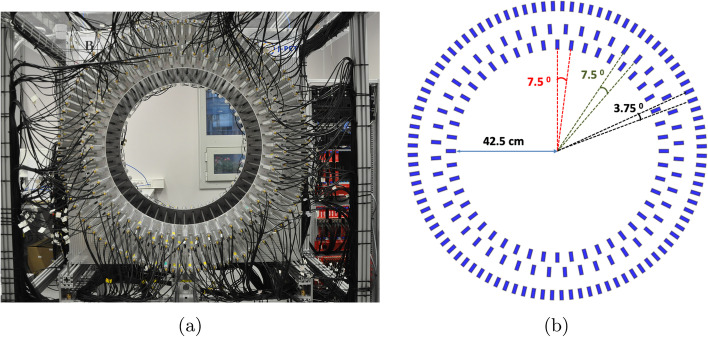
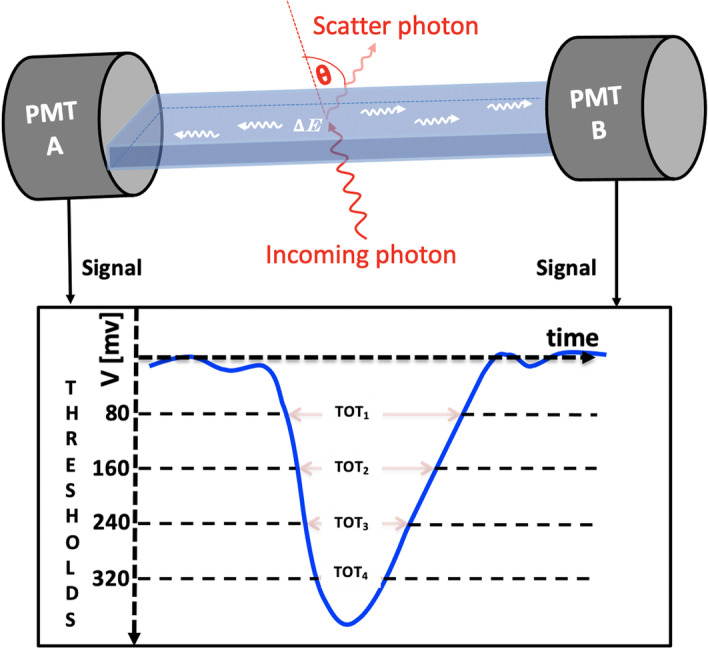
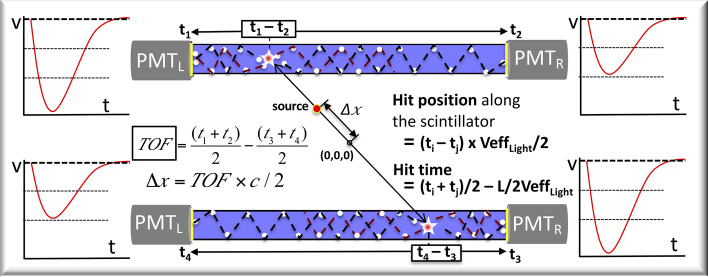
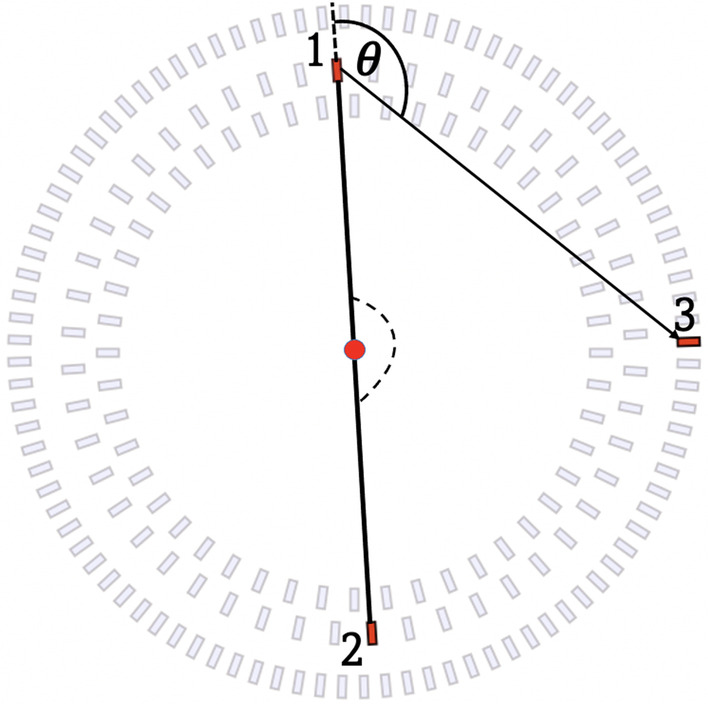
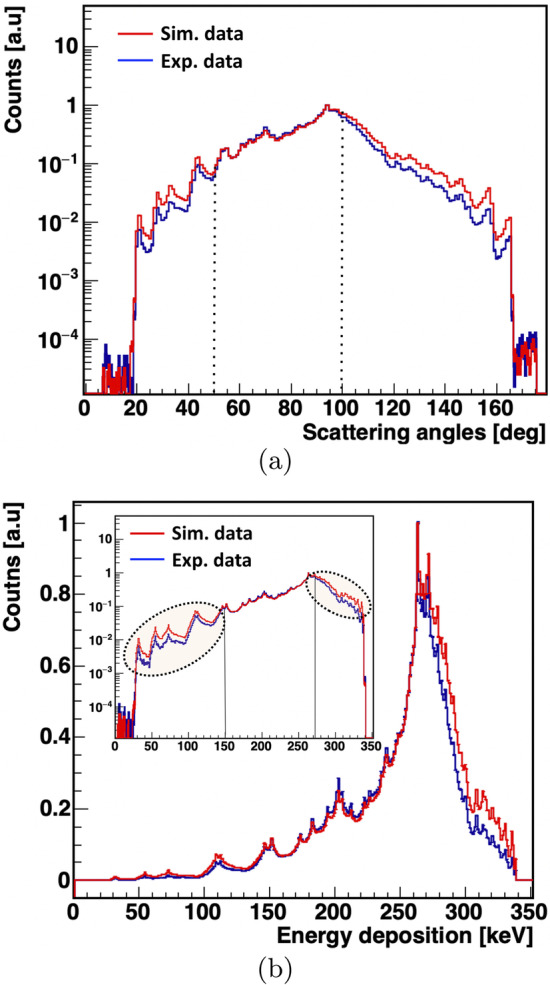
The Jagiellonian Positron Emission Tomograph is the 3-layer prototype of the first scanner based on plastic scintillators, consisting of 192 half-metre-long strips with readouts at both ends. Compared to crystal-based detectors, plastic scintillators are several times cheaper and could be considered as a more economical alternative to crystal scintillators in future PETs. JPET is also a first multi-photon PET prototype. For the development of multi-photon detection, with photon characterized by the continuous energy spectrum, it is important to estimate the efficiency of J-PET as a function of energy deposition. The aim of this work is to determine the registration efficiency of the J-PET tomograph as a function of energy deposition by incident photons and the intrinsic efficiency of the J-PET scanner in detecting photons of different incident energies. In this study, 3-hit events are investigated, where 2-hits are caused by 511 keV photons emitted in [Formula: see text] annihilations, while the third hit is caused by one of the scattered photons. The scattered photon is used to accurately measure the scattering angle and thus the energy deposition. Two hits by a primary and a scattered photon are sufficient to calculate the scattering angle of a photon, while the third hit ensures the precise labeling of the 511 keV photons.
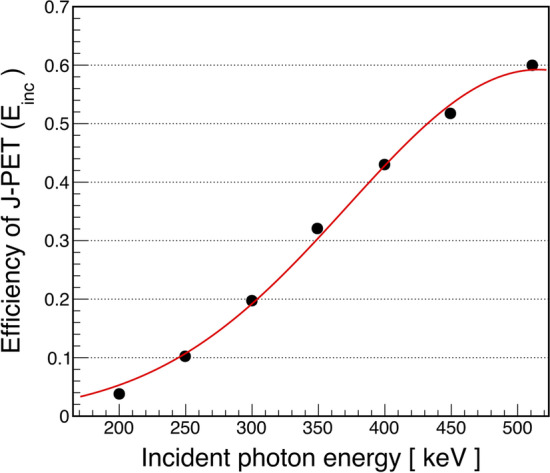
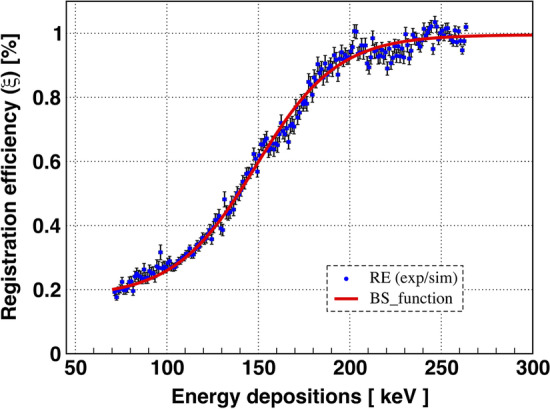
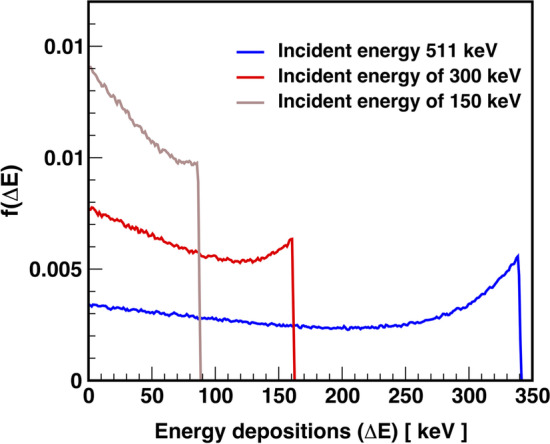
By comparing experimental and simulated energy distribution spectra, the registration efficiency of the J-PET scanner was determined in the energy deposition range of 70-270 keV, where it varies between 20 and 100[Formula: see text]. In addition, the intrinsic efficiency of the J-PET was also determined as a function of the energy of the incident photons.
A method for determining registration efficiency as a function of energy deposition and intrinsic efficiency as a function of incident photon energy of the J-PET scanner was demonstrated. This study is crucial for evaluating the performance of the scanner based on plastic scintillators and its applications as a standard and multi-photon PET systems. The method may be also used in the calibration of Compton-cameras developed for the ion-beam therapy monitoring and simultaneous multi-radionuclide imaging in nuclear medicine.
雅盖隆正电子发射断层扫描仪是基于塑料闪烁体的首台扫描仪的三层原型机,由192根半米长的条带组成,两端均有读出装置。与基于晶体的探测器相比,塑料闪烁体的成本要便宜几倍,在未来的正电子发射断层扫描仪中可被视为晶体闪烁体更经济的替代品。雅盖隆正电子发射断层扫描仪也是首个多光子正电子发射断层扫描仪原型机。对于多光子探测的发展,由于光子具有连续能谱的特性,估计雅盖隆正电子发射断层扫描仪的效率随能量沉积的变化情况很重要。这项工作的目的是确定雅盖隆正电子发射断层扫描仪的记录效率随入射光子能量沉积的变化情况,以及雅盖隆正电子发射断层扫描仪在探测不同入射能量光子时的本征效率。在本研究中,对三击中事件进行了研究,其中两击由[公式:见原文]湮灭发射的511 keV光子引起,而第三击由散射光子之一引起。散射光子用于精确测量散射角,从而测量能量沉积。一个初级光子和一个散射光子的两次击中足以计算光子的散射角,而第三次击中确保对511 keV光子的精确标记。
通过比较实验和模拟的能量分布光谱,确定了雅盖隆正电子发射断层扫描仪在70 - 270 keV能量沉积范围内的记录效率,其在20%至100%[公式:见原文]之间变化。此外,还确定了雅盖隆正电子发射断层扫描仪的本征效率随入射光子能量的变化情况。
展示了一种确定雅盖隆正电子发射断层扫描仪记录效率随能量沉积变化以及本征效率随入射光子能量变化的方法。这项研究对于评估基于塑料闪烁体的扫描仪的性能及其作为标准和多光子正电子发射断层系统的应用至关重要。该方法也可用于为离子束治疗监测和核医学中的同步多放射性核素成像而开发的康普顿相机的校准。