Zhang Wanqing, Li Xijiao, Ding Xiaoman, Hua Kang, Sun Aili, Hu Xinxin, Nie Ziwei, Zhang Yongsheng, Wang Jichao, Li Renlong, Liu Shanqin
School of Chemistry and Chemical Engineering, Henan Institute of Science and Technology Xinxiang 453003 China
School of 3D Printing, Xinxiang University Xinxing 453003 China.
RSC Adv. 2023 Apr 5;13(16):10800-10817. doi: 10.1039/d3ra00966a. eCollection 2023 Apr 3.
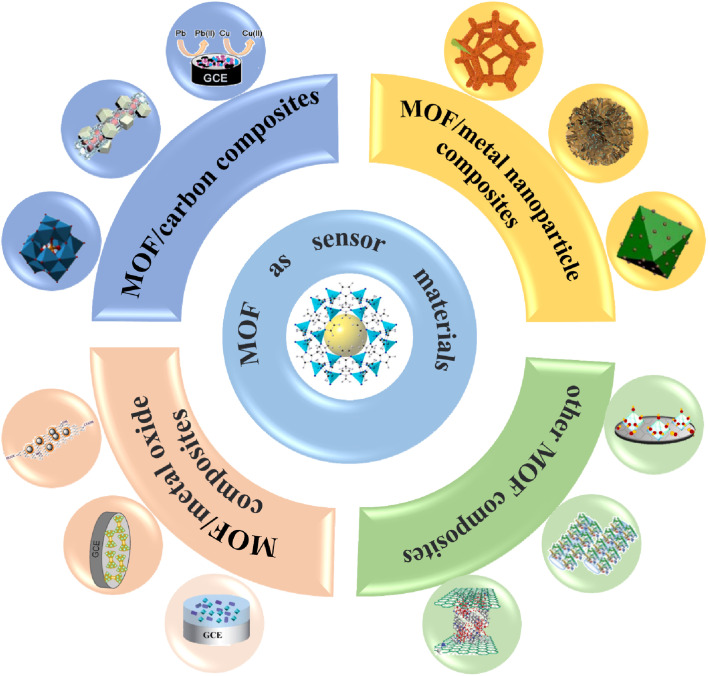
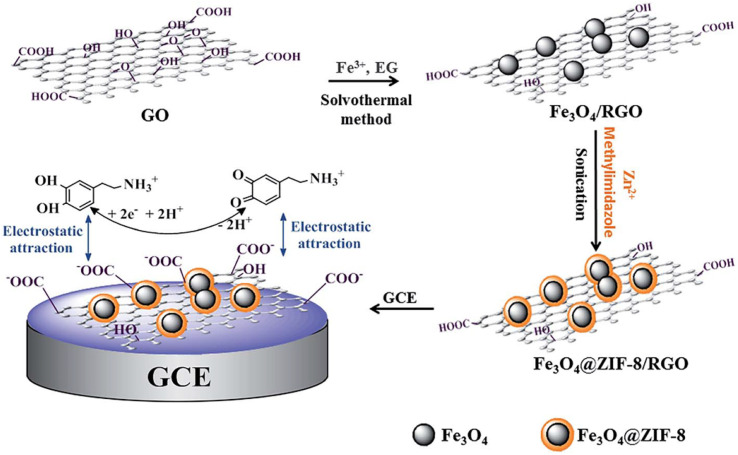
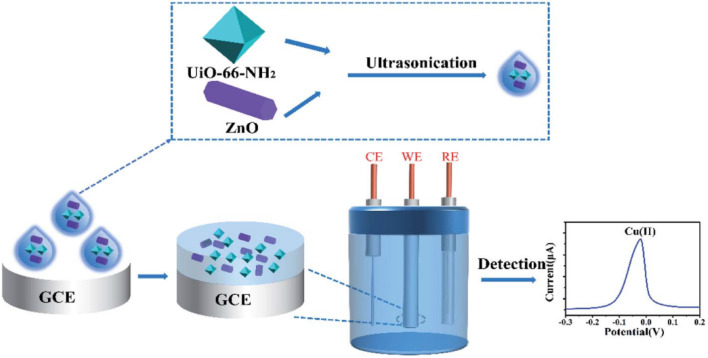
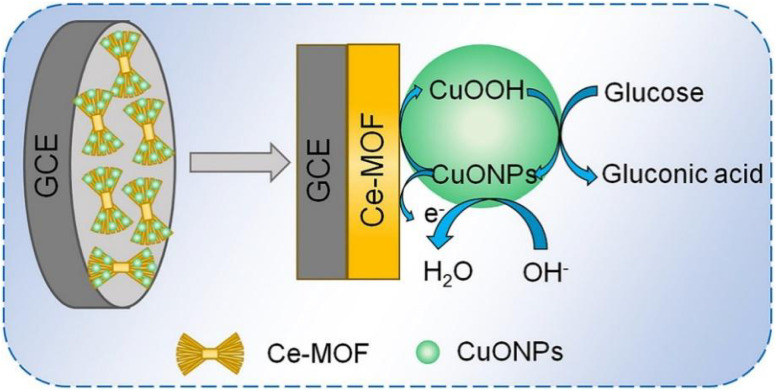
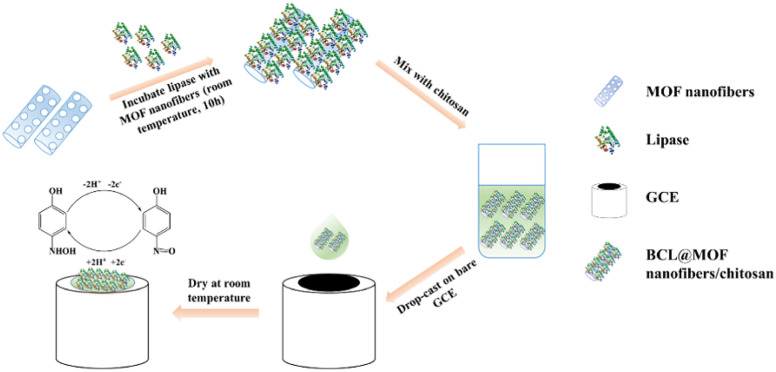
Metal-organic framework composites have the advantages of large surface area, high porosity, strong catalytic efficiency and good stability, which provide a great possibility of finding excellent electrode materials for electrochemical sensors. However, MOF composites still face various challenges and difficulties, which limit their development and application. This paper reviews the application of MOF composites in electrochemical sensors, including MOF/carbon composites, MOF/metal nanoparticle composites, MOF/metal oxide composites and MOF/enzyme composites. In addition, the application challenges of MOF composites in electrochemical sensors are summarized. Finally, the application prospect for MOF composites is considered to promote the synthesis of more MOF composites with excellent properties.
金属有机框架复合材料具有比表面积大、孔隙率高、催化效率强和稳定性好等优点,这为寻找用于电化学传感器的优异电极材料提供了很大可能性。然而,金属有机框架复合材料仍面临各种挑战和困难,这限制了它们的开发和应用。本文综述了金属有机框架复合材料在电化学传感器中的应用,包括金属有机框架/碳复合材料、金属有机框架/金属纳米颗粒复合材料、金属有机框架/金属氧化物复合材料和金属有机框架/酶复合材料。此外,总结了金属有机框架复合材料在电化学传感器中的应用挑战。最后,展望了金属有机框架复合材料的应用前景,以促进合成更多具有优异性能的金属有机框架复合材料。