Key Laboratory of Animal Models and Human Disease Mechanisms of the Chinese Academy of Sciences, Kunming Institute of Zoology - The Chinese University of Hong Kong (KIZ-CUHK) Joint Laboratory of Bioresources and Molecular Research in Common Diseases, Center for Biosafety Mega-Science, Kunming Institute of Zoology, Chinese Academy of Sciences, Kunming, Yunnan, China.
Kunming College of Life Science, University of Chinese Academy of Sciences, Kunming, Yunnan, China.
Front Immunol. 2023 Mar 22;14:1143796. doi: 10.3389/fimmu.2023.1143796. eCollection 2023.
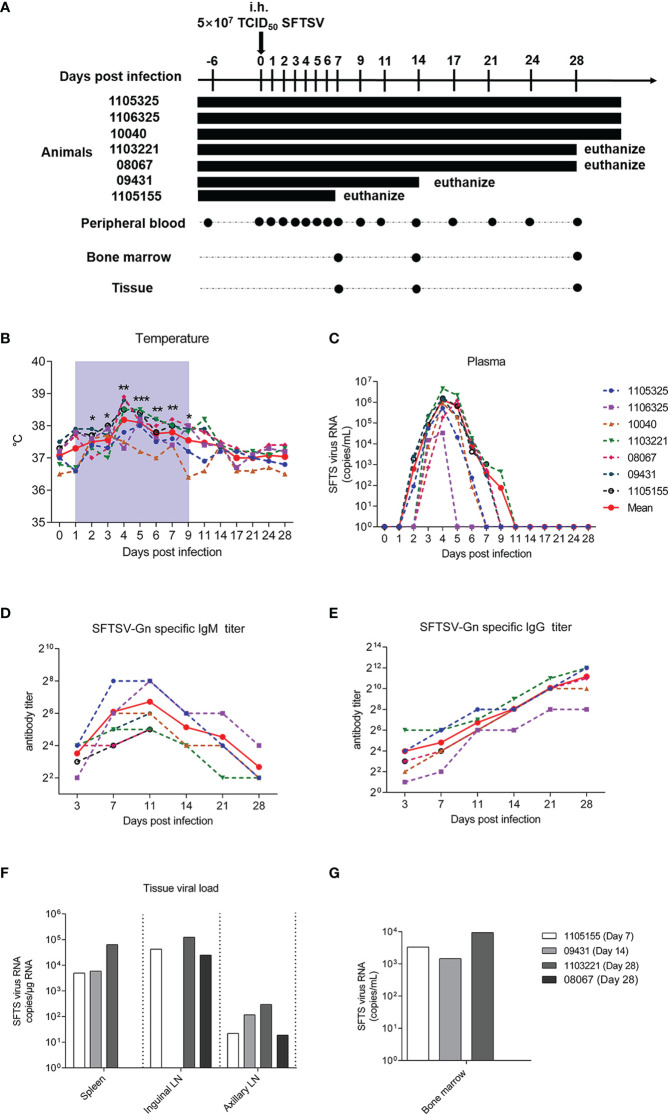
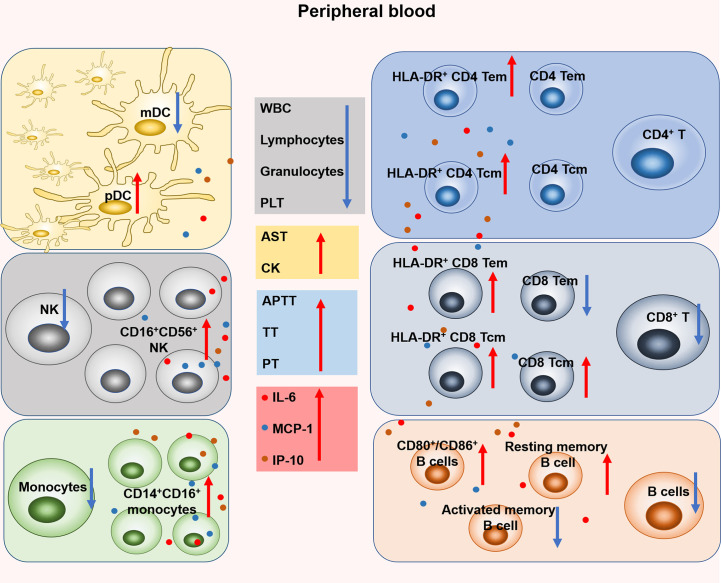
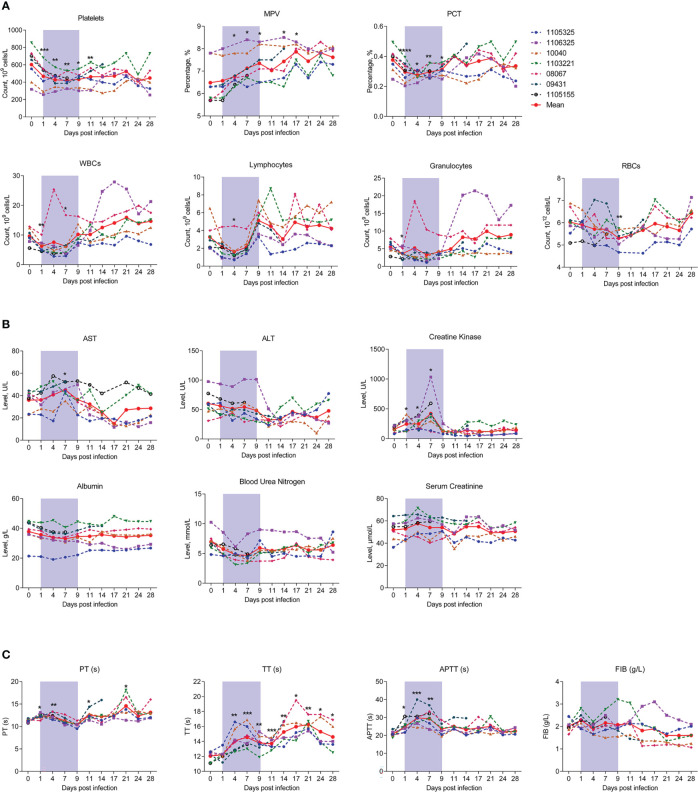
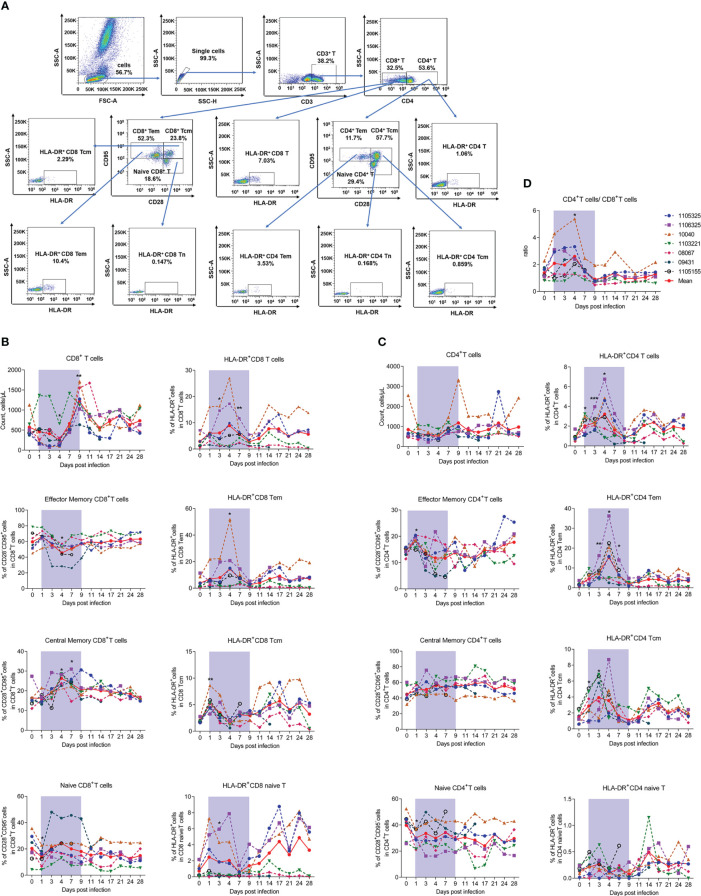
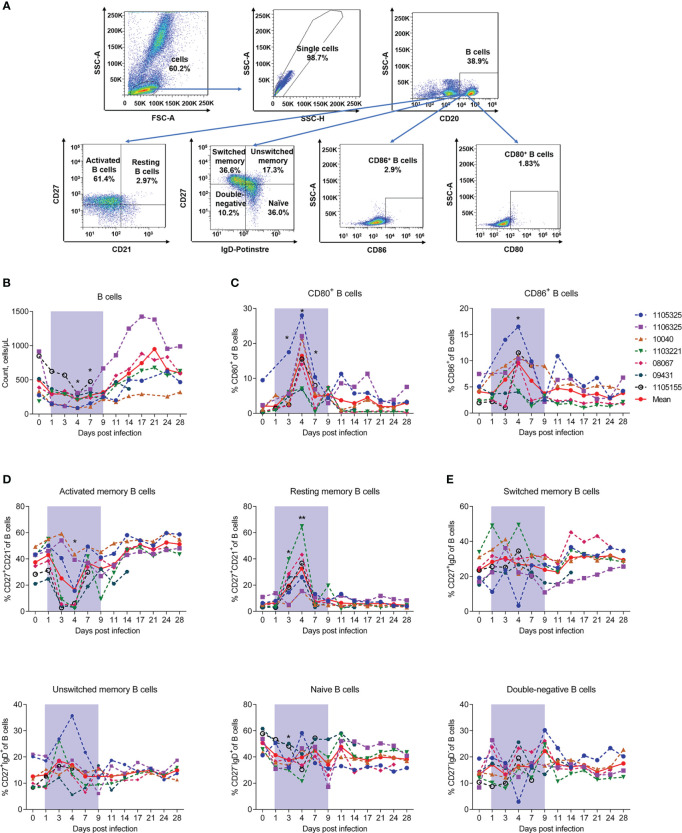
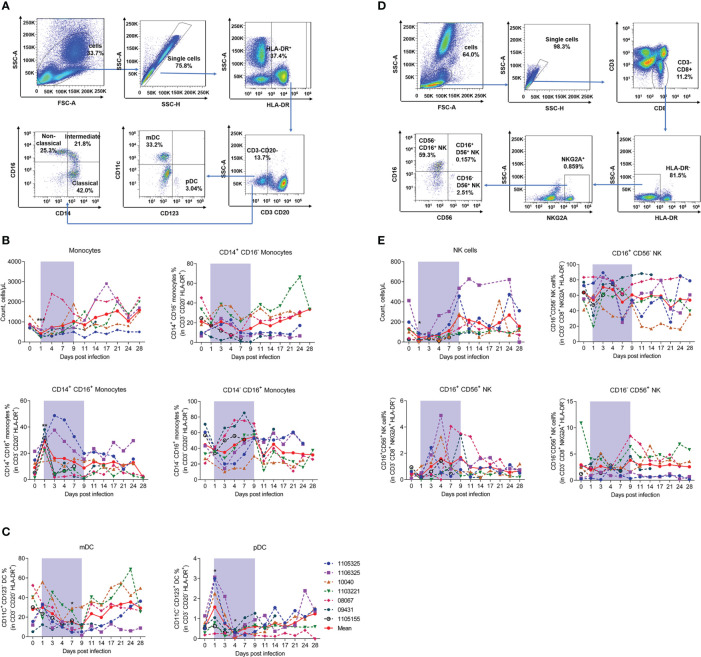
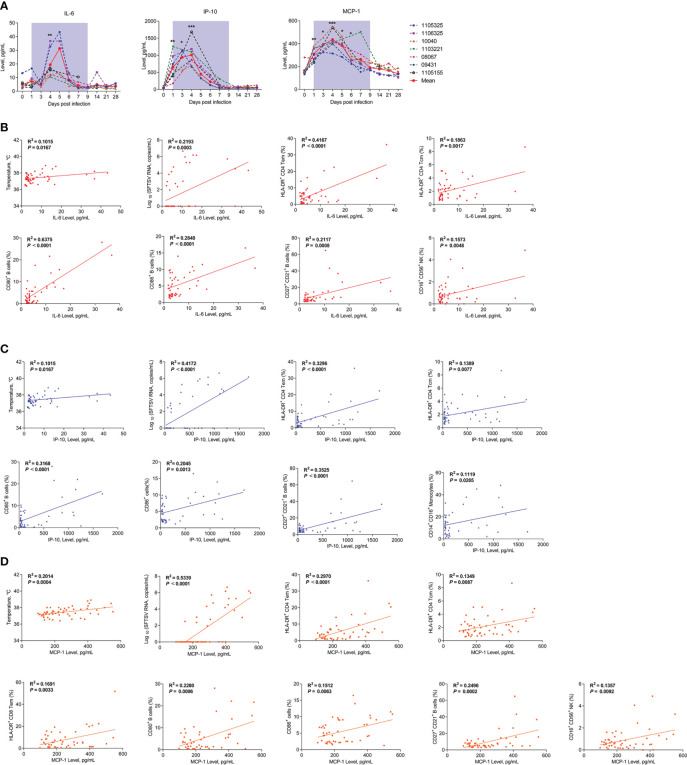
Severe fever with thrombocytopenia syndrome virus (SFTSV), an emerging bunyavirus, causes severe fever with thrombocytopenia syndrome (SFTS), with a high fatality rate of 20%-30%. At present, however, the pathogenesis of SFTSV remains largely unclear and no specific therapeutics or vaccines against its infection are currently available. Therefore, animal models that can faithfully recapitulate human disease are important to help understand and treat SFTSV infection. Here, we infected seven Chinese rhesus macaques () with SFTSV. Virological and immunological changes were monitored over 28 days post-infection. Results showed that mild symptoms appeared in the macaques, including slight fever, thrombocytopenia, leukocytopenia, increased aspartate aminotransferase (AST) and creatine kinase (CK) in the blood. Viral replication was persistently detectable in lymphoid tissues and bone marrow even after viremia disappeared. Immunocyte detection showed that the number of T cells (mainly CD8 T cells), B cells, natural killer (NK) cells, and monocytes decreased during infection. In detail, effector memory CD8 T cells declined but showed increased activation, while both the number and activation of effector memory CD4 T cells increased significantly. Furthermore, activated memory B cells decreased, while CD80/CD86 B cells and resting memory B cells (CD27CD21) increased significantly. Intermediate monocytes (CD14CD16) increased, while myeloid dendritic cells (mDCs) rather than plasmacytoid dendritic cells (pDCs) markedly declined during early infection. Cytokines, including interleukin-6 (IL-6), interferon-inducible protein-10 (IP-10), and macrophage inflammatory protein 1 (MCP-1), were substantially elevated in blood and were correlated with activated CD4 T cells, B cells, CD16CD56 NK cells, CD14CD16 monocytes during infection. Thus, this study demonstrates that Chinese rhesus macaques infected with SFTSV resemble mild clinical symptoms of human SFTS and provides detailed virological and immunological parameters in macaques for understanding the pathogenesis of SFTSV infection.
严重发热伴血小板减少综合征病毒(SFTSV)是一种新兴的布尼亚病毒,可引起严重发热伴血小板减少综合征(SFTS),其病死率高达 20%-30%。然而,目前 SFTSV 的发病机制在很大程度上尚不清楚,也没有针对其感染的特效治疗药物或疫苗。因此,能够忠实地再现人类疾病的动物模型对于帮助理解和治疗 SFTSV 感染非常重要。在这里,我们用 SFTSV 感染了 7 只中国恒河猴()。在感染后 28 天内监测了病毒学和免疫学变化。结果表明,猴子出现了轻微的症状,包括轻微发热、血小板减少、白细胞减少、血液中天冬氨酸转氨酶(AST)和肌酸激酶(CK)升高。即使在病毒血症消失后,淋巴组织和骨髓中仍能持续检测到病毒复制。免疫细胞检测显示,在感染过程中 T 细胞(主要是 CD8 T 细胞)、B 细胞、自然杀伤(NK)细胞和单核细胞的数量减少。具体而言,效应记忆 CD8 T 细胞减少,但表现出激活增加,而效应记忆 CD4 T 细胞的数量和激活均显著增加。此外,激活的记忆 B 细胞减少,而 CD80/CD86 B 细胞和静止记忆 B 细胞(CD27CD21)显著增加。中间单核细胞(CD14CD16)增加,而髓样树突状细胞(mDCs)而不是浆细胞样树突状细胞(pDCs)在早期感染期间明显减少。细胞因子,包括白细胞介素 6(IL-6)、干扰素诱导蛋白 10(IP-10)和巨噬细胞炎性蛋白 1(MCP-1),在血液中大量升高,并与感染期间激活的 CD4 T 细胞、B 细胞、CD16CD56 NK 细胞、CD14CD16 单核细胞相关。因此,本研究表明,感染 SFTSV 的中国恒河猴类似于人类 SFTS 的轻度临床症状,并提供了猴体内 SFTSV 感染的详细病毒学和免疫学参数,有助于理解 SFTSV 感染的发病机制。