Gietl Mario, Burkert Francesco, Seiwald Stefanie, Böhm Anna, Hofer Stefanie, Gostner Johanna M, Piater Talia, Geisler Simon, Weiss Guenter, Loeffler-Ragg Judith, Sonnweber Thomas, Tancevski Ivan, Pizzini Alex, Sahanic Sabina, Fuchs Dietmar, Bellmann-Weiler Rosa, Kurz Katharina
Department of Internal Medicine II, Medical University Innsbruck, Biocentre, Medical Biochemistry, Innsbruck, Austria.
Int J Tryptophan Res. 2023 Feb 13;16:11786469231154244. doi: 10.1177/11786469231154244. eCollection 2023.
Fatigue, sleep disturbance, and neurological symptoms during and after COVID-19 are common and might be associated with inflammation-induced changes in tryptophan (Trp) and phenylalanine (Phe) metabolism.
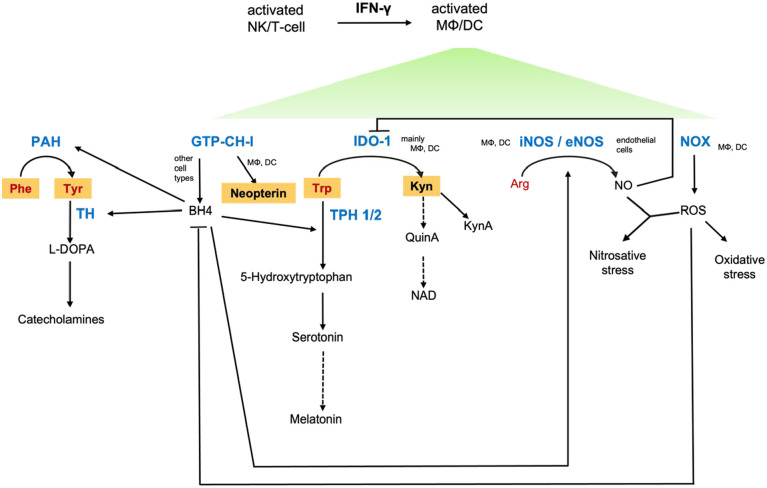
This pilot study investigated interferon gamma inducible biochemical pathways (namely Trp catabolism, neopterin, tyrosine [Tyr], and nitrite formation) during acute COVID-19 and reconvalescence.
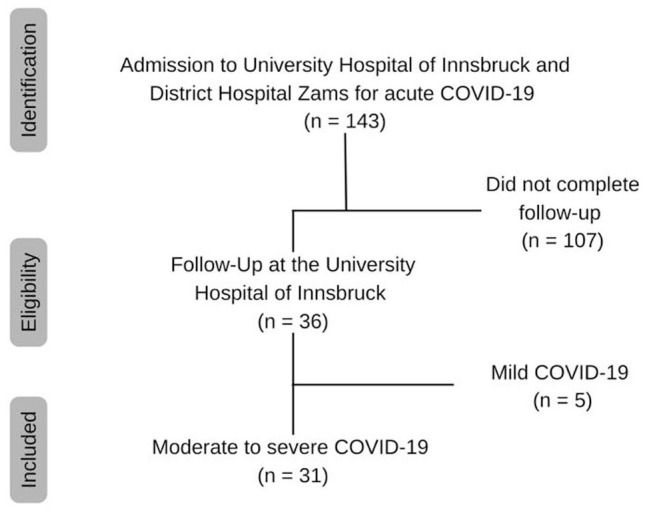
Thirty one patients with moderate to severe COVID-19 admitted to the University Hospital of Innsbruck in early 2020 (March-May) were followed up. Neurotransmitter precursors Trp, Phe, Tyr as well as kynurenine (Kyn), neopterin, nitrite, and routine laboratory parameters were analyzed during acute infection and at a follow-up (FU) 60 days thereafter. Clinical symptoms of patients (neurological symptoms, fatigue, sleep disturbance) were recorded and associations with concentrations of laboratory parameters investigated.
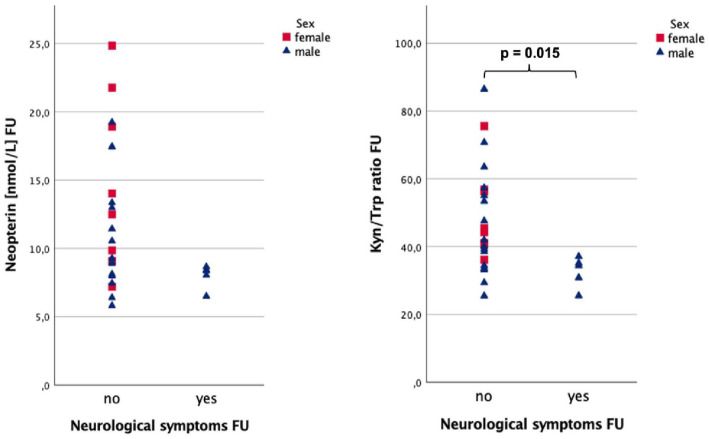
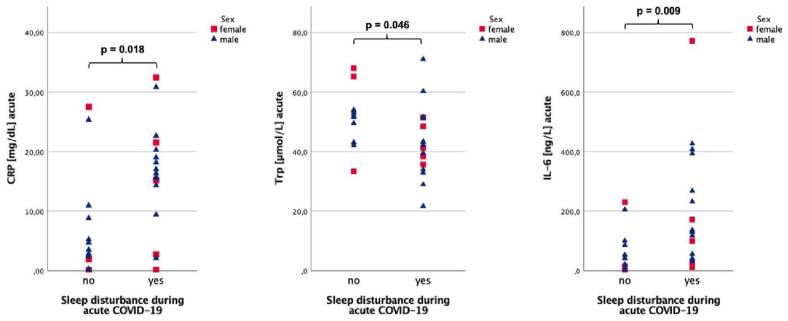
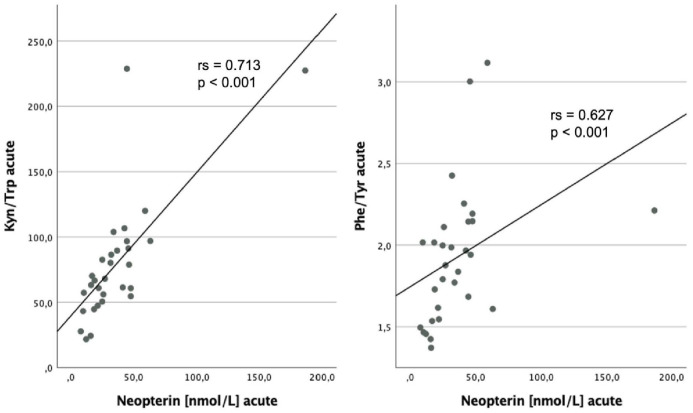
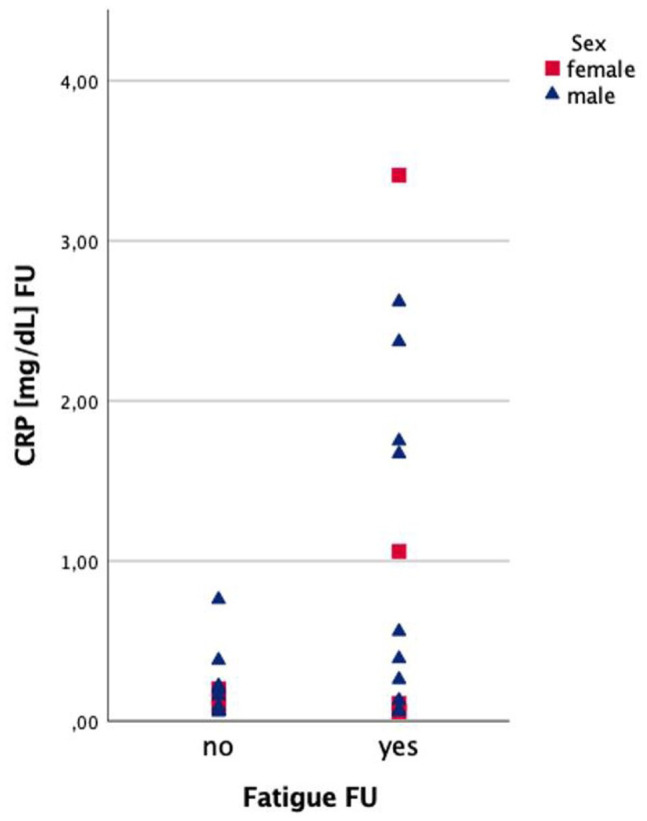
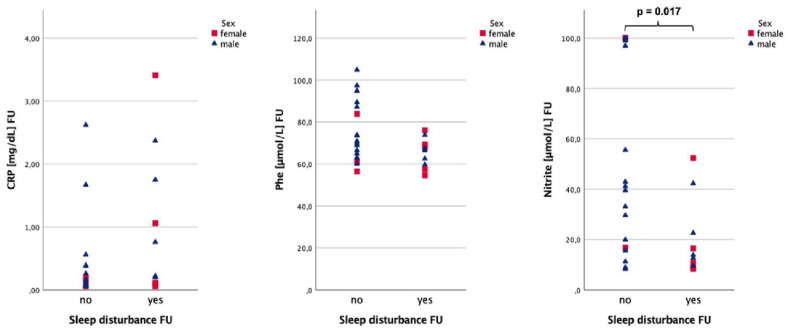
Almost half of the patients suffered from neurological symptoms (48.4%), the majority of patients experienced sleep difficulties (56.7%) during acute COVID-19. Fatigue was present in nearly all patients. C-reactive protein (CRP), interleukin-6 (IL-6), neopterin, Kyn, Phe concentrations were significantly increased, and Trp levels depleted during acute COVID-19. Patients with sleep impairment and neurological symptoms during acute illness presented with increased CRP and IL-6 concentrations, Trp levels were lower in patients with sleep disturbance. In general, inflammatory markers declined during reconvalescence. A high percentage of patients suffered from persistent symptoms at FU (neurological symptoms: 17.2%, fatigue: 51.7%, sleeping disturbance: 34.5%) and had higher CRP concentrations. Nitrite and Phe levels were lower in patients with sleeping difficulties at FU and Kyn/Trp ratio, as indicator of IDO activity, was significantly lower in patients with neurological symptoms compared to patients without them at FU. In summary, inflammation induced alterations of amino acid metabolism might be related to acute and persisting symptoms of COVID-19.
新型冠状病毒肺炎(COVID-19)期间及之后出现的疲劳、睡眠障碍和神经症状很常见,可能与炎症引起的色氨酸(Trp)和苯丙氨酸(Phe)代谢变化有关。
这项初步研究调查了急性COVID-19期间及康复期干扰素γ诱导的生化途径(即Trp分解代谢、新蝶呤、酪氨酸[Tyr]和亚硝酸盐形成)。
对2020年初(3月至5月)入住因斯布鲁克大学医院的31例中重度COVID-19患者进行随访。在急性感染期间及之后60天的随访(FU)时,分析神经递质前体Trp、Phe、Tyr以及犬尿氨酸(Kyn)、新蝶呤、亚硝酸盐和常规实验室参数。记录患者的临床症状(神经症状、疲劳、睡眠障碍),并研究其与所调查的实验室参数浓度的相关性。
几乎一半的患者出现神经症状(48.4%),大多数患者在急性COVID-19期间有睡眠困难(56.7%)。几乎所有患者都有疲劳症状。急性COVID-19期间,C反应蛋白(CRP)、白细胞介素-6(IL-6)、新蝶呤、Kyn、Phe浓度显著升高,Trp水平降低。急性疾病期间有睡眠障碍和神经症状的患者CRP和IL-6浓度升高,睡眠障碍患者的Trp水平较低。一般来说,康复期炎症标志物下降。高比例的患者在随访时有持续症状(神经症状:17.2%,疲劳:51.7%,睡眠障碍:34.5%),且CRP浓度较高。随访时睡眠困难患者的亚硝酸盐和Phe水平较低,作为吲哚胺2,3-双加氧酶(IDO)活性指标的Kyn/Trp比值,有神经症状的患者与无神经症状的患者相比显著降低。总之,炎症引起的氨基酸代谢改变可能与COVID-19的急性和持续症状有关。