Department of Neurosurgery, Stanford University, Stanford, CA 94305, USA.
Stanford Genetics Bioinformatics Service Center, Stanford University, Stanford, CA 94305, USA.
Cell Rep. 2023 Apr 25;42(4):112353. doi: 10.1016/j.celrep.2023.112353. Epub 2023 Apr 11.
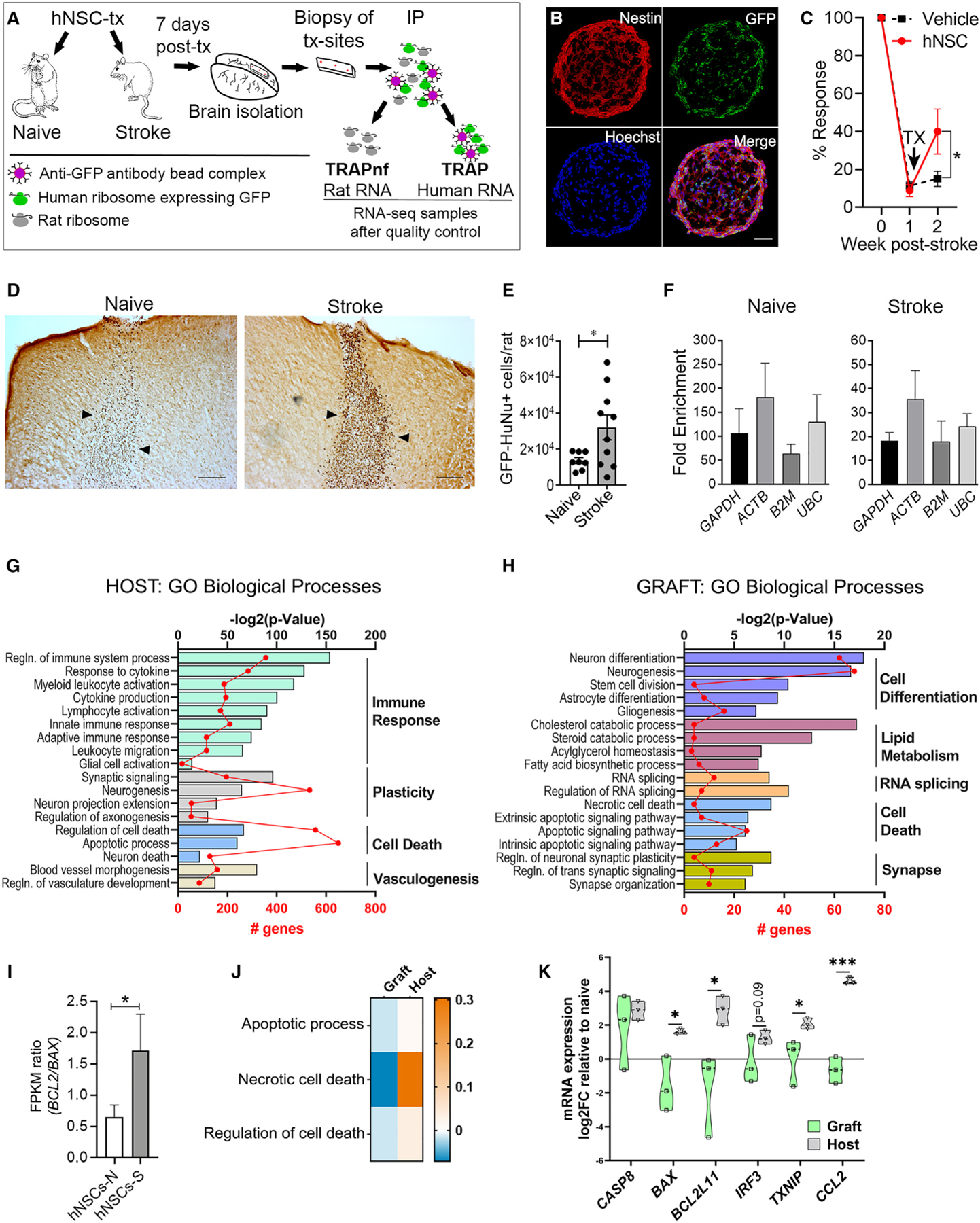
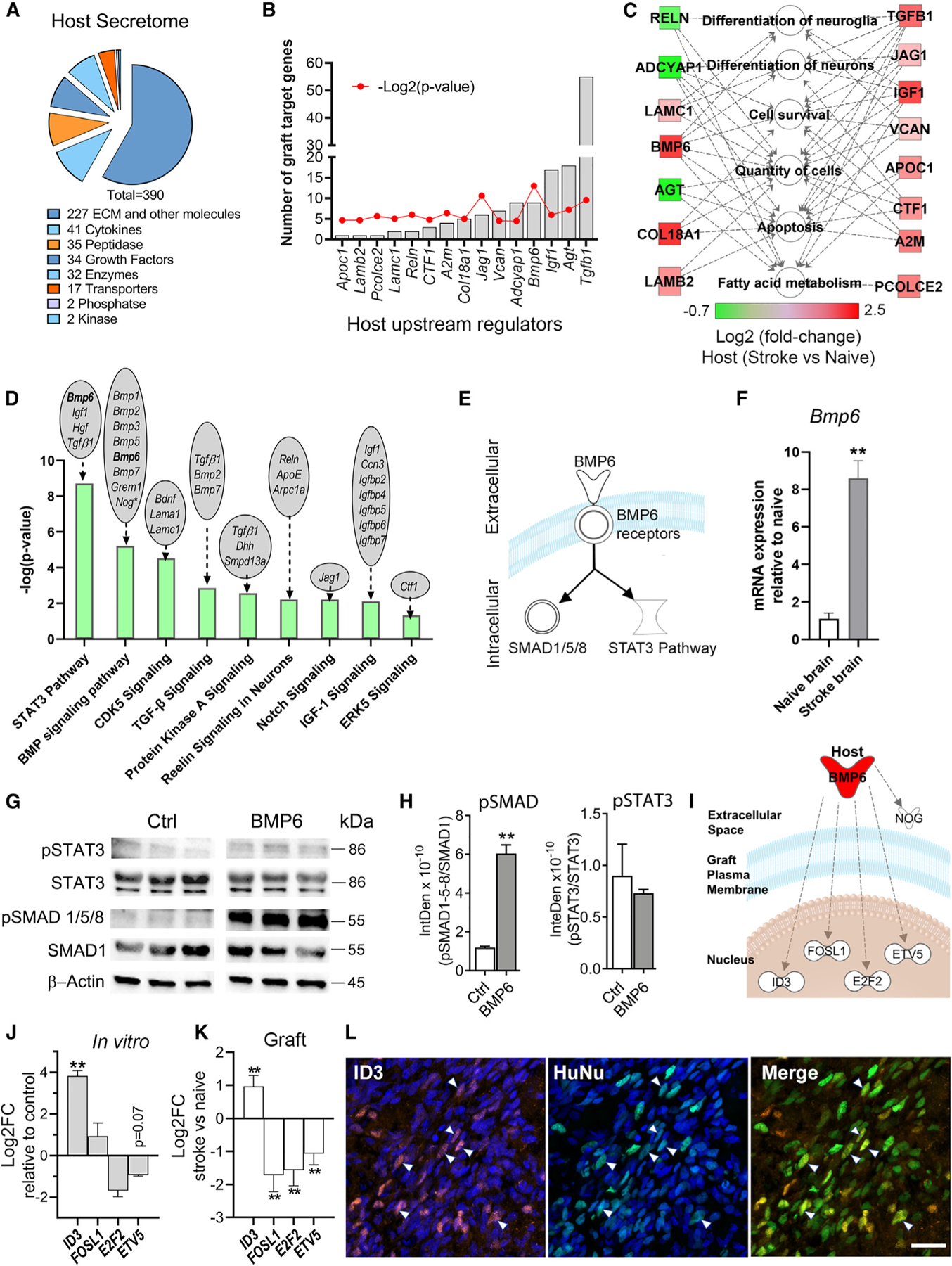
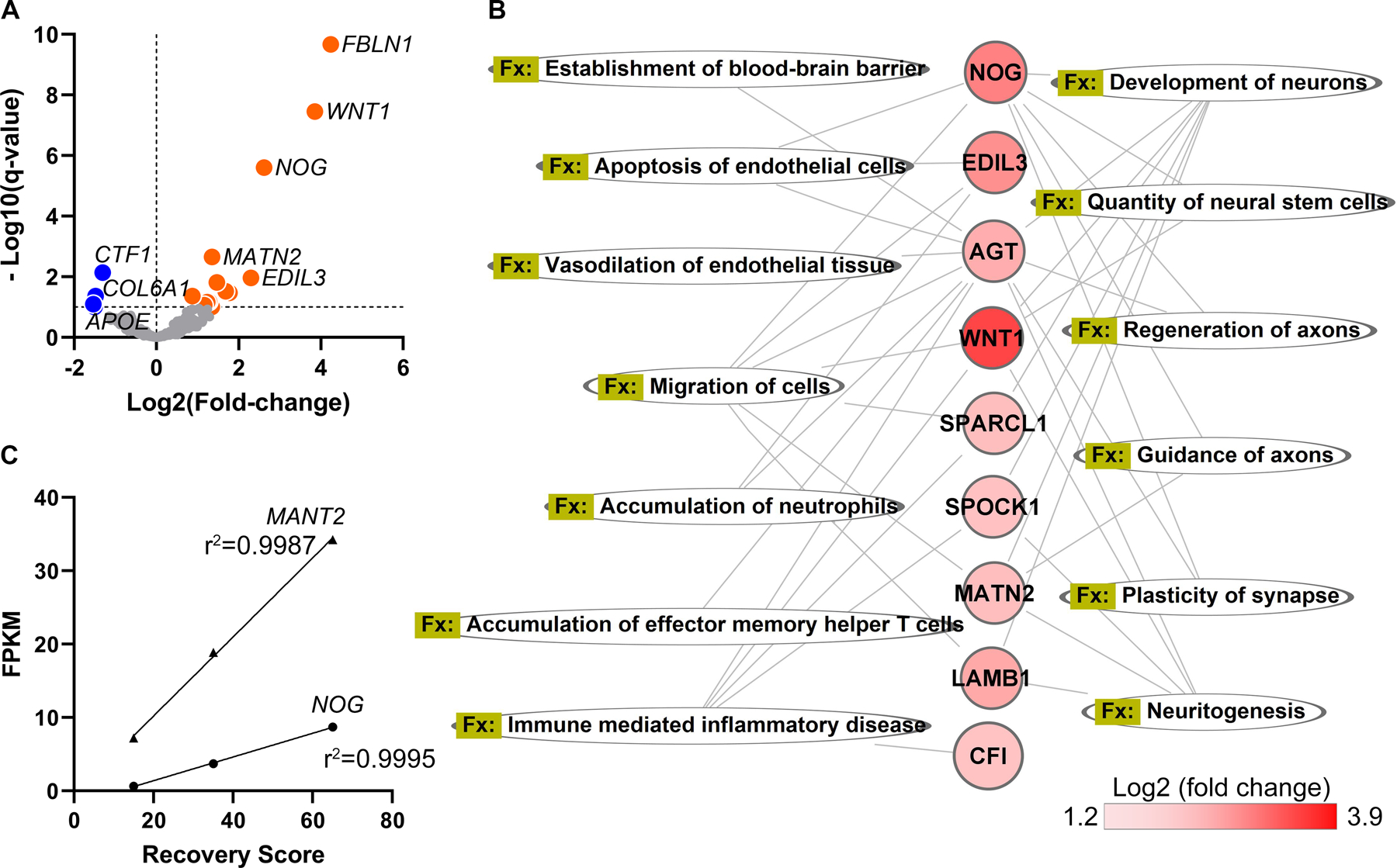
Stem cell therapy shows promise for multiple disorders; however, the molecular crosstalk between grafted cells and host tissue is largely unknown. Here, we take a step toward addressing this question. Using translating ribosome affinity purification (TRAP) with sequencing tools, we simultaneously decode the transcriptomes of graft and host for human neural stem cells (hNSCs) transplanted into the stroke-injured rat brain. Employing pathway analysis tools, we investigate the interactions between the two transcriptomes to predict molecular pathways linking host and graft genes; as proof of concept, we predict host-secreted factors that signal to the graft and the downstream molecular cascades they trigger in the graft. We identify a potential host-graft crosstalk pathway where BMP6 from the stroke-injured brain induces graft secretion of noggin, a known brain repair factor. Decoding the molecular interplay between graft and host is a critical step toward deciphering the molecular mechanisms of stem cell action.
干细胞疗法在多种疾病中显示出前景;然而,移植物细胞和宿主组织之间的分子串扰在很大程度上是未知的。在这里,我们朝着解决这个问题迈出了一步。我们使用核糖体亲和纯化 (TRAP) 与测序工具,同时解码移植到中风损伤大鼠大脑中的人神经干细胞 (hNSC) 的移植物和宿主的转录组。我们利用途径分析工具,研究两个转录组之间的相互作用,以预测连接宿主和移植物基因的分子途径;作为概念验证,我们预测了向移植物发出信号的宿主分泌因子,以及它们在移植物中引发的下游分子级联。我们确定了一个潜在的宿主-移植物串扰途径,其中来自中风损伤大脑的 BMP6 诱导移植物分泌 noggin,这是一种已知的脑修复因子。解码移植物和宿主之间的分子相互作用是破译干细胞作用的分子机制的关键步骤。