Burciu Călin, Șirli Roxana, Bende Renata, Popa Alexandru, Vuletici Deiana, Miuțescu Bogdan, Rațiu Iulia, Popescu Alina, Sporea Ioan, Dănilă Mirela
Department of Gastroenterology and Hepatology, "Victor Babes" University of Medicine and Pharmacy, 300041 Timișoara, Romania.
Advanced Regional Research Center in Gastroenterology and Hepatology, "Victor Babes" University of Medicine and Pharmacy, 30041 Timisoara, Romania.
Diagnostics (Basel). 2023 Mar 27;13(7):1253. doi: 10.3390/diagnostics13071253.
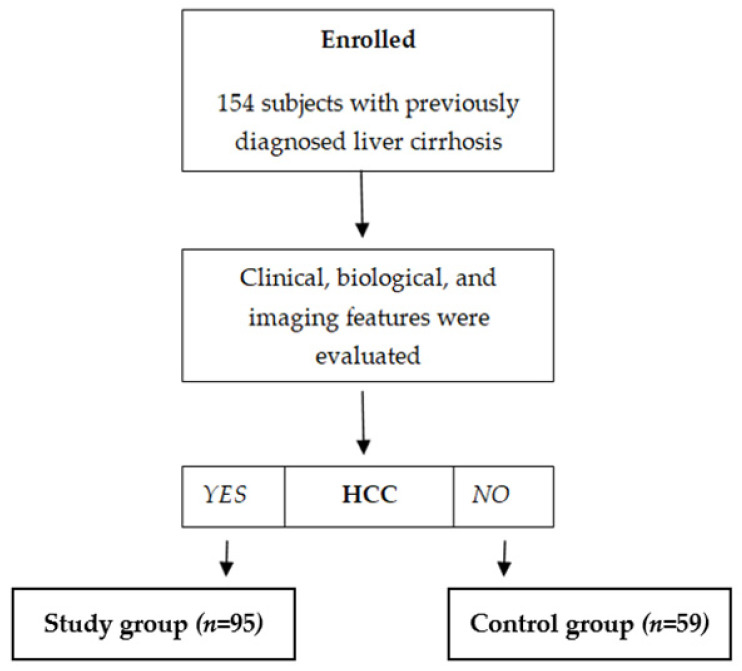
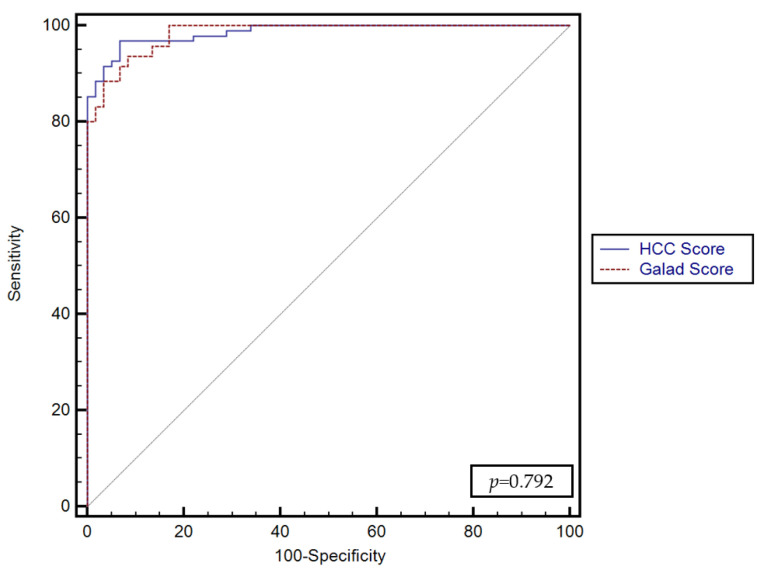
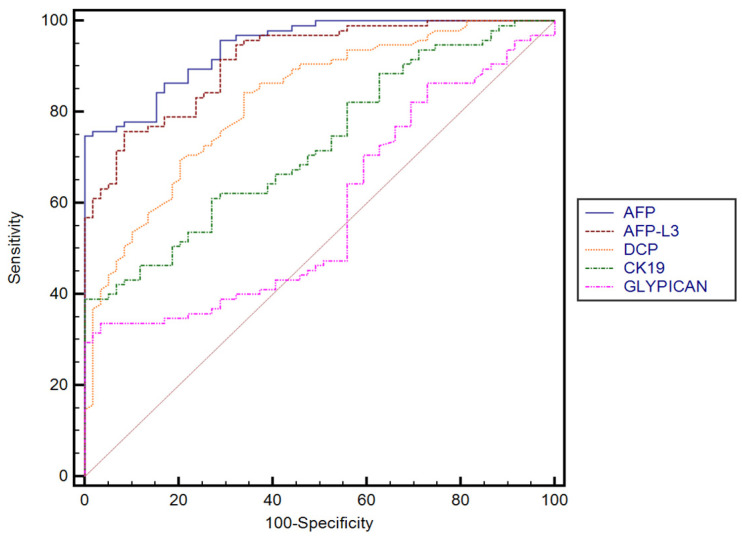
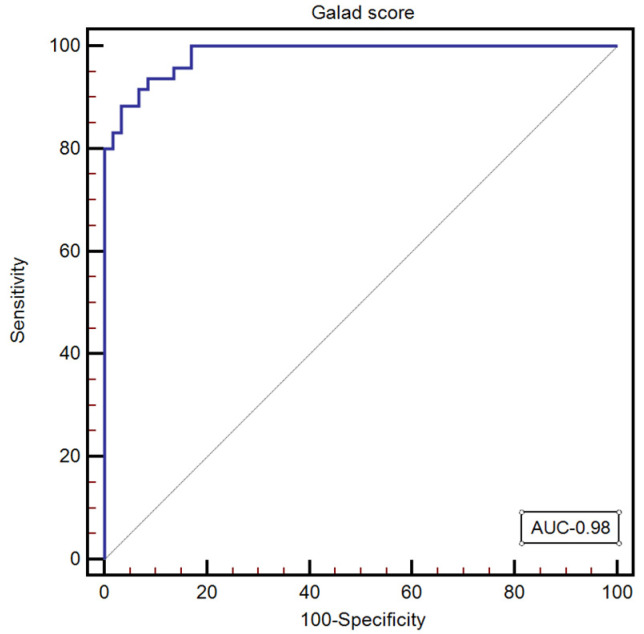
Various statistical models predict the probability of developing hepatocellular carcinoma (HCC) in patients with cirrhosis, with GALAD being one of the most extensively studied scores. Biomarkers like alpha-fetoprotein (AFP), AFP-L3, and des-g-carboxyprothrombin (DCP) are widely used alone or in conjunction with ultrasound to screen for HCC. Our study aimed to compare the effectiveness of Cytokeratin 19 (CK19) and Glypican-3 (GPC3) as standalone biomarkers and in a statistical model to predict the likelihood of HCC. We conducted a monocentric prospective study involving 154 participants with previously diagnosed liver cirrhosis, divided into two groups: 95 patients with confirmed HCC based on clinical, biological, and imaging features and 59 patients without HCC. We measured the levels of AFP, AFP-L3, DCP, GPC3, and CK19 in both groups. We used univariate and multivariate statistical analyses to evaluate the ability of GPC3 and CK19 to predict the presence of HCC and incorporated them into a statistical model-the GALKA score-which was then compared to the GALAD score. AFP performed better than AFP-F3, DCP, GPC3, and CK19 in predicting the presence of HCC in our cohort. Additionally, GPC3 outperformed CK19. We used multivariate analysis to compute the GALKA score to predict the presence of HCC. Using these predictors, the following score was formulated: 0.005AFP-L3 + 0.00069AFP + 0.000066GPC3 + 0.01CK19 + 0.235*Serum Albumin-0.277. The optimal cutoff was >0.32 (AUROC = 0.98, sensitivity: 96.8%, specificity: 93%, positive predictive value-95.8%, negative predictive value-94.8%). The GALKA score had a similar predictive value to the GALAD score for the presence of HCC. In conclusion, AFP, AFP-L3, and DCP were the best biomarkers for predicting the likelihood of HCC. Our score performed well overall and was comparable to the GALAD score.
各种统计模型可预测肝硬化患者发生肝细胞癌(HCC)的概率,GALAD是研究最为广泛的评分系统之一。甲胎蛋白(AFP)、AFP-L3和异常凝血酶原(DCP)等生物标志物被广泛单独使用或与超声检查结合用于筛查HCC。我们的研究旨在比较细胞角蛋白19(CK19)和磷脂酰肌醇蛋白聚糖-3(GPC3)作为独立生物标志物以及在统计模型中预测HCC可能性的有效性。我们进行了一项单中心前瞻性研究,纳入了154名先前诊断为肝硬化的参与者,分为两组:95例根据临床、生物学和影像学特征确诊为HCC的患者以及59例未患HCC的患者。我们测量了两组患者的AFP、AFP-L3、DCP、GPC3和CK19水平。我们使用单变量和多变量统计分析来评估GPC3和CK19预测HCC存在的能力,并将它们纳入一个统计模型——GALKA评分,然后将其与GALAD评分进行比较。在我们的队列中,AFP在预测HCC存在方面比AFP-F3、DCP、GPC3和CK19表现更好。此外,GPC3的表现优于CK19。我们使用多变量分析计算GALKA评分以预测HCC的存在。使用这些预测指标,制定了以下评分:0.005×AFP-L3 + 0.00069×AFP + 0.000066×GPC3 + 0.01×CK19 + 0.235×血清白蛋白 - 0.277。最佳临界值>0.32(曲线下面积 = 0.98,灵敏度:96.8%,特异性:93%,阳性预测值 - 95.8%,阴性预测值 - 94.8%)。对于HCC的存在,GALKA评分与GALAD评分具有相似的预测价值。总之,AFP、AFP-L3和DCP是预测HCC可能性的最佳生物标志物。我们的评分总体表现良好,与GALAD评分相当。