• 文献检索
  • 文档翻译
  • 深度研究
  • 学术资讯
  • Suppr Zotero 插件Zotero 插件
  • 邀请有礼
  • 套餐&价格
  • 历史记录
应用&插件
Suppr Zotero 插件Zotero 插件浏览器插件Mac 客户端Windows 客户端微信小程序
定价
高级版会员购买积分包购买API积分包
服务
文献检索文档翻译深度研究API 文档MCP 服务
关于我们
关于 Suppr公司介绍联系我们用户协议隐私条款
关注我们

Suppr 超能文献

核心技术专利:CN118964589B侵权必究
粤ICP备2023148730 号-1Suppr @ 2026

文献检索

告别复杂PubMed语法,用中文像聊天一样搜索,搜遍4000万医学文献。AI智能推荐,让科研检索更轻松。

立即免费搜索

文件翻译

保留排版,准确专业,支持PDF/Word/PPT等文件格式,支持 12+语言互译。

免费翻译文档

深度研究

AI帮你快速写综述,25分钟生成高质量综述,智能提取关键信息,辅助科研写作。

立即免费体验

使用精细预训练深度模型和显著性图对颈椎骨折和脱位进行分类

Classification of Cervical Spine Fracture and Dislocation Using Refined Pre-Trained Deep Model and Saliency Map.

作者信息

Naguib Soaad M, Hamza Hanaa M, Hosny Khalid M, Saleh Mohammad K, Kassem Mohamed A

机构信息

Department of Information Systems, Faculty of Computers and Informatics, Zagazig University, Zagazig 44519, Egypt.

Department of Information Technology, Faculty of Computers and Informatics, Zagazig University, Zagazig 44519, Egypt.

出版信息

Diagnostics (Basel). 2023 Mar 28;13(7):1273. doi: 10.3390/diagnostics13071273.

DOI:10.3390/diagnostics13071273
PMID:37046491
原文链接:https://pmc.ncbi.nlm.nih.gov/articles/PMC10093757/
Abstract

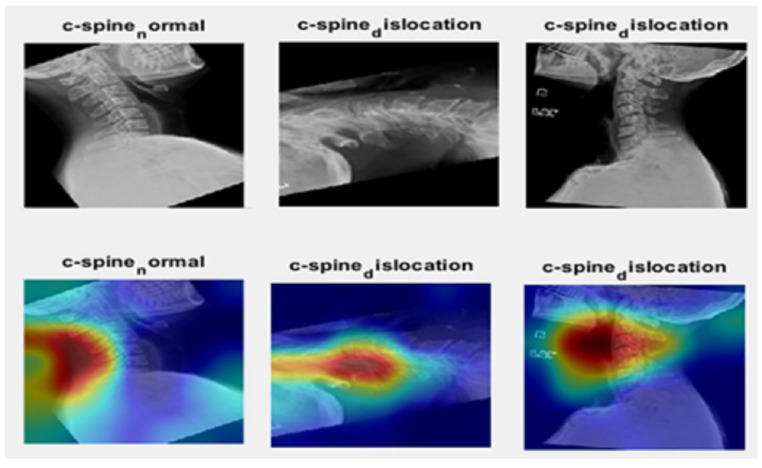
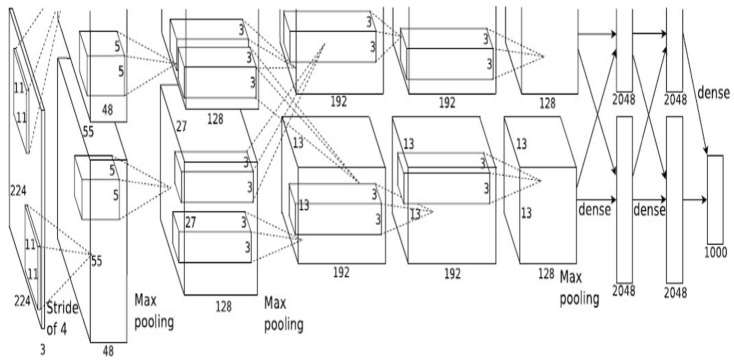
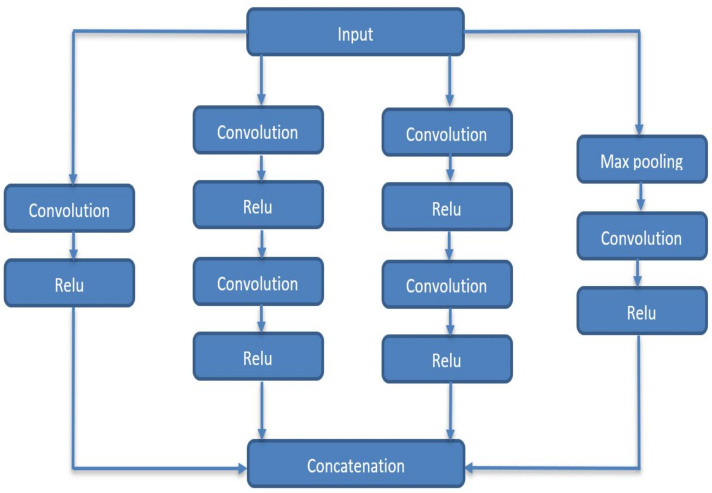
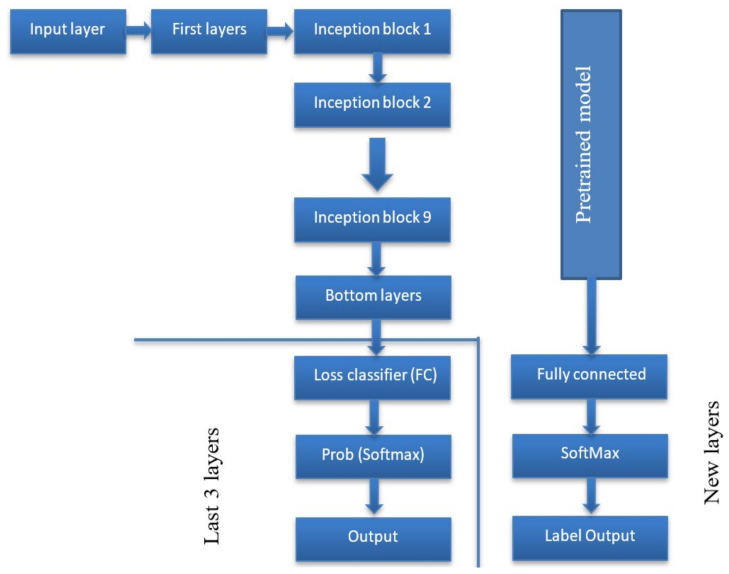
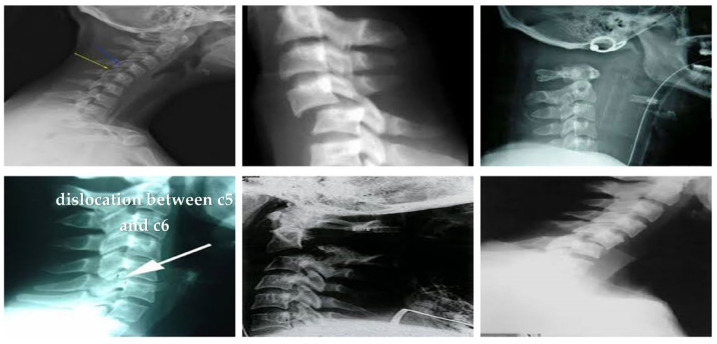
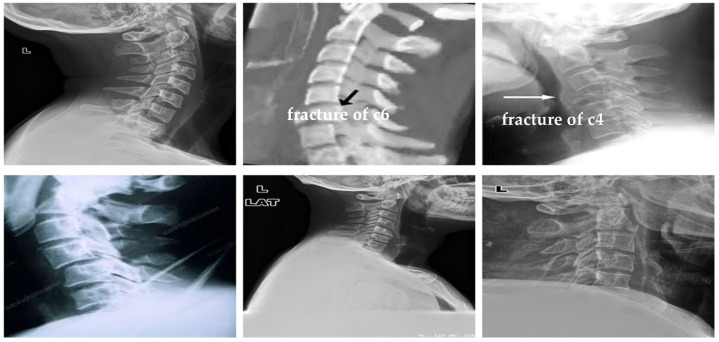
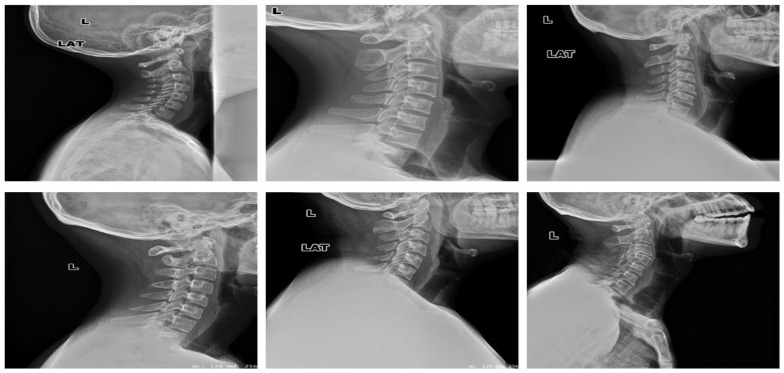
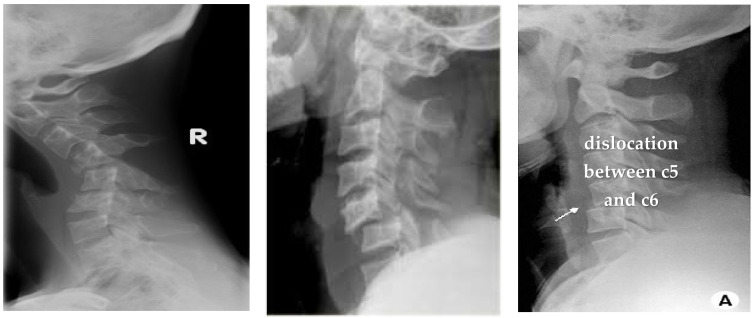
Cervical spine (CS) fractures or dislocations are medical emergencies that may lead to more serious consequences, such as significant functional disability, permanent paralysis, or even death. Therefore, diagnosing CS injuries should be conducted urgently without any delay. This paper proposes an accurate computer-aided-diagnosis system based on deep learning (AlexNet and GoogleNet) for classifying CS injuries as fractures or dislocations. The proposed system aims to support physicians in diagnosing CS injuries, especially in emergency services. We trained the model on a dataset containing 2009 X-ray images (530 CS dislocation, 772 CS fractures, and 707 normal images). The results show 99.56%, 99.33%, 99.67%, and 99.33% for accuracy, sensitivity, specificity, and precision, respectively. Finally, the saliency map has been used to measure the spatial support of a specific class inside an image. This work targets both research and clinical purposes. The designed software could be installed on the imaging devices where the CS images are captured. Then, the captured CS image is used as an input image where the designed code makes a clinical decision in emergencies.

摘要

颈椎(CS)骨折或脱位是医疗急症,可能会导致更严重的后果,如严重的功能残疾、永久性瘫痪甚至死亡。因此,应立即对颈椎损伤进行诊断,不容有任何延误。本文提出了一种基于深度学习(AlexNet和GoogleNet)的精确计算机辅助诊断系统,用于将颈椎损伤分类为骨折或脱位。该系统旨在辅助医生诊断颈椎损伤,尤其是在急救服务中。我们在一个包含2009张X射线图像(530张颈椎脱位、772张颈椎骨折和707张正常图像)的数据集上训练了该模型。结果显示,准确率、灵敏度、特异性和精确率分别为99.56%、99.33%、99.67%和99.33%。最后,显著性图被用于测量图像中特定类别的空间支持度。这项工作兼顾了研究和临床目的。所设计的软件可以安装在采集颈椎图像的成像设备上。然后,将采集到的颈椎图像用作输入图像,由设计的代码在紧急情况下做出临床决策。
https://cdn.ncbi.nlm.nih.gov/pmc/blobs/072b/10093757/cae39fcf743b/diagnostics-13-01273-g015.jpg
https://cdn.ncbi.nlm.nih.gov/pmc/blobs/072b/10093757/4439aebf8683/diagnostics-13-01273-g001.jpg
https://cdn.ncbi.nlm.nih.gov/pmc/blobs/072b/10093757/045713cffdba/diagnostics-13-01273-g002.jpg
https://cdn.ncbi.nlm.nih.gov/pmc/blobs/072b/10093757/4d85f7c5c4c3/diagnostics-13-01273-g003.jpg
https://cdn.ncbi.nlm.nih.gov/pmc/blobs/072b/10093757/8d9ca712516e/diagnostics-13-01273-g004.jpg
https://cdn.ncbi.nlm.nih.gov/pmc/blobs/072b/10093757/348ff6cbaecd/diagnostics-13-01273-g005.jpg
https://cdn.ncbi.nlm.nih.gov/pmc/blobs/072b/10093757/15c78b96811e/diagnostics-13-01273-g006.jpg
https://cdn.ncbi.nlm.nih.gov/pmc/blobs/072b/10093757/b6a26895da67/diagnostics-13-01273-g007.jpg
https://cdn.ncbi.nlm.nih.gov/pmc/blobs/072b/10093757/570031d43294/diagnostics-13-01273-g008.jpg
https://cdn.ncbi.nlm.nih.gov/pmc/blobs/072b/10093757/245f6af44a34/diagnostics-13-01273-g009.jpg
https://cdn.ncbi.nlm.nih.gov/pmc/blobs/072b/10093757/65d8b8fa8273/diagnostics-13-01273-g010.jpg
https://cdn.ncbi.nlm.nih.gov/pmc/blobs/072b/10093757/d0b8d8a4d687/diagnostics-13-01273-g011.jpg
https://cdn.ncbi.nlm.nih.gov/pmc/blobs/072b/10093757/3d79daaa08d4/diagnostics-13-01273-g012.jpg
https://cdn.ncbi.nlm.nih.gov/pmc/blobs/072b/10093757/e755ff7a480e/diagnostics-13-01273-g013.jpg
https://cdn.ncbi.nlm.nih.gov/pmc/blobs/072b/10093757/af69759c9227/diagnostics-13-01273-g014.jpg
https://cdn.ncbi.nlm.nih.gov/pmc/blobs/072b/10093757/cae39fcf743b/diagnostics-13-01273-g015.jpg
https://cdn.ncbi.nlm.nih.gov/pmc/blobs/072b/10093757/4439aebf8683/diagnostics-13-01273-g001.jpg
https://cdn.ncbi.nlm.nih.gov/pmc/blobs/072b/10093757/045713cffdba/diagnostics-13-01273-g002.jpg
https://cdn.ncbi.nlm.nih.gov/pmc/blobs/072b/10093757/4d85f7c5c4c3/diagnostics-13-01273-g003.jpg
https://cdn.ncbi.nlm.nih.gov/pmc/blobs/072b/10093757/8d9ca712516e/diagnostics-13-01273-g004.jpg
https://cdn.ncbi.nlm.nih.gov/pmc/blobs/072b/10093757/348ff6cbaecd/diagnostics-13-01273-g005.jpg
https://cdn.ncbi.nlm.nih.gov/pmc/blobs/072b/10093757/15c78b96811e/diagnostics-13-01273-g006.jpg
https://cdn.ncbi.nlm.nih.gov/pmc/blobs/072b/10093757/b6a26895da67/diagnostics-13-01273-g007.jpg
https://cdn.ncbi.nlm.nih.gov/pmc/blobs/072b/10093757/570031d43294/diagnostics-13-01273-g008.jpg
https://cdn.ncbi.nlm.nih.gov/pmc/blobs/072b/10093757/245f6af44a34/diagnostics-13-01273-g009.jpg
https://cdn.ncbi.nlm.nih.gov/pmc/blobs/072b/10093757/65d8b8fa8273/diagnostics-13-01273-g010.jpg
https://cdn.ncbi.nlm.nih.gov/pmc/blobs/072b/10093757/d0b8d8a4d687/diagnostics-13-01273-g011.jpg
https://cdn.ncbi.nlm.nih.gov/pmc/blobs/072b/10093757/3d79daaa08d4/diagnostics-13-01273-g012.jpg
https://cdn.ncbi.nlm.nih.gov/pmc/blobs/072b/10093757/e755ff7a480e/diagnostics-13-01273-g013.jpg
https://cdn.ncbi.nlm.nih.gov/pmc/blobs/072b/10093757/af69759c9227/diagnostics-13-01273-g014.jpg
https://cdn.ncbi.nlm.nih.gov/pmc/blobs/072b/10093757/cae39fcf743b/diagnostics-13-01273-g015.jpg

相似文献

1
Classification of Cervical Spine Fracture and Dislocation Using Refined Pre-Trained Deep Model and Saliency Map.使用精细预训练深度模型和显著性图对颈椎骨折和脱位进行分类
Diagnostics (Basel). 2023 Mar 28;13(7):1273. doi: 10.3390/diagnostics13071273.
2
Artificial Intelligence Detection of Cervical Spine Fractures Using Convolutional Neural Network Models.使用卷积神经网络模型对颈椎骨折进行人工智能检测
Neurospine. 2024 Sep;21(3):833-841. doi: 10.14245/ns.2448580.290. Epub 2024 Sep 30.
3
Development of a Machine Learning-Based Model for Accurate Detection and Classification of Cervical Spine Fractures Using CT Imaging.基于机器学习的模型用于利用CT成像准确检测和分类颈椎骨折的开发
Cureus. 2023 Oct 19;15(10):e47328. doi: 10.7759/cureus.47328. eCollection 2023 Oct.
4
Deep feature classification of angiomyolipoma without visible fat and renal cell carcinoma in abdominal contrast-enhanced CT images with texture image patches and hand-crafted feature concatenation.利用纹理图像补丁和手工特征串联对腹部增强 CT 图像中无可见脂肪的血管平滑肌脂肪瘤和肾细胞癌进行深度特征分类。
Med Phys. 2018 Apr;45(4):1550-1561. doi: 10.1002/mp.12828. Epub 2018 Mar 25.
5
Development and optimization of AI algorithms for wrist fracture detection in children using a freely available dataset.利用一个免费数据集开发并优化用于儿童手腕骨折检测的人工智能算法。
Front Pediatr. 2023 Dec 21;11:1291804. doi: 10.3389/fped.2023.1291804. eCollection 2023.
6
Sanders classification of calcaneal fractures in CT images with deep learning and differential data augmentation techniques.基于深度学习和差分数据增强技术的 CT 图像中跟骨骨折 Sanders 分类法。
Injury. 2021 Mar;52(3):616-624. doi: 10.1016/j.injury.2020.09.010. Epub 2020 Sep 16.
7
What Does Deep Learning See? Insights From a Classifier Trained to Predict Contrast Enhancement Phase From CT Images.深度学习所见:从 CT 图像预测对比增强阶段的分类器训练所得到的见解。
AJR Am J Roentgenol. 2018 Dec;211(6):1184-1193. doi: 10.2214/AJR.18.20331. Epub 2018 Nov 7.
8
Precise proximal femur fracture classification for interactive training and surgical planning.精确的股骨近端骨折分类,用于交互式培训和手术规划。
Int J Comput Assist Radiol Surg. 2020 May;15(5):847-857. doi: 10.1007/s11548-020-02150-x. Epub 2020 Apr 25.
9
Artificial intelligence to diagnosis distal radius fracture using biplane plain X-rays.人工智能利用双平面平片 X 射线诊断桡骨远端骨折。
J Orthop Surg Res. 2021 Nov 25;16(1):694. doi: 10.1186/s13018-021-02845-0.
10
Advanced compressive extension injuries of the subaxial cervical spine: do we really understand the nuances of this injury?下颈椎过伸性压缩损伤:我们真的了解这种损伤的细微差别吗?
Spine J. 2021 Jul;21(7):1159-1167. doi: 10.1016/j.spinee.2021.02.010. Epub 2021 Feb 19.

引用本文的文献

1
Advancing Spine Fracture Detection: The Role of Artificial Intelligence in Clinical Practice.推进脊柱骨折检测:人工智能在临床实践中的作用。
Korean J Neurotrauma. 2025 Jul 18;21(3):172-182. doi: 10.13004/kjnt.2025.21.e22. eCollection 2025 Jul.
2
Radiomics analysis based on plain X-rays to detect spinal fractures with posterior wall injury.基于普通X线片的放射组学分析用于检测伴有后壁损伤的脊柱骨折。
Digit Health. 2025 Feb 25;11:20552076251324436. doi: 10.1177/20552076251324436. eCollection 2025 Jan-Dec.
3
Deep learning approach based on a patch residual for pediatric supracondylar subtle fracture detection.

本文引用的文献

1
Soft Tissue Injury in Cervical Spine Is a Risk Factor for Intersegmental Instability: A Finite Element Analysis.颈椎软组织损伤是节段间不稳定的危险因素:有限元分析。
World Neurosurg. 2022 Aug;164:e358-e366. doi: 10.1016/j.wneu.2022.04.112. Epub 2022 May 2.
2
Epidemiology of traumatic cervical spinal fractures in a general Norwegian population.挪威普通人群创伤性颈椎骨折的流行病学研究
Inj Epidemiol. 2022 Mar 24;9(1):10. doi: 10.1186/s40621-022-00374-w.
3
Fracture Detection in Wrist X-ray Images Using Deep Learning-Based Object Detection Models.
基于块残差的深度学习方法用于小儿髁上细微骨折检测。
Biomol Biomed. 2025 May 8;25(7):1631-1646. doi: 10.17305/bb.2024.11341.
4
Artificial Intelligence for Cervical Spine Fracture Detection: A Systematic Review of Diagnostic Performance and Clinical Potential.用于颈椎骨折检测的人工智能:诊断性能和临床潜力的系统评价
Global Spine J. 2025 May;15(4):2547-2558. doi: 10.1177/21925682251314379. Epub 2025 Jan 12.
5
Interpretable Multi-Label Classification for Tibiofibula Fracture 2D CT Images with Selective Attention and Data Augmentation.基于选择性注意力和数据增强的胫腓骨骨折二维CT图像可解释多标签分类
Diagnostics (Basel). 2024 Dec 5;14(23):2740. doi: 10.3390/diagnostics14232740.
6
Exploring vision transformers and XGBoost as deep learning ensembles for transforming carcinoma recognition.探索将视觉Transformer和XGBoost作为深度学习集成方法用于转化型癌的识别。
Sci Rep. 2024 Dec 3;14(1):30052. doi: 10.1038/s41598-024-81456-1.
7
Watch Your Back! How Deep Learning Is Cracking the Real World of CT for Cervical Spine Fractures.小心背后!深度学习如何破解颈椎骨折CT的现实世界。
Radiol Artif Intell. 2024 Nov;6(6):e240604. doi: 10.1148/ryai.240604.
8
Application and Prospects of Deep Learning Technology in Fracture Diagnosis.深度学习技术在骨折诊断中的应用与前景
Curr Med Sci. 2024 Dec;44(6):1132-1140. doi: 10.1007/s11596-024-2928-5. Epub 2024 Nov 18.
9
A new superfluity deep learning model for detecting knee osteoporosis and osteopenia in X-ray images.一种用于检测 X 射线图像中膝关节骨质疏松和骨量减少的新型深度学习模型。
Sci Rep. 2024 Oct 25;14(1):25434. doi: 10.1038/s41598-024-75549-0.
10
Explainable artificial intelligence in orthopedic surgery.骨科手术中的可解释人工智能
J Exp Orthop. 2024 Jul 17;11(3):e12103. doi: 10.1002/jeo2.12103. eCollection 2024 Jul.
基于深度学习的目标检测模型在腕部 X 射线图像中的骨折检测。
Sensors (Basel). 2022 Feb 8;22(3):1285. doi: 10.3390/s22031285.
4
Refined Residual Deep Convolutional Network for Skin Lesion Classification.精细化残差深度卷积网络在皮肤损伤分类中的应用。
J Digit Imaging. 2022 Apr;35(2):258-280. doi: 10.1007/s10278-021-00552-0. Epub 2022 Jan 11.
5
Cervical spine injury response to direct rear head impact.颈椎损伤对直接头部后碰撞的反应。
Clin Biomech (Bristol). 2022 Feb;92:105552. doi: 10.1016/j.clinbiomech.2021.105552. Epub 2021 Dec 17.
6
Artificial intelligence for imaging-based COVID-19 detection: Systematic review comparing added value of AI versus human readers.基于影像的 COVID-19 检测人工智能:比较 AI 与人工读者增值的系统评价。
Eur J Radiol. 2021 Dec;145:110028. doi: 10.1016/j.ejrad.2021.110028. Epub 2021 Nov 16.
7
Machine Learning and Deep Learning Methods for Skin Lesion Classification and Diagnosis: A Systematic Review.用于皮肤病变分类与诊断的机器学习和深度学习方法:一项系统综述。
Diagnostics (Basel). 2021 Jul 31;11(8):1390. doi: 10.3390/diagnostics11081390.
8
CT Cervical Spine Fracture Detection Using a Convolutional Neural Network.使用卷积神经网络检测颈椎 CT 骨折。
AJNR Am J Neuroradiol. 2021 Jul;42(7):1341-1347. doi: 10.3174/ajnr.A7094. Epub 2021 Apr 1.
9
Biomechanics, evaluation, and management of subaxial cervical spine injuries: A comprehensive review of the literature.下颈椎脊柱损伤的生物力学、评估和管理:文献综述。
J Clin Neurosci. 2021 Jan;83:131-139. doi: 10.1016/j.jocn.2020.11.004. Epub 2020 Dec 3.
10
Assessment of a deep-learning system for fracture detection in musculoskeletal radiographs.用于肌肉骨骼X光片中骨折检测的深度学习系统评估。
NPJ Digit Med. 2020 Oct 30;3:144. doi: 10.1038/s41746-020-00352-w. eCollection 2020.