Department of Life Science, College of Science and Engineering, Fu Jen Catholic University, New Taipei City 242062, Taiwan.
Department of Food Science, Fu Jen Catholic University, New Taipei City 242062, Taiwan.
Int J Mol Sci. 2023 Mar 28;24(7):6328. doi: 10.3390/ijms24076328.
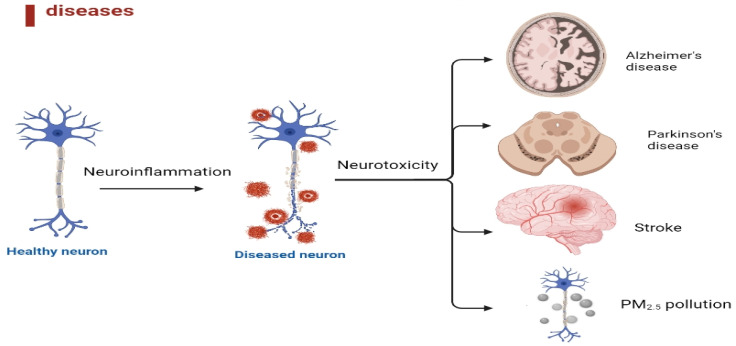
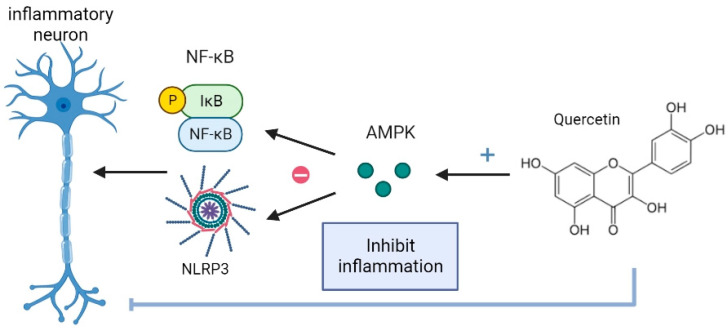
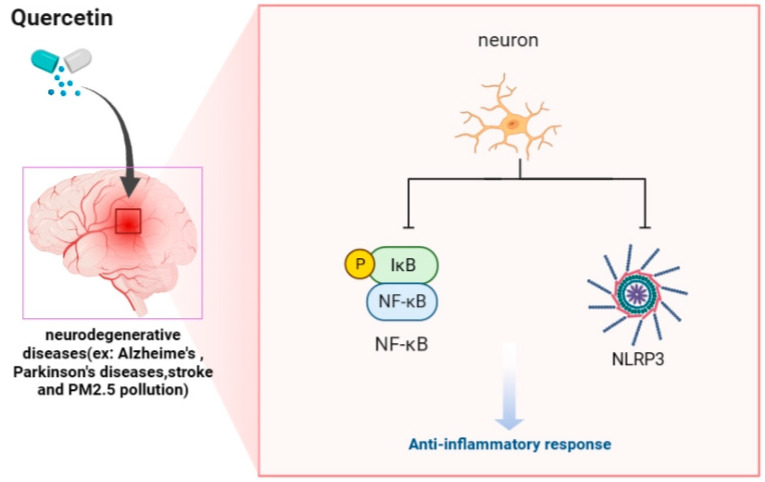
Neuroinflammation is a critical factor in developing and progressing numerous brain diseases, including neurodegenerative diseases. Chronic or excessive neuroinflammation can lead to neurotoxicity, causing brain damage and contributing to the onset and progression of various brain diseases. Therefore, understanding neuroinflammation mechanisms and developing strategies to control them is crucial for treating brain diseases. Studies have shown that neuroinflammation plays a vital role in the progression of neurodegenerative diseases, such as Alzheimer's (AD) and Parkinson's (PD), and stroke. Additionally, the effects of PM pollution on the brain, including neuroinflammation and neurotoxicity, are well-documented. Quercetin is a flavonoid, a plant pigment in many fruits, vegetables, and grains. Quercetin has been studied for its potential health benefits, including its anti-inflammatory, antioxidant, and anti-cancer properties. Quercetin may also have a positive impact on immune function and allergy symptoms. In addition, quercetin has been shown to have anti-inflammatory and neuroprotective properties and can activate AMP-activated protein kinase (AMPK), a cellular energy sensor that modulates inflammation and oxidative stress. By reducing inflammation and protecting against neuroinflammatory toxicity, quercetin holds promise as a safe and effective adjunctive therapy for treating neurodegenerative diseases and other brain disorders. Understanding and controlling the mechanisms of NF-κB and NLRP3 inflammasome pathways are crucial for preventing and treating conditions, and quercetin may be a promising tool in this effort. This review article aims to discuss the role of neuroinflammation in the development and progression of various brain disorders, including neurodegenerative diseases and stroke, and the impact of PM pollution on the brain. The paper also highlights quercetin's potential health benefits and anti-inflammatory and neuroprotective properties.
神经炎症是许多脑部疾病(包括神经退行性疾病)发展和进展的关键因素。慢性或过度的神经炎症会导致神经毒性,引起脑损伤,并导致各种脑部疾病的发生和进展。因此,了解神经炎症机制并开发控制这些机制的策略对于治疗脑部疾病至关重要。研究表明,神经炎症在神经退行性疾病(如阿尔茨海默病(AD)和帕金森病(PD)以及中风)的进展中起着重要作用。此外,PM 污染对大脑的影响,包括神经炎症和神经毒性,已有充分的记录。槲皮素是一种类黄酮,是许多水果、蔬菜和谷物中的植物色素。槲皮素因其潜在的健康益处而受到研究,包括其抗炎、抗氧化和抗癌特性。槲皮素还可能对免疫功能和过敏症状产生积极影响。此外,槲皮素已被证明具有抗炎和神经保护特性,并且可以激活 AMP 激活的蛋白激酶(AMPK),这是一种调节炎症和氧化应激的细胞能量传感器。通过减少炎症和防止神经炎症毒性,槲皮素有望成为治疗神经退行性疾病和其他脑部疾病的安全有效的辅助治疗方法。了解和控制 NF-κB 和 NLRP3 炎性小体途径的机制对于预防和治疗这些疾病至关重要,而槲皮素可能是这方面的一种有前途的工具。本文旨在讨论神经炎症在各种脑部疾病(包括神经退行性疾病和中风)发展和进展中的作用,以及 PM 污染对大脑的影响。本文还强调了槲皮素的潜在健康益处和抗炎及神经保护特性。