Research and Technology Centre (FTZ), Kiel University, Hafentörn 1, 25761, Büsum, Germany.
Federation of German Avifaunists (DDA), Hafentörn 1, 25761, Büsum, Germany.
Sci Rep. 2023 Apr 13;13(1):4779. doi: 10.1038/s41598-023-31601-z.
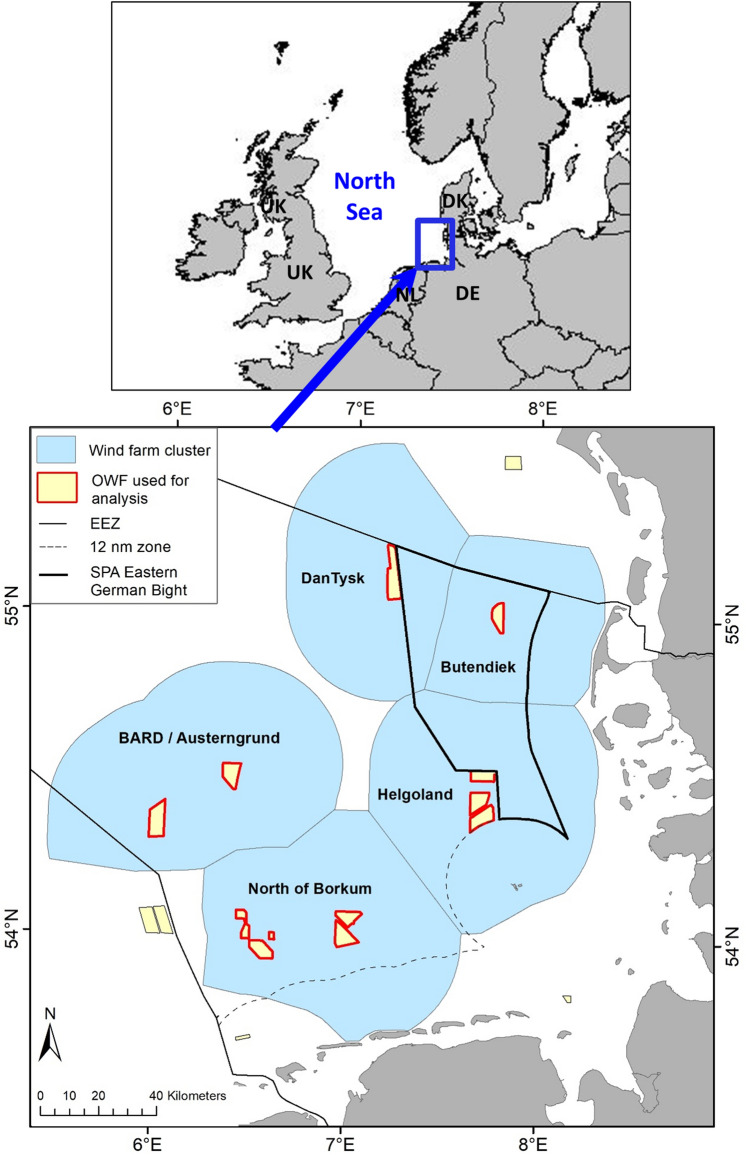
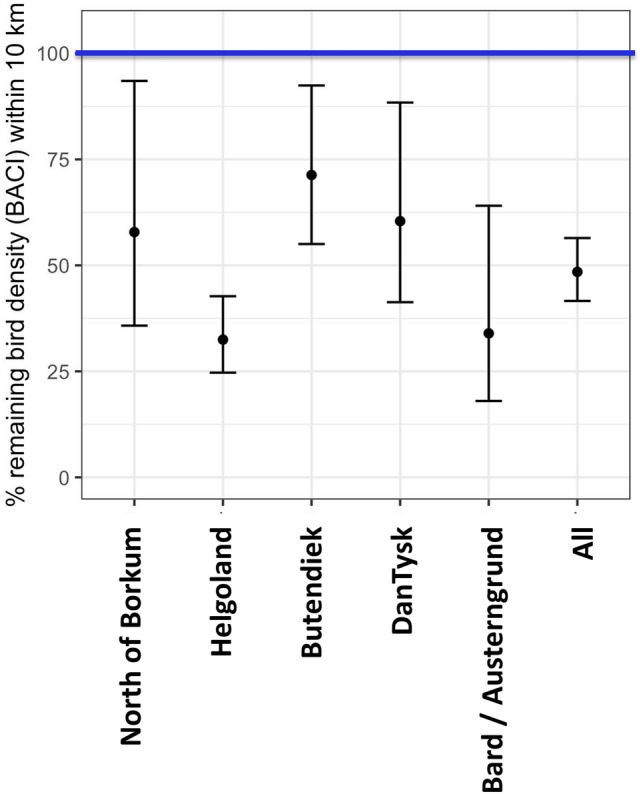
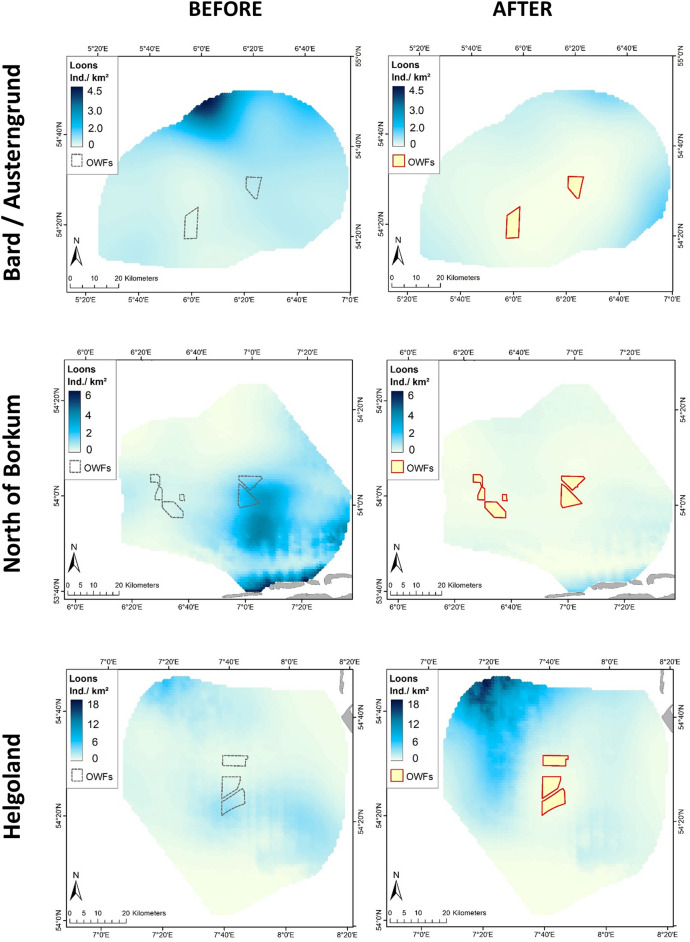
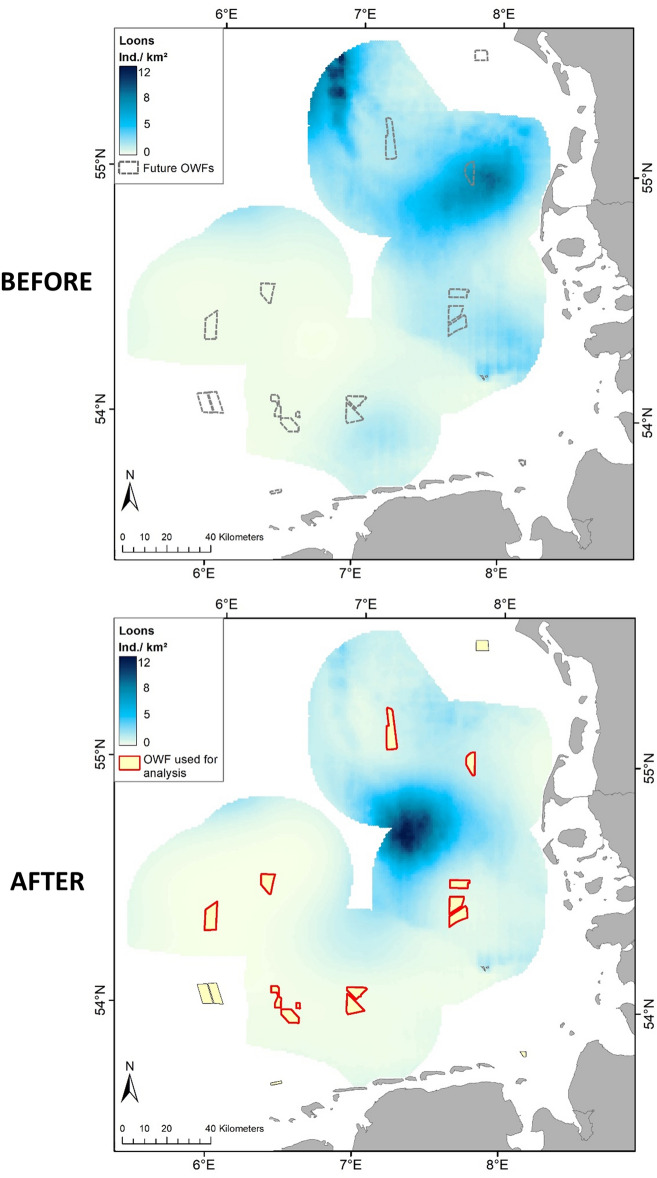
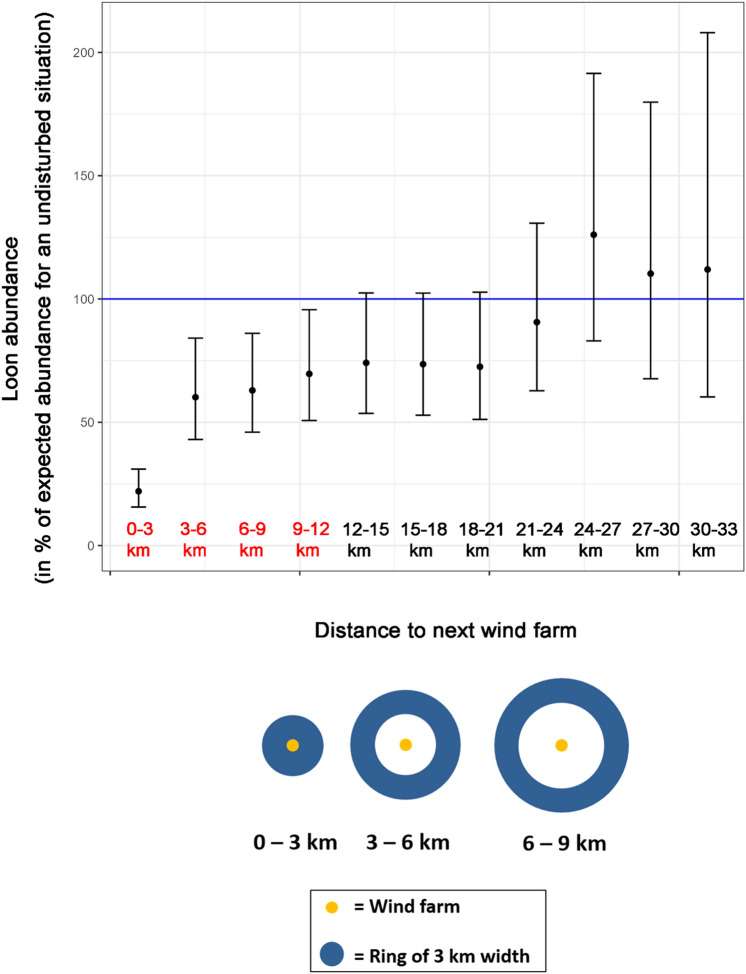
The North Sea is a key area worldwide for the installation of offshore wind farms (OWFs). We analysed data from multiple sources to quantify the effects of OWFs on seabirds from the family Gaviidae (loons) in the German North Sea. The distribution and abundance of loons changed substantially from the period before to the period after OWF construction. Densities of loons were significantly reduced at distances of up to 9-12 km from the OWF footprints. Abundance declined by 94% within the OWF + 1 km zone and by 52% within the OWF + 10 km zone. The observed redistribution was a large-scale effect, with birds aggregating within the study area at large distances from the OWFs. Although renewable energies will be needed to provide a large share of our energy demands in the future, it is necessary to minimize the costs in terms of less-adaptable species, to avoid amplifying the biodiversity crisis.
北海是全球范围内安装海上风电场 (OWFs) 的关键区域。我们分析了来自多个来源的数据,以量化 OWFs 对北海德国地区的 Gaviidae 科(潜鸟)海鸟的影响。潜鸟的分布和数量在 OWF 建设前后发生了重大变化。潜鸟的密度在离 OWF 足迹 9-12 公里的范围内显著降低。在 OWF+1 公里范围内的数量减少了 94%,在 OWF+10 公里范围内减少了 52%。观察到的重新分布是一种大规模的效应,鸟类在远离 OWF 的研究区域内大量聚集。尽管未来我们需要可再生能源来提供我们能源需求的很大一部分,但有必要尽量减少对适应能力较低的物种的成本,以避免加剧生物多样性危机。