Department of Digestive Disease, The First Affiliated Hospital of USTC, Division of Life Sciences and Medicine, University of Science and Technology of China, Hefei, Anhui, China.
Institute of Immunology, the CAS Key Laboratory of Innate Immunity and Chronic Disease, School of Basic Medical Sciences, Division of Life Sciences and Medicine, University of Science and Technology of China, Hefei, Anhui, China.
Cell Res. 2023 May;33(5):372-388. doi: 10.1038/s41422-023-00790-7. Epub 2023 Apr 13.
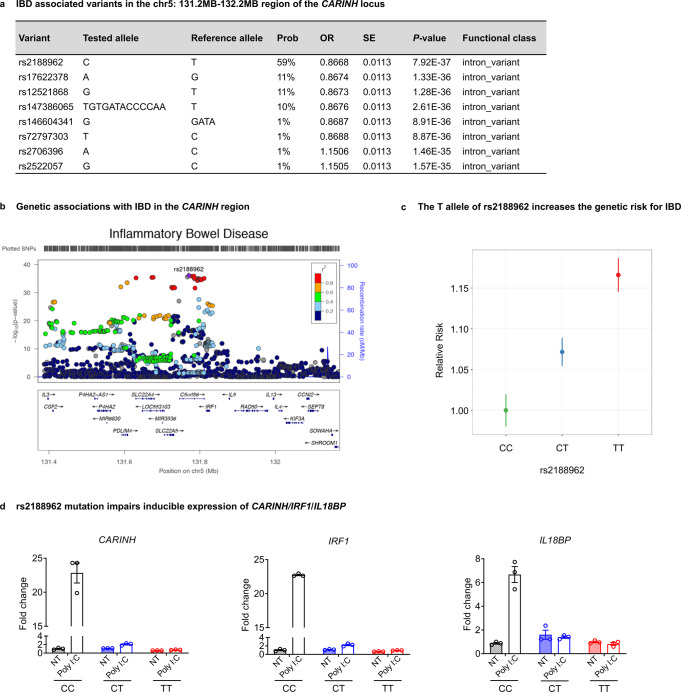
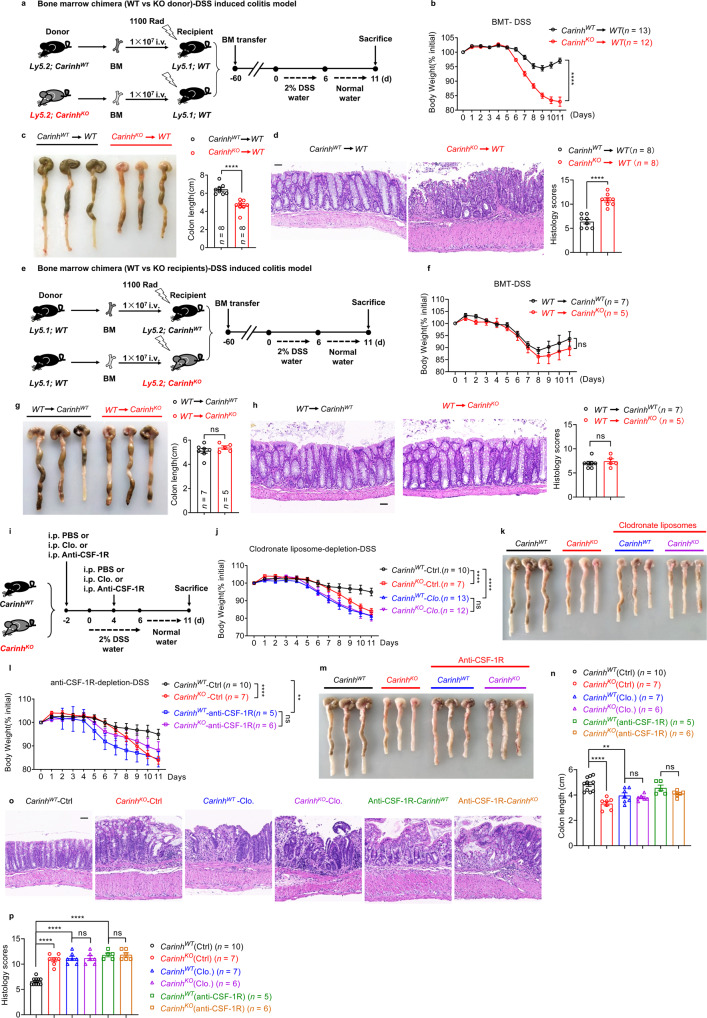
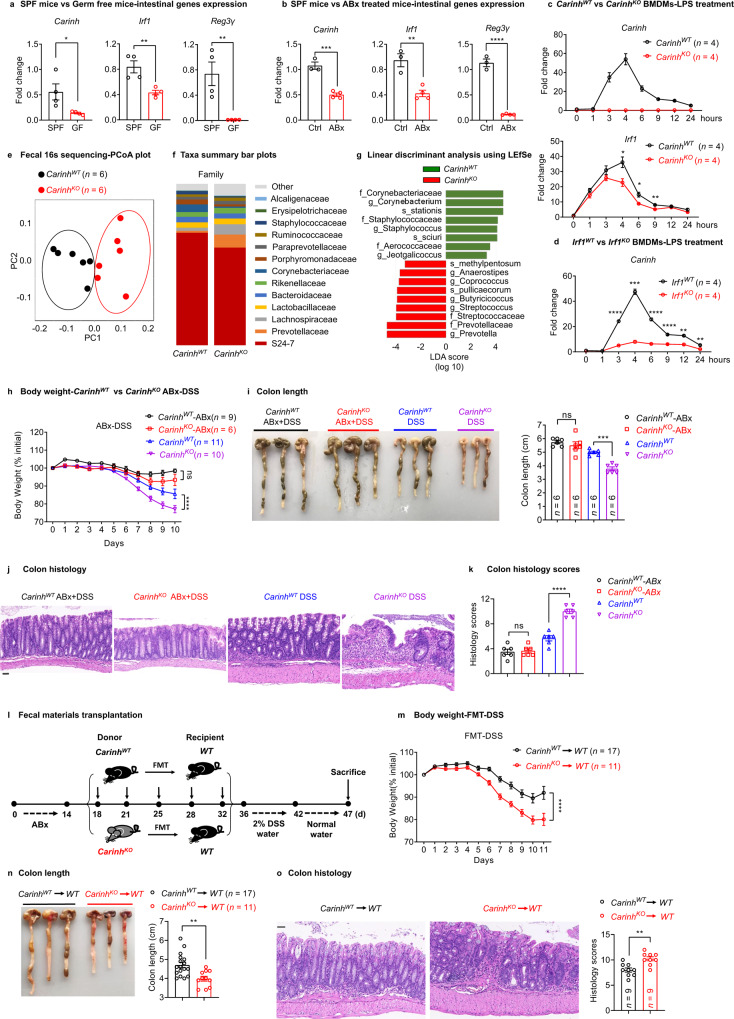
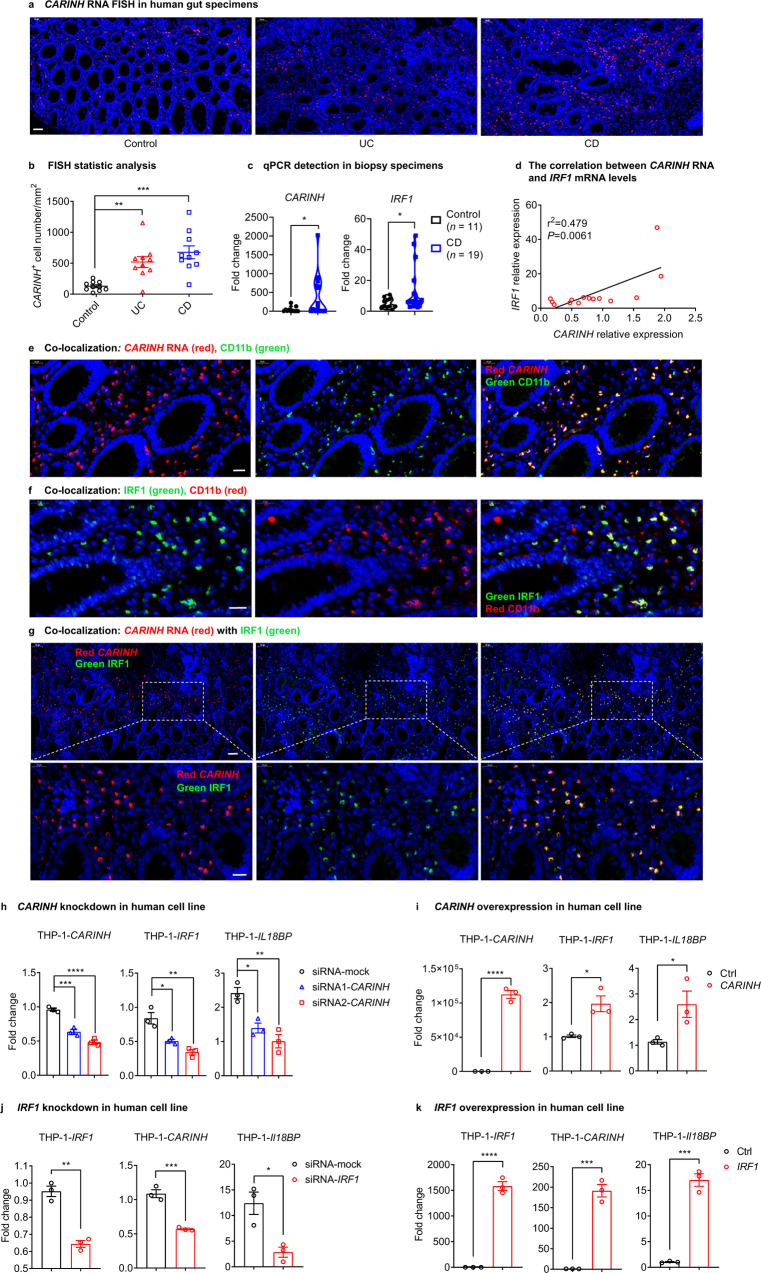
Inflammatory bowel diseases (IBD) are known to have complex, genetically influenced etiologies, involving dysfunctional interactions between the intestinal immune system and the microbiome. Here, we characterized how the RNA transcript from an IBD-associated long non-coding RNA locus ("CARINH-Colitis Associated IRF1 antisense Regulator of Intestinal Homeostasis") protects against IBD. We show that CARINH and its neighboring gene coding for the transcription factor IRF1 together form a feedforward loop in host myeloid cells. The loop activation is sustained by microbial factors, and functions to maintain the intestinal host-commensal homeostasis via the induction of the anti-inflammatory factor IL-18BP and anti-microbial factors called guanylate-binding proteins (GBPs). Extending these mechanistic insights back to humans, we demonstrate that the function of the CARINH/IRF1 loop is conserved between mice and humans. Genetically, the T allele of rs2188962, the most probable causal variant of IBD within the CARINH locus from the human genetics study, impairs the inducible expression of the CARINH/IRF1 loop and thus increases genetic predisposition to IBD. Our study thus illustrates how an IBD-associated lncRNA maintains intestinal homeostasis and protects the host against colitis.
炎症性肠病(IBD)已知具有复杂的、受遗传影响的病因,涉及肠道免疫系统和微生物组之间功能失调的相互作用。在这里,我们描述了与 IBD 相关的长非编码 RNA 基因座(“CARINH-结肠炎相关 IRF1 反义调节肠道内稳态”)的 RNA 转录本如何预防 IBD。我们表明,CARINH 及其编码转录因子 IRF1 的邻近基因一起在宿主髓样细胞中形成正反馈回路。该回路的激活由微生物因子维持,并通过诱导抗炎因子 IL-18BP 和称为鸟苷酸结合蛋白(GBP)的抗微生物因子来维持肠道宿主共生平衡。将这些机制见解扩展到人类,我们证明了 CARINH/IRF1 环在小鼠和人类之间是保守的。从人类遗传学研究中,CARINH 基因座中 IBD 的最可能因果变异体 rs2188962 的 T 等位基因在遗传上损害了 CARINH/IRF1 环的诱导表达,从而增加了 IBD 的遗传易感性。因此,我们的研究说明了与 IBD 相关的 lncRNA 如何维持肠道内稳态并保护宿主免受结肠炎的侵害。