Institute of Molecular Physiology, Shenzhen Bay Laboratory, Shenzhen, Guangdong, China.
Center for Neurointelligence, School of Medicine, Chongqing University, Chongqing, China.
Cell Res. 2023 Jun;33(6):434-447. doi: 10.1038/s41422-023-00800-8. Epub 2023 Apr 13.
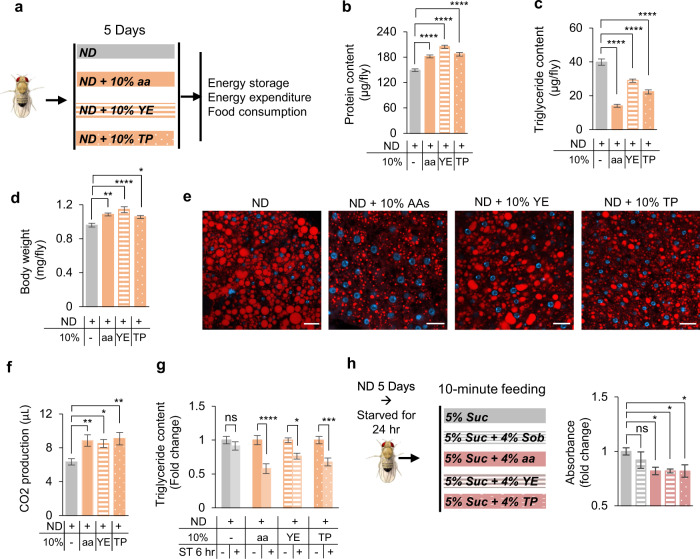
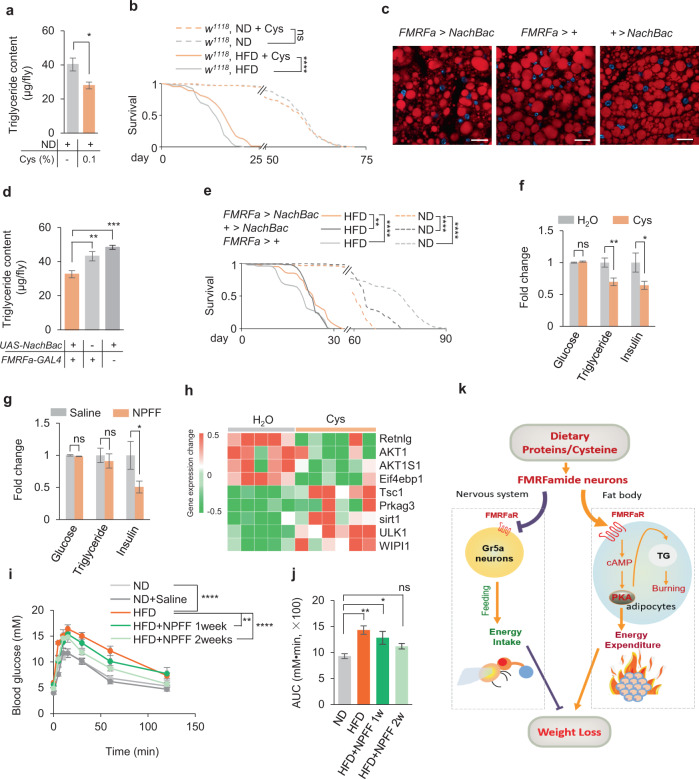
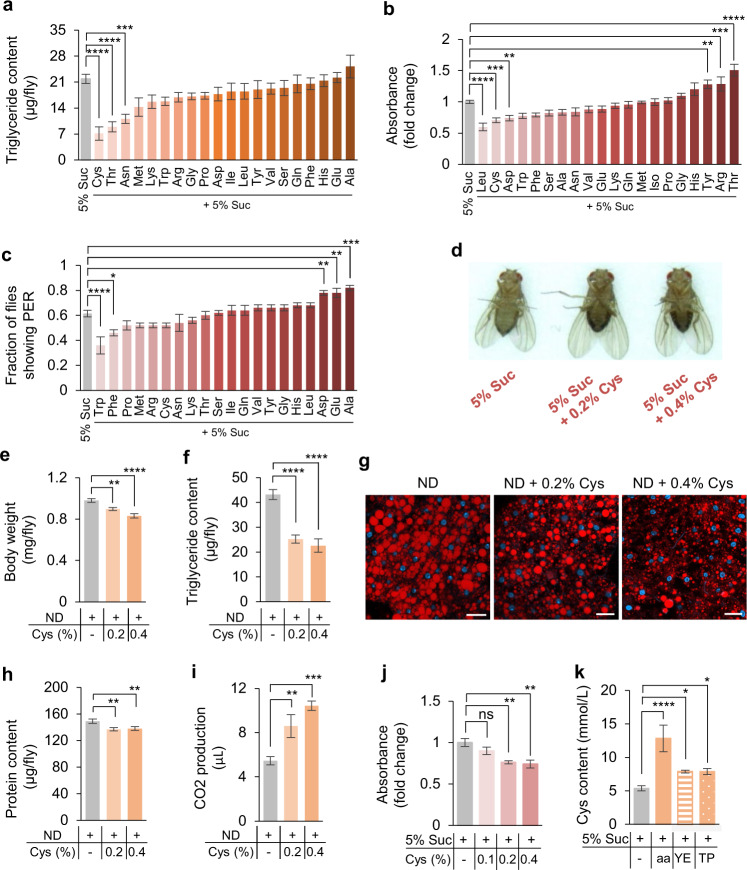
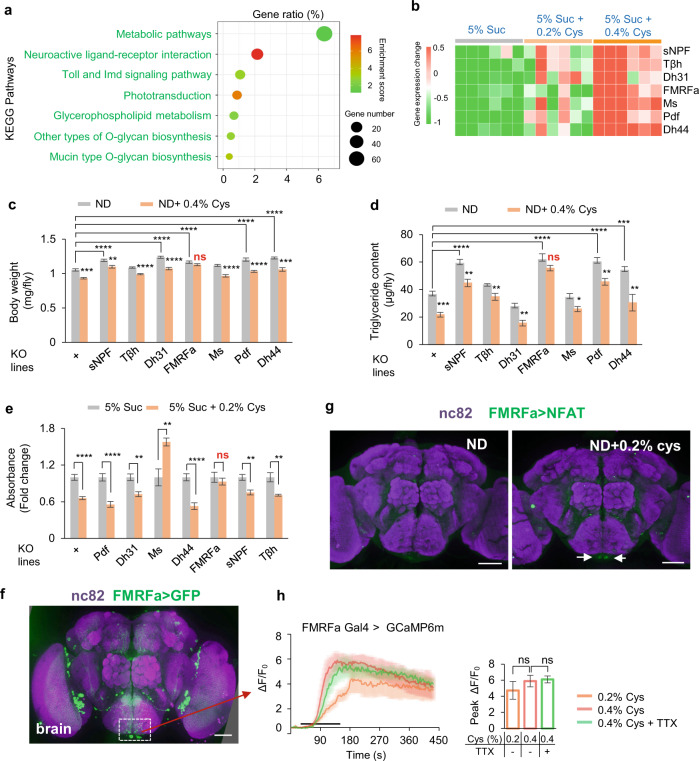
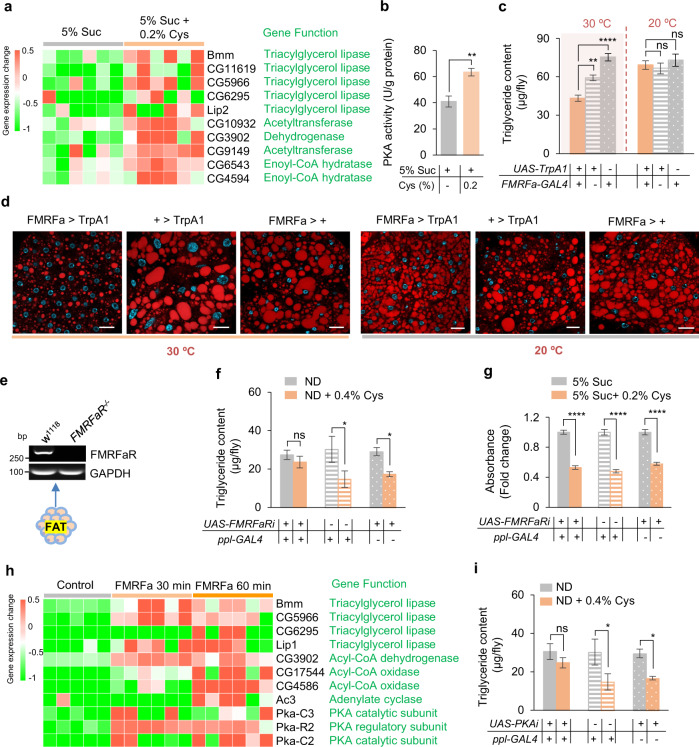
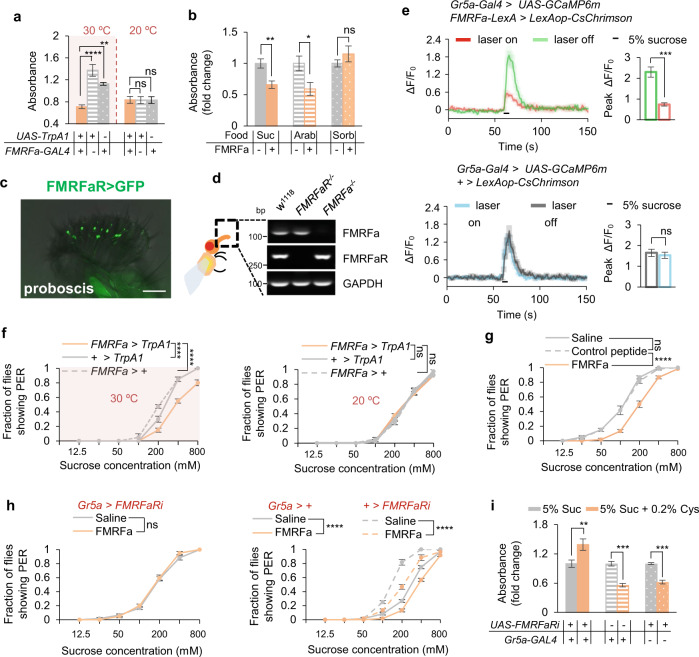
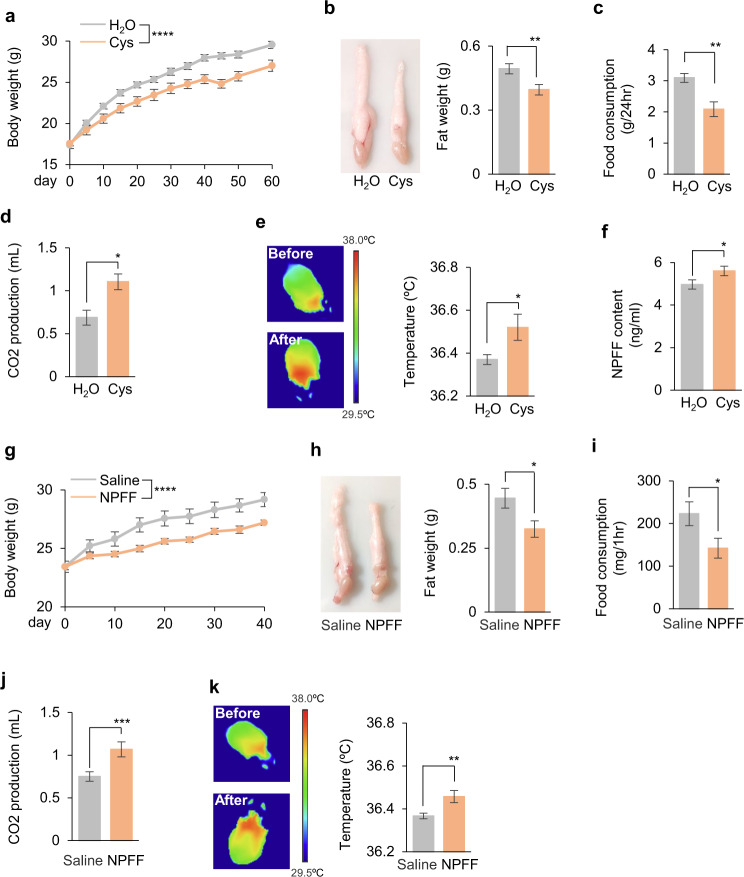
Obesity imposes a global health threat and calls for safe and effective therapeutic options. Here, we found that protein-rich diet significantly reduced body fat storage in fruit flies, which was largely attributed to dietary cysteine intake. Mechanistically, dietary cysteine increased the production of a neuropeptide FMRFamide (FMRFa). Enhanced FMRFa activity simultaneously promoted energy expenditure and suppressed food intake through its cognate receptor (FMRFaR), both contributing to the fat loss effect. In the fat body, FMRFa signaling promoted lipolysis by increasing PKA and lipase activity. In sweet-sensing gustatory neurons, FMRFa signaling suppressed appetitive perception and hence food intake. We also demonstrated that dietary cysteine worked in a similar way in mice via neuropeptide FF (NPFF) signaling, a mammalian RFamide peptide. In addition, dietary cysteine or FMRFa/NPFF administration provided protective effect against metabolic stress in flies and mice without behavioral abnormalities. Therefore, our study reveals a novel target for the development of safe and effective therapies against obesity and related metabolic diseases.
肥胖对全球健康构成威胁,因此需要安全有效的治疗方法。在这里,我们发现富含蛋白质的饮食可显著减少果蝇体内的脂肪储存,这主要归因于饮食中半胱氨酸的摄入。从机制上讲,饮食中的半胱氨酸增加了神经肽 FMRFamide(FMRFa)的产生。增强的 FMRFa 活性通过其同源受体(FMRFaR)同时促进能量消耗和抑制食物摄入,这两者都有助于减肥效果。在脂肪组织中,FMRFa 信号通过增加 PKA 和脂肪酶活性促进脂肪分解。在甜味感知味觉神经元中,FMRFa 信号抑制了食欲感知,从而减少了食物摄入。我们还证明,通过神经肽 FF(NPFF)信号,即一种哺乳动物 RFamide 肽,饮食中的半胱氨酸在小鼠中以类似的方式发挥作用。此外,饮食中的半胱氨酸或 FMRFa/NPFF 的给药在不引起行为异常的情况下,为果蝇和小鼠提供了对抗代谢应激的保护作用。因此,我们的研究揭示了针对肥胖症和相关代谢性疾病开发安全有效的治疗方法的新靶点。