
评估不同物种对盐胁迫番茄(品种名未给出)的促生长功效。
Evaluation of the growth-inducing efficacy of various species on the salt-stressed tomato ( Mill.).
作者信息
Patani Anil, Prajapati Dharmendra, Ali Daoud, Kalasariya Haresh, Yadav Virendra Kumar, Tank Jigna, Bagatharia Snehal, Joshi Madhvi, Patel Ashish
机构信息
Department of Biotechnology, Smt. S. S. Patel Nootan Science and Commerce College, Sankalchand Patel University, Visnagar, Gujarat, India.
Department of Zoology, College of Science, King Saud University, Riyadh, Saudi Arabia.
出版信息
Front Plant Sci. 2023 Mar 28;14:1168155. doi: 10.3389/fpls.2023.1168155. eCollection 2023.
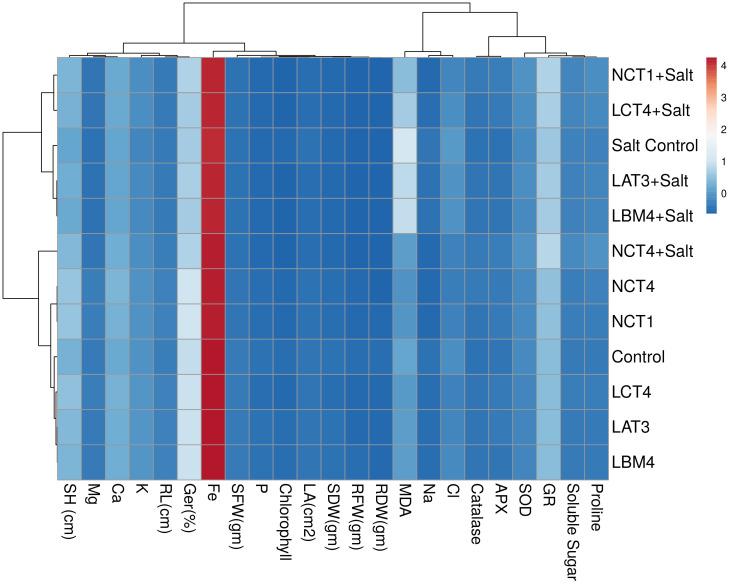
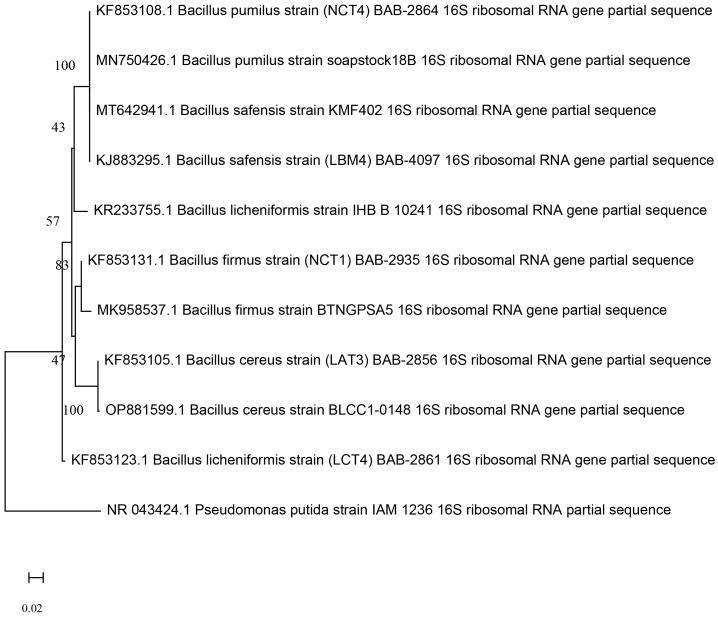
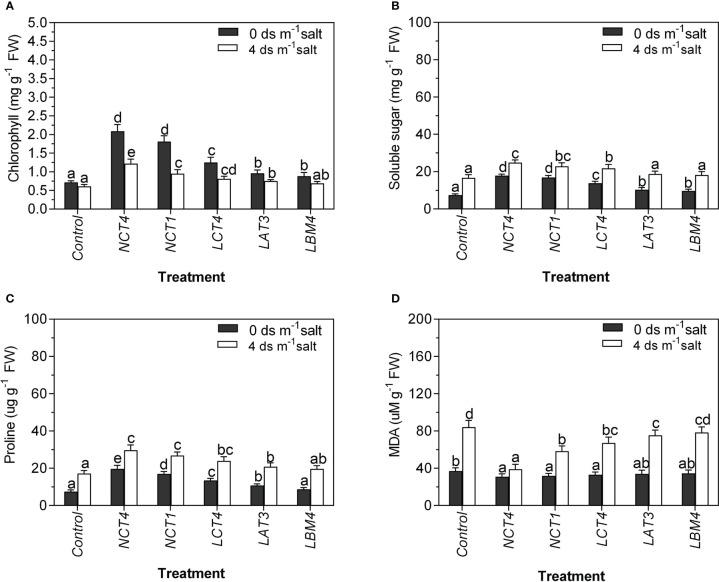
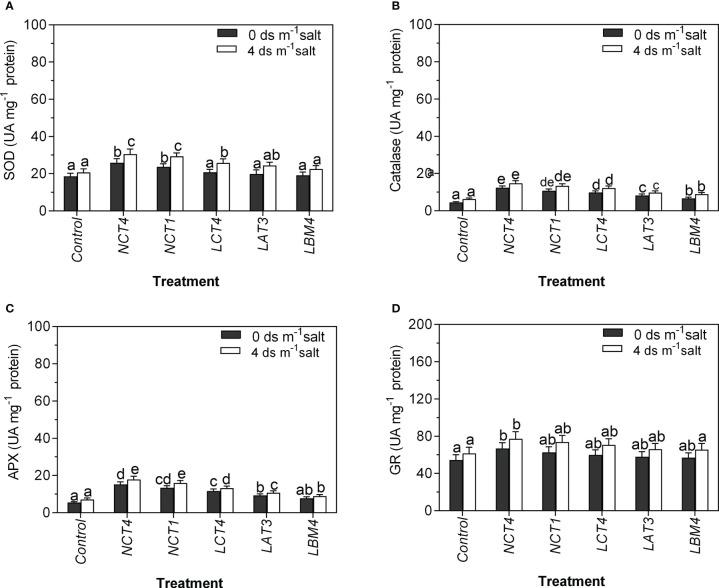
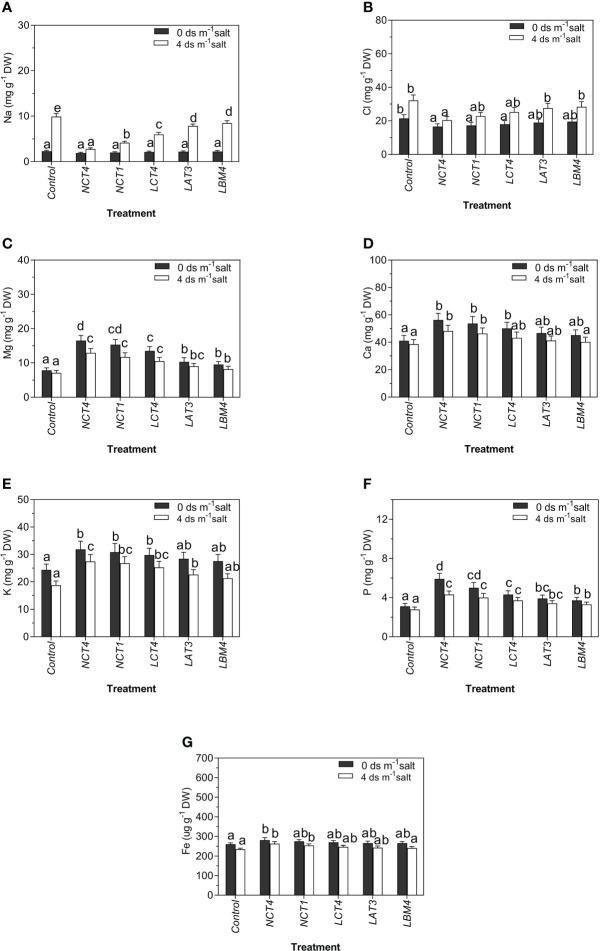
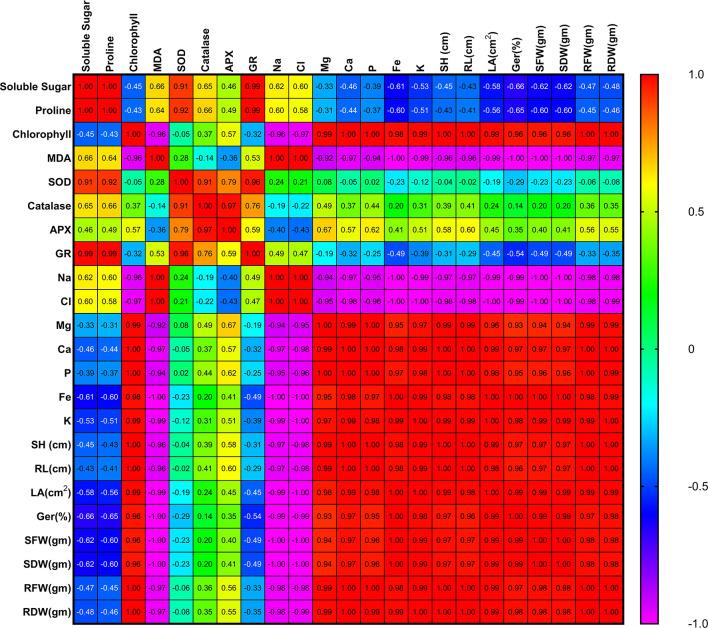
Plants are affected by salt stress in a variety of ways, including water deficiency, ion toxicity, nutrient imbalance, and oxidative stress, all of which can cause cellular damage or plant death. Halotolerant plant growth-promoting rhizobacteria (PGPR) could be a viable alternative for tomato plants growing in arid and semi-arid environments. The aim of this research was to isolate halotolerant plant growth promoting sp. to promote tomato ( Mill.) growth and salt stress resistance. 107 PGPR strains were isolated from the rhizospheres of 'Kesudo' ( Lam.), 'Kawaria' ( L.), and 'Arjun' ( Roxb.) plants to test their plant growth promoting abilities, including indole-3-acetic acid, phosphate solubilization, siderophore production, and ACC deaminase activity. Five bacterial strains ( (NCT4), (NCT1), (LCT4), (LAT3), and (LBM4)) were chosen for 16S rRNA on the basis of PGPR traits. Compared to PGPR untreated plants, tomato plants developed from PGPR-treated seeds had considerably increased germination percentage, seedling growth, plant height, dry weight, and leaf area. As comparison to PGPR non-inoculated plants, salt-stressed tomato plants treated with PGPR strains had higher levels of total soluble sugar, proline, and chlorophyll as well as higher levels of SOD, CAT, APX, and GR activity. PGPR-inoculated salt-stressed tomato plants had lower MDA, sodium, and chloride levels than non-inoculated plants. In addition, magnesium, calcium, potassium, phosphorus, and iron levels were higher in PGPR treated plants when subjected to salt stress. These results indicate that halotolerant PGPR strains can increase tomato productivity and tolerance to salt stress by removing salt stress's negative effects on plant growth.
植物受到盐胁迫的影响方式多种多样,包括水分亏缺、离子毒性、营养失衡和氧化应激,所有这些都可能导致细胞损伤或植物死亡。耐盐促生根际细菌(PGPR)可能是在干旱和半干旱环境中种植番茄的一种可行替代方案。本研究的目的是分离耐盐促生菌,以促进番茄(品种名未完整给出)的生长和抗盐胁迫能力。从‘Kesudo’(品种名未完整给出)、‘Kawaria’(品种名未完整给出)和‘Arjun’(品种名未完整给出)植物的根际分离出107株PGPR菌株,以测试它们的促植物生长能力,包括吲哚 - 3 - 乙酸、解磷、铁载体产生和ACC脱氨酶活性。基于PGPR特性,选择了5株细菌菌株(菌株名未完整给出)进行16S rRNA分析。与未用PGPR处理的植物相比,用PGPR处理种子培育出的番茄植株发芽率、幼苗生长、株高、干重和叶面积显著增加。与未接种PGPR的植物相比,用PGPR菌株处理的盐胁迫番茄植株总可溶性糖、脯氨酸和叶绿素水平更高,超氧化物歧化酶(SOD)、过氧化氢酶(CAT)、抗坏血酸过氧化物酶(APX)和谷胱甘肽还原酶(GR)活性也更高。接种PGPR的盐胁迫番茄植株丙二醛(MDA)、钠和氯水平低于未接种的植株。此外,在盐胁迫下,PGPR处理的植物中镁、钙、钾、磷和铁水平更高。这些结果表明,耐盐PGPR菌株可以通过消除盐胁迫对植物生长的负面影响来提高番茄的生产力和耐盐胁迫能力。
 Zotero 插件