Institute of Medical Biology, Chinese Academy of Medical Sciences and Peking Union Medical College, Yunnan, People's Republic of China.
State Key Laboratory of Medical Molecular Biology, Department of Molecular Biology and Biochemistry, Institute of Basic Medical Sciences, Medical Primate Research Center, Neuroscience Center, Chinese Academy of Medical Sciences, School of Basic Medicine, Peking Union Medical College, Beijing, People's Republic of China.
Emerg Microbes Infect. 2023 Dec;12(1):2203782. doi: 10.1080/22221751.2023.2203782.
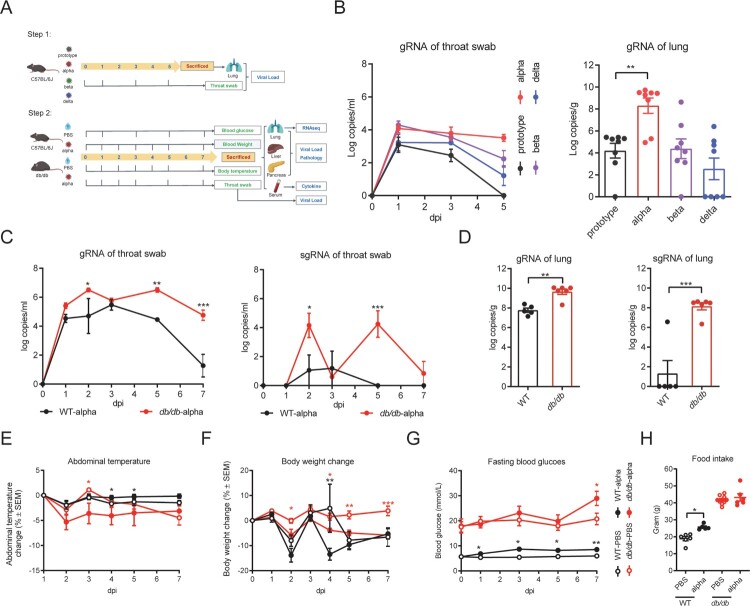
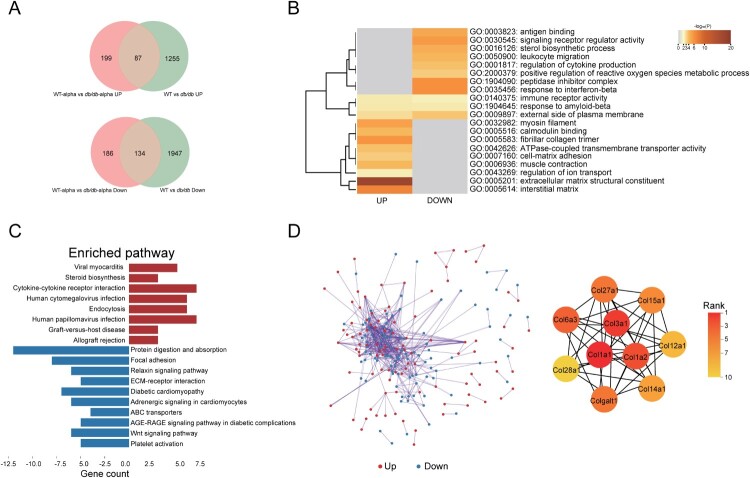
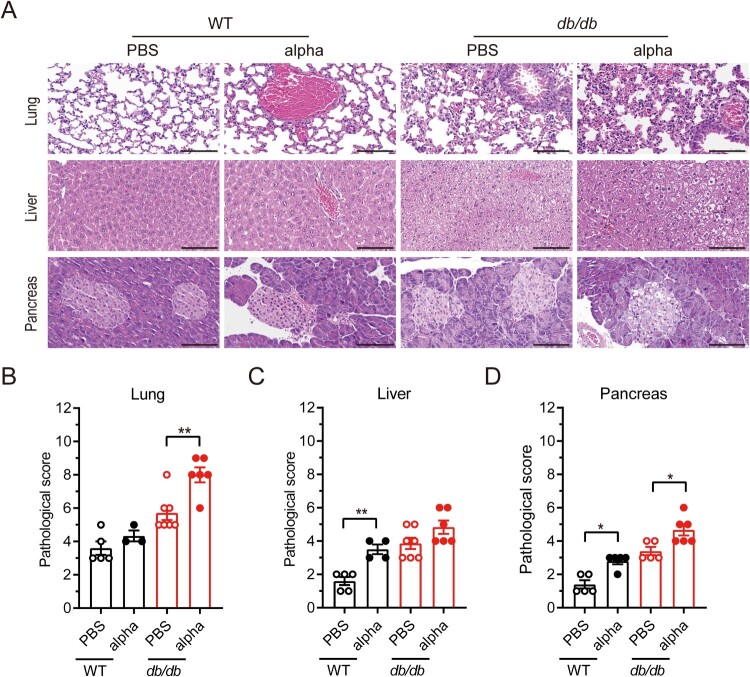
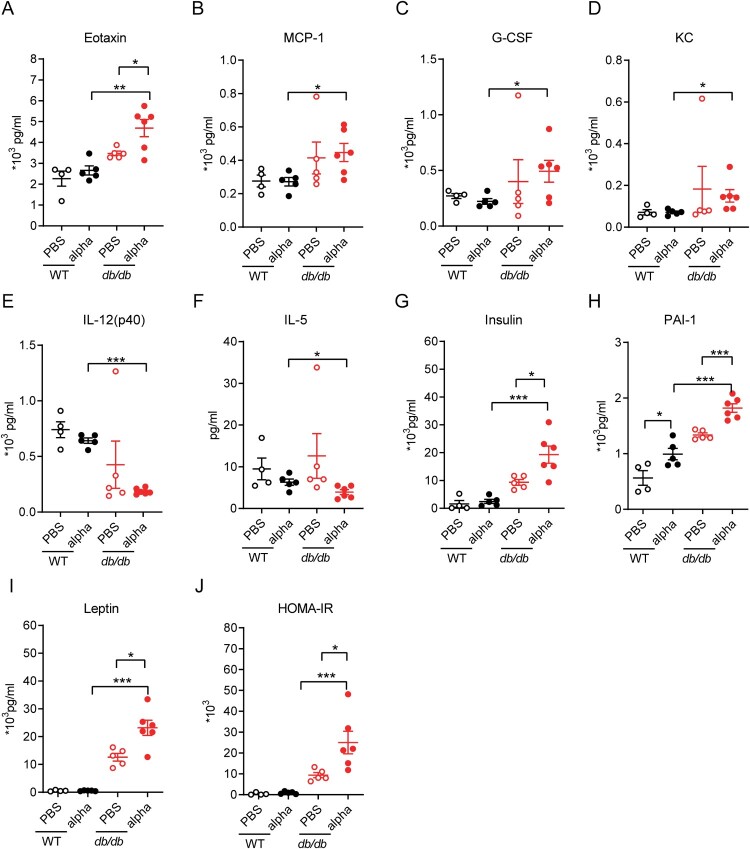
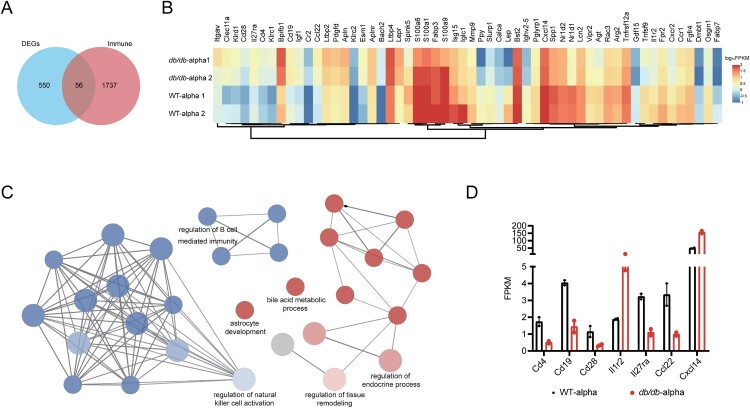
Multiple clinical and epidemiological studies have shown an interconnection between coronavirus disease 2019 (COVID-19) and diabetes, but experimental evidence is still lacking. Understanding the interplay between them is important because of the global health burden of COVID-19 and diabetes. We found that mice were susceptible to the alpha strain of SARS-CoV-2. Moreover, diabetic mice with leptin receptor gene deficiency ( mice) showed a higher viral load in the throat and lung and slower virus clearance in the throat after infection than mice. Histological and multifactor analysis revealed more advanced pulmonary injury and serum inflammation in SARS-CoV-2 infected diabetic mice. Moreover, SARS-CoV-2 infected diabetic mice exhibited more severe insulin resistance and islet cell loss than uninfected diabetic mice. By RNA sequencing analysis, we found that diabetes may reduce the collagen level, suppress the immune response and aggravate inflammation in the lung after infection, which may account for the greater susceptibility of diabetic mice and their more severe lung damage after infection. In summary, we successfully established a SARS-CoV-2 infected diabetic mice model and demonstrated that diabetes and COVID-19 were risk factors for one another.
多项临床和流行病学研究表明,2019 年冠状病毒病(COVID-19)和糖尿病之间存在关联,但仍缺乏实验证据。了解它们之间的相互作用很重要,因为 COVID-19 和糖尿病给全球健康带来了负担。我们发现,小鼠易感染 SARS-CoV-2 的 alpha 株。此外,瘦素受体基因缺失的糖尿病小鼠(db/db 小鼠)在感染后喉咙和肺部的病毒载量更高,喉咙中的病毒清除速度更慢。组织学和多因素分析显示,感染 SARS-CoV-2 的糖尿病小鼠的肺部损伤更严重,血清炎症反应更强。此外,感染 SARS-CoV-2 的糖尿病小鼠比未感染的糖尿病小鼠表现出更严重的胰岛素抵抗和胰岛细胞丢失。通过 RNA 测序分析,我们发现糖尿病可能会降低肺部胶原水平,抑制感染后的免疫反应并加重炎症,这可能是糖尿病小鼠易感性增加以及感染后肺部损伤更严重的原因。总之,我们成功建立了 SARS-CoV-2 感染的糖尿病小鼠模型,并证明糖尿病和 COVID-19 相互之间是危险因素。