Li Huanyu, Wang Daofeng, Ho Cheong Wong, Shan Dan
Department of Pharmacology, School of Pharmacy, China Medical University, Shenyang, Liaoning, 110122, China.
Liaoning Key Laboratory of Molecular Targeted Anti-Tumor Drug Development and Evaluation, Liaoning Cancer Immune Peptide Drug Engineering Technology Research Center, Key Laboratory of Precision Diagnosis and Treatment of Gastrointestinal Tumors (China Medical University), Ministry of Education, Shenyang, Liaoning, 110122, China.
Heliyon. 2024 Mar 10;10(6):e27627. doi: 10.1016/j.heliyon.2024.e27627. eCollection 2024 Mar 30.
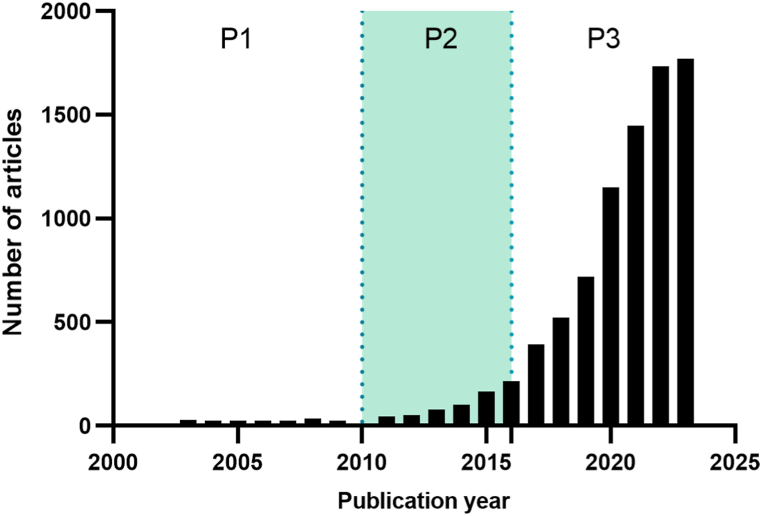
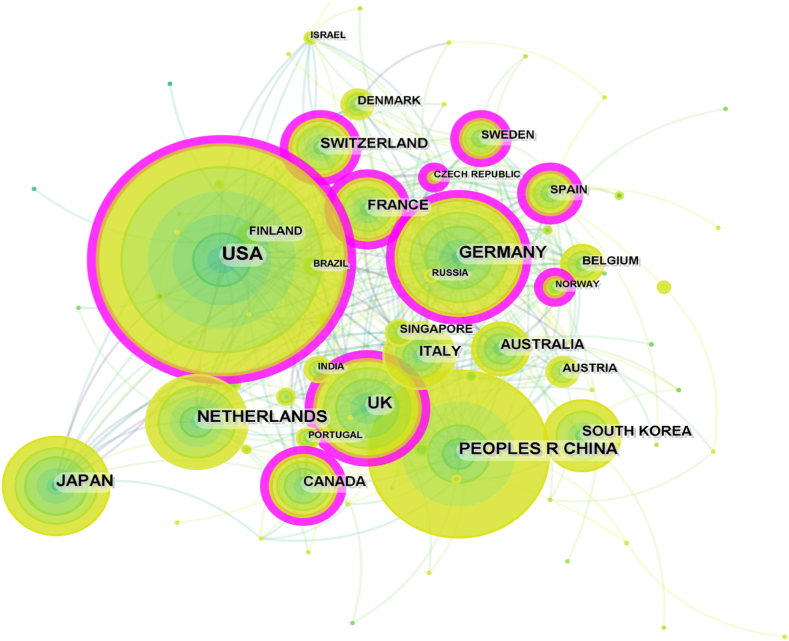
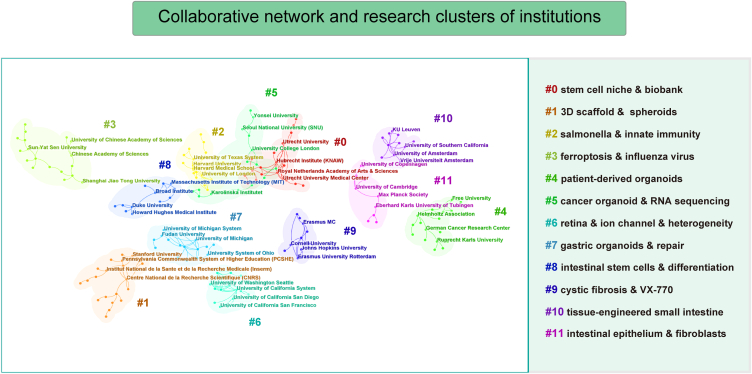
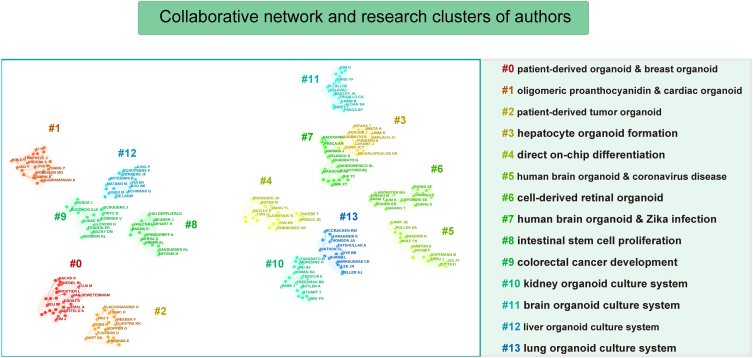
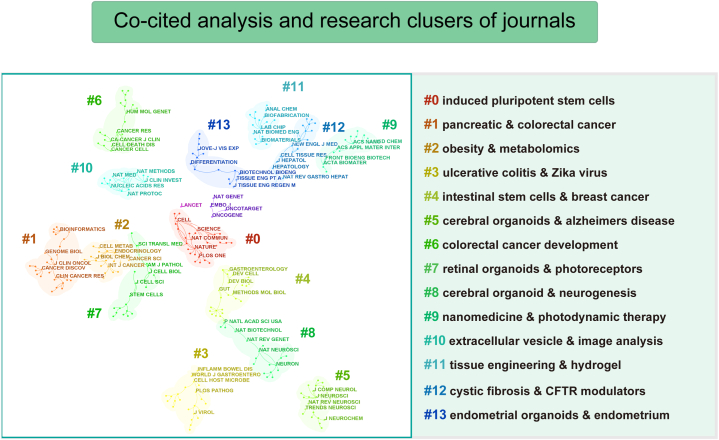
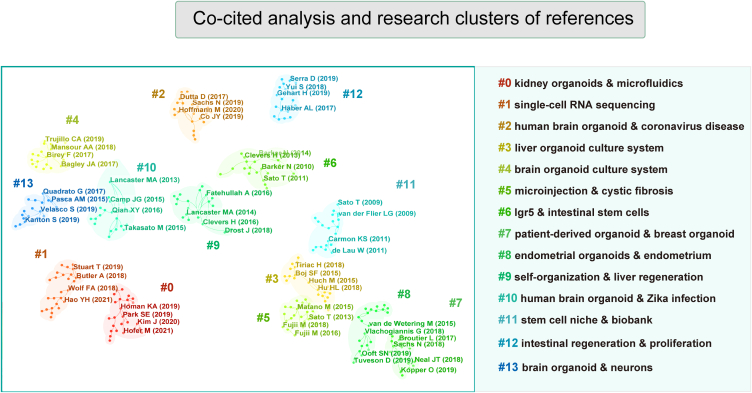
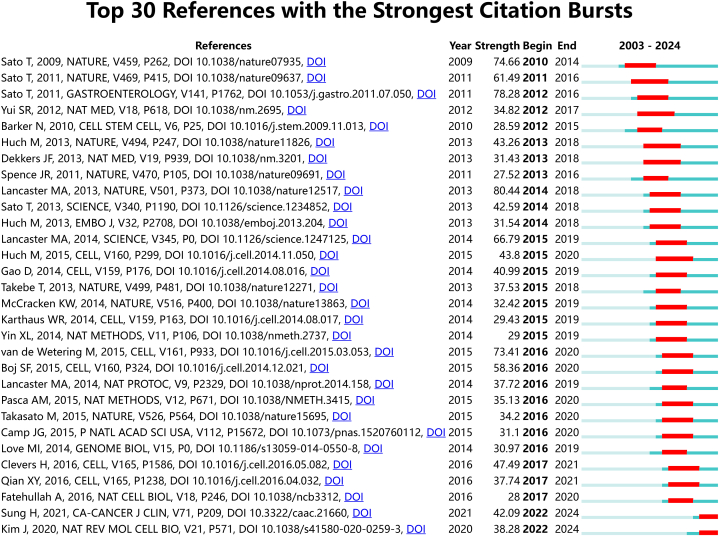
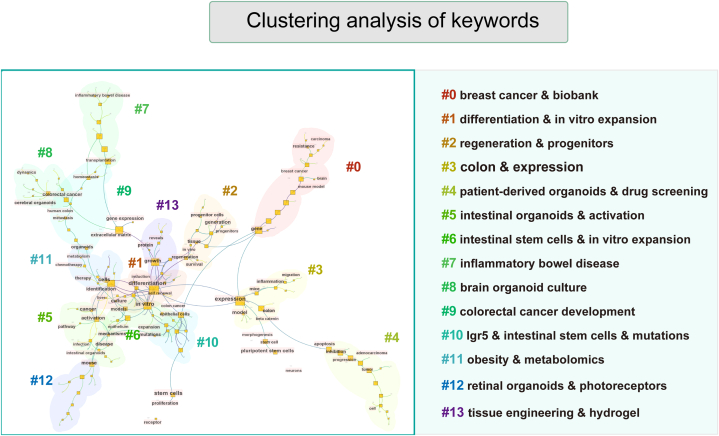
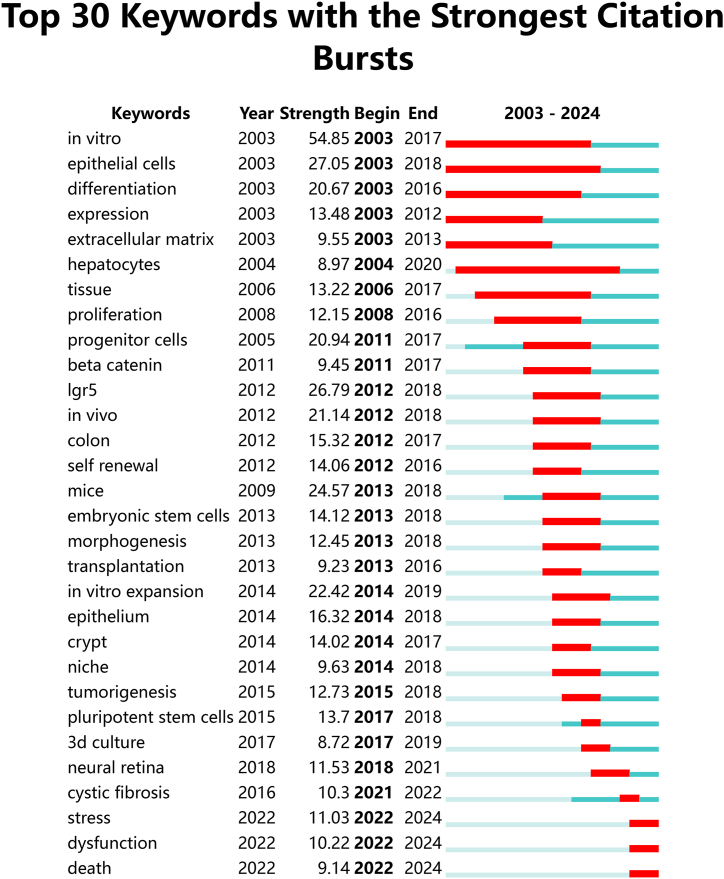
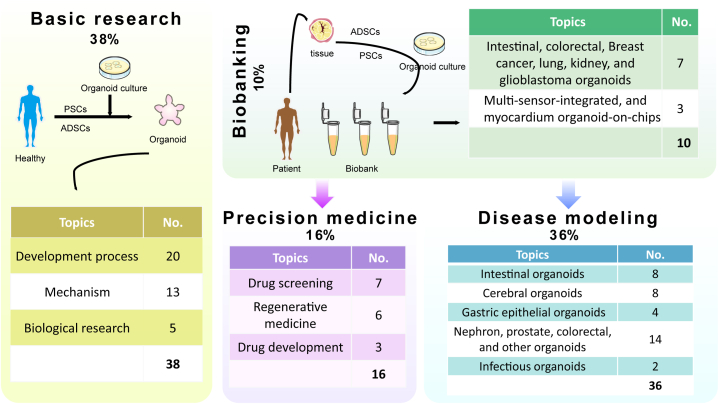
The emergence and rapid development of human organoids have provided the possibility to replace animal models in treating human diseases. Intelligence studies help focus on research hotspots and address key mechanistic issues. Currently, few comprehensive studies describe the characteristics of human organoid research. In this study, we extracted 8,591 original articles on organoids from the Web of Science core collection database over the past two decades and conducted intelligence analysis using CiteSpace. The number of publications in this field has experienced rapid growth in the last ten years (almost 70-fold increase since 2009). The United States, China, Germany, Netherlands, and UK have strong collaborations in publishing articles. Clevers Hans, Van Der Laan, Jason R Spence, and Sato Toshiro have made significant contributions to advancing progress in this field. Clustering and burst analysis categorized research hotspots into tissue model and functional construction, intercellular signaling, immune mechanisms, and tumor metastasis. Organoid research in highly cited articles covers four major areas: basic research (38%), involving stem cell developmental processes and cell-cell interactions; biobanking (10%), with a focus on organoid cultivation; precision medicine (16%), emphasizing cell therapy and drug development; and disease modeling (36%), including pathogen analysis and screening for disease-related genetic variations. The main obstacles currently faced in organoid research include cost and technology, vascularization of cells, immune system establishment, international standard protocols, and limited availability of high-quality clinical trial data. Future research will focus on cost-saving measures, technology sharing, development of international standards, and conducting high-level clinical trials.
人类类器官的出现和快速发展为在治疗人类疾病中取代动物模型提供了可能性。情报研究有助于聚焦研究热点并解决关键机制问题。目前,很少有综合性研究描述人类类器官研究的特征。在本研究中,我们从科学网核心合集数据库中提取了过去二十年里8591篇关于类器官的原始文章,并使用CiteSpace进行情报分析。该领域的出版物数量在过去十年中经历了快速增长(自2009年以来增长了近70倍)。美国、中国、德国、荷兰和英国在文章发表方面有很强的合作。克莱弗斯·汉斯、范德·拉恩、贾森·R·斯彭斯和佐藤俊郎为推动该领域的进展做出了重大贡献。聚类和突现分析将研究热点分为组织模型与功能构建、细胞间信号传导、免疫机制和肿瘤转移。高被引文章中的类器官研究涵盖四个主要领域:基础研究(38%),涉及干细胞发育过程和细胞间相互作用;生物样本库(10%),重点是类器官培养;精准医学(16%),强调细胞治疗和药物开发;以及疾病建模(36%),包括病原体分析和疾病相关基因变异的筛查。类器官研究目前面临的主要障碍包括成本和技术、细胞血管化、免疫系统建立、国际标准方案以及高质量临床试验数据的可用性有限。未来的研究将集中在成本节约措施、技术共享、国际标准的制定以及开展高水平的临床试验。