Department of Psychology, University of Missouri-Kansas City, 5030 Cherry St, Kansas City, MO, 64110, USA.
Center for Children's Healthy Lifestyles & Nutrition, Department of Pediatrics, Children's Mercy, 610 E. 2nd St, Kansas City, MO, 66108, USA.
Sci Rep. 2023 Apr 15;13(1):6145. doi: 10.1038/s41598-023-32823-x.
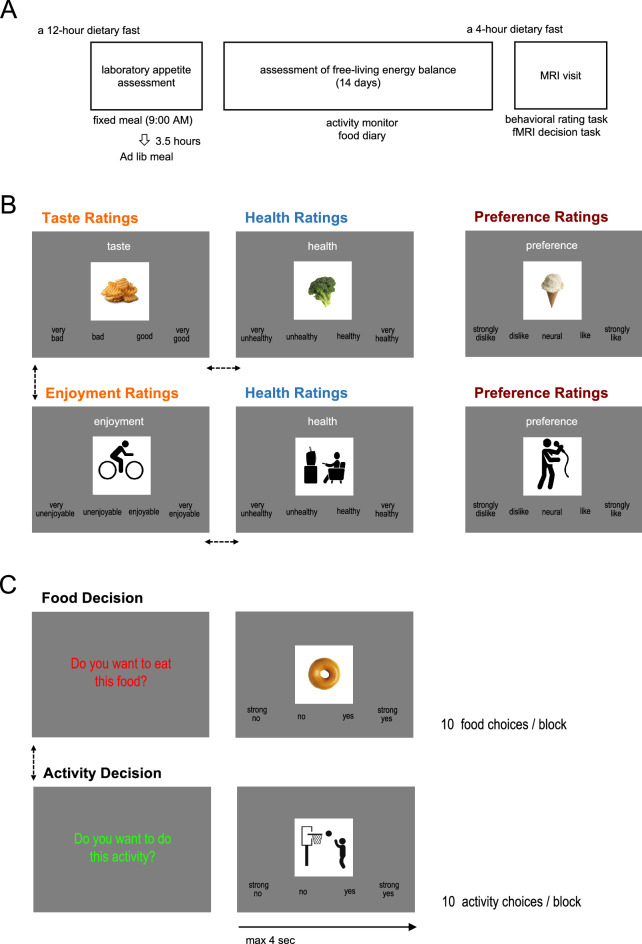
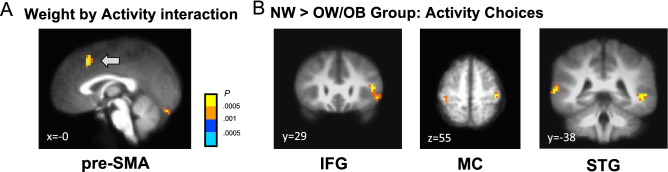
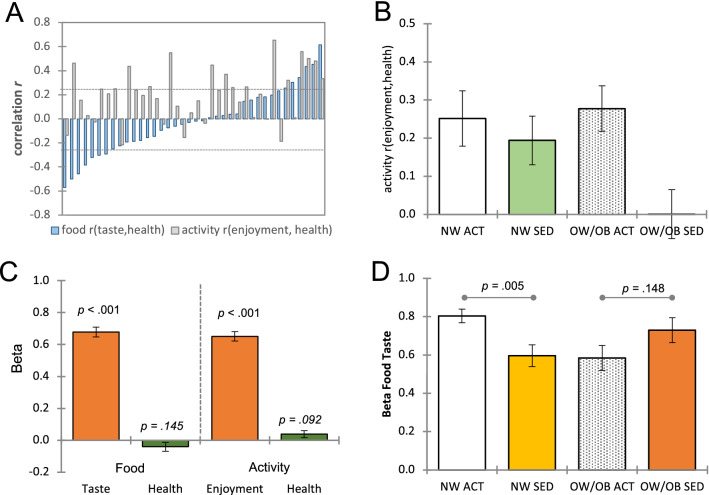
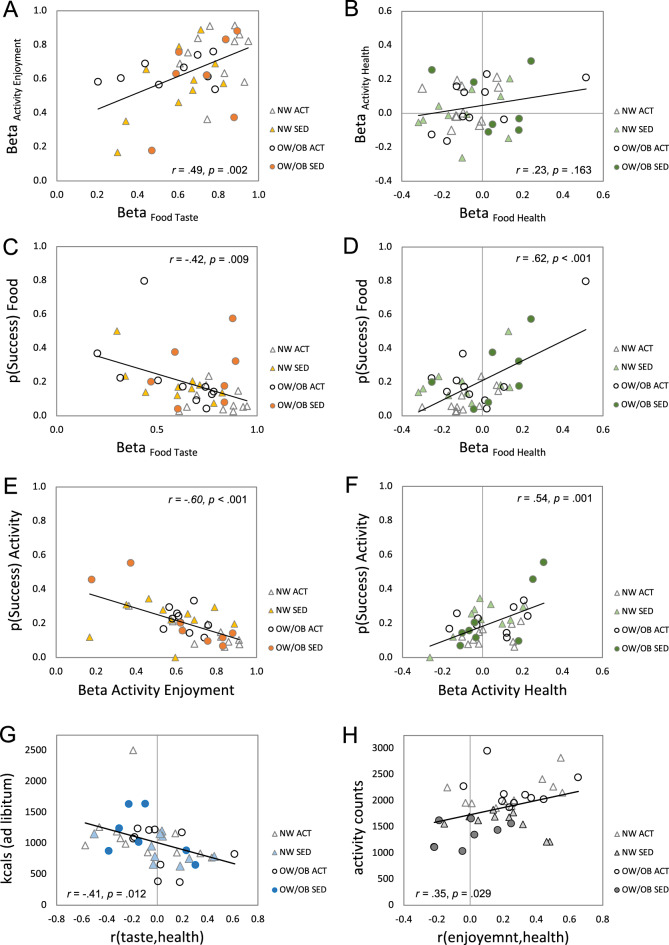
We examined the neurocomputational mechanisms in which male adolescents make food and physical activity decisions and how those processes are influenced by body weight and physical activity levels. After physical activity and dietary assessments, thirty-eight males ages 14-18 completed the behavioral rating and fMRI decision tasks for food and physical activity items. The food and physical activity self-control decisions were significantly correlated with each other. In both, taste- or enjoyment-oriented processes were negatively associated with successful self-control decisions, while health-oriented processes were positively associated. The correlation between taste/enjoyment and healthy attribute ratings predicted actual laboratory food intake and physical activities (2-week activity monitoring). fMRI data showed the decision values of both food and activity are encoded in the ventromedial prefrontal cortex, suggesting both decisions share common reward value-related circuits at the time of choice. Compared to the group with overweight/obese, the group with normal weight showed stronger brain activations in the cognitive control, multisensory integration, and motor control regions during physical activity decisions. For both food and physical activity, self-controlled decisions utilize similar computational and neurobiological mechanisms, which may provide insights into how to promote healthy food and physical activity decisions.
我们研究了男性青少年做出食物和体育活动决策的神经计算机制,以及这些过程如何受到体重和体育活动水平的影响。在进行体育活动和饮食评估后,38 名 14-18 岁的男性完成了食物和体育活动项目的行为评分和 fMRI 决策任务。食物和体育活动的自我控制决策之间存在显著的相关性。在这两种决策中,口味或享受导向的过程与成功的自我控制决策呈负相关,而健康导向的过程则呈正相关。口味/享受和健康属性评分之间的相关性预测了实际的实验室食物摄入和体育活动(2 周的活动监测)。fMRI 数据显示,食物和活动的决策值都被编码在腹内侧前额叶皮层,这表明在选择时,两种决策都共享共同的与奖励价值相关的回路。与超重/肥胖组相比,正常体重组在进行体育活动决策时,在认知控制、多感觉整合和运动控制区域的大脑活动更强。对于食物和体育活动,自我控制决策都利用了相似的计算和神经生物学机制,这可能为如何促进健康的食物和体育活动决策提供了一些思路。