The First Clinical Medical College of Lanzhou University, Lanzhou, 730000, China.
Gansu University of Chinese Medicine, Lanzhou, 730000, China.
Stem Cell Res Ther. 2023 Apr 15;14(1):91. doi: 10.1186/s13287-023-03332-5.
The success of stem cell therapy for knee osteoarthritis (KOA) in preclinical animal models has accelerated the pace of clinical translation. However, it remains uncertain whether the current scientific evidence supports the clinical application of stem cells in treating KOA. A comprehensive evaluation of the safety and efficacy of stem cell therapies and scientific evidence quality is necessary.
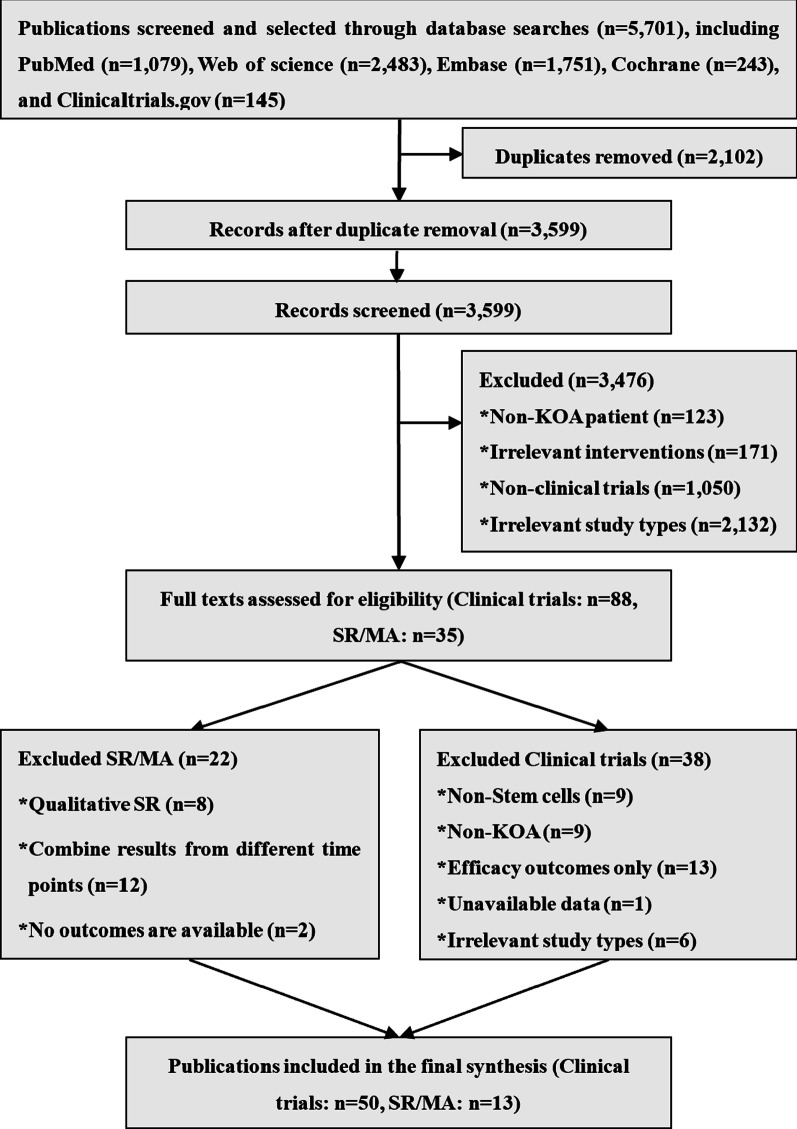
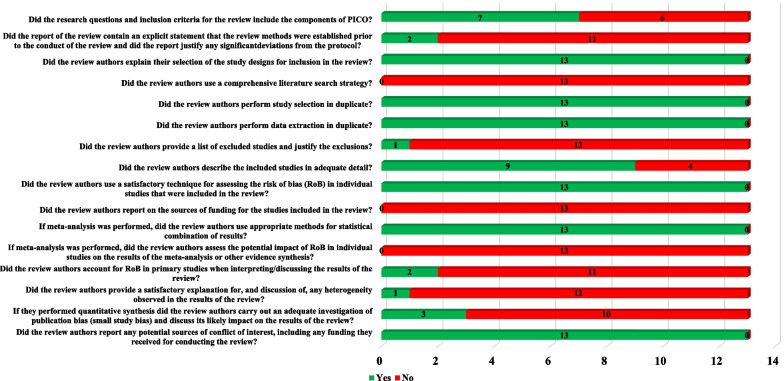
Using "stem cells" and "knee osteoarthritis" as the search terms, several databases, including PubMed, Web of Science, Cochrane, Embase, and Clinicaltrials.gov, were searched on August 25, 2022, and updated on February 27, 2023. Clinical studies that reported adverse reactions (ARs) of stem cell therapy in KOA patients were included without limiting the type of studies. Quantitative systematic reviews of stem cell therapy for KOA that conducted meta-analysis were included. Two researchers conducted literature screening and data extraction independently, and the evidence quality was evaluated according to the Institute of Health Economics and AMSTAR 2 criteria.
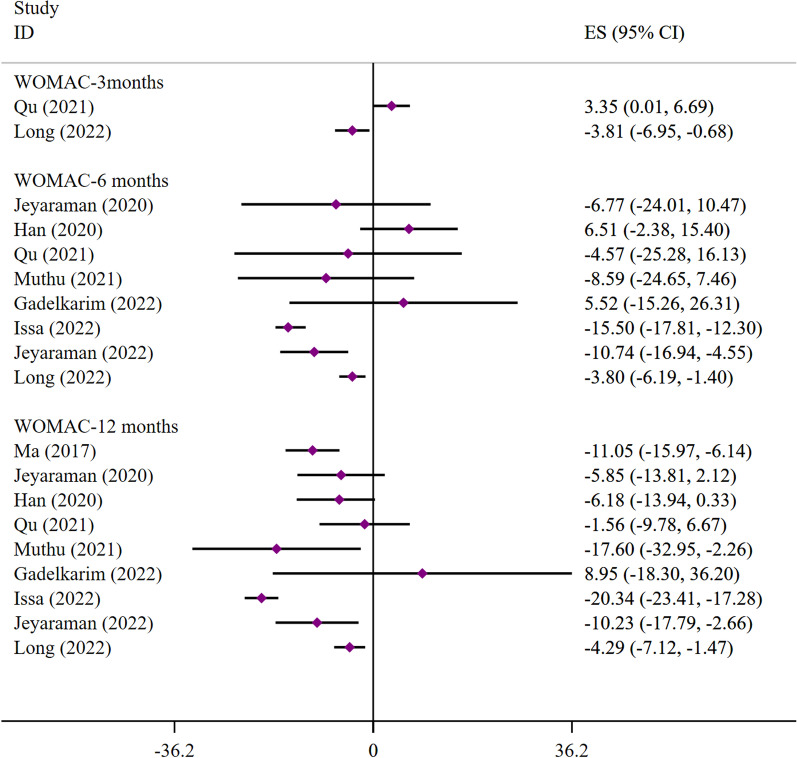
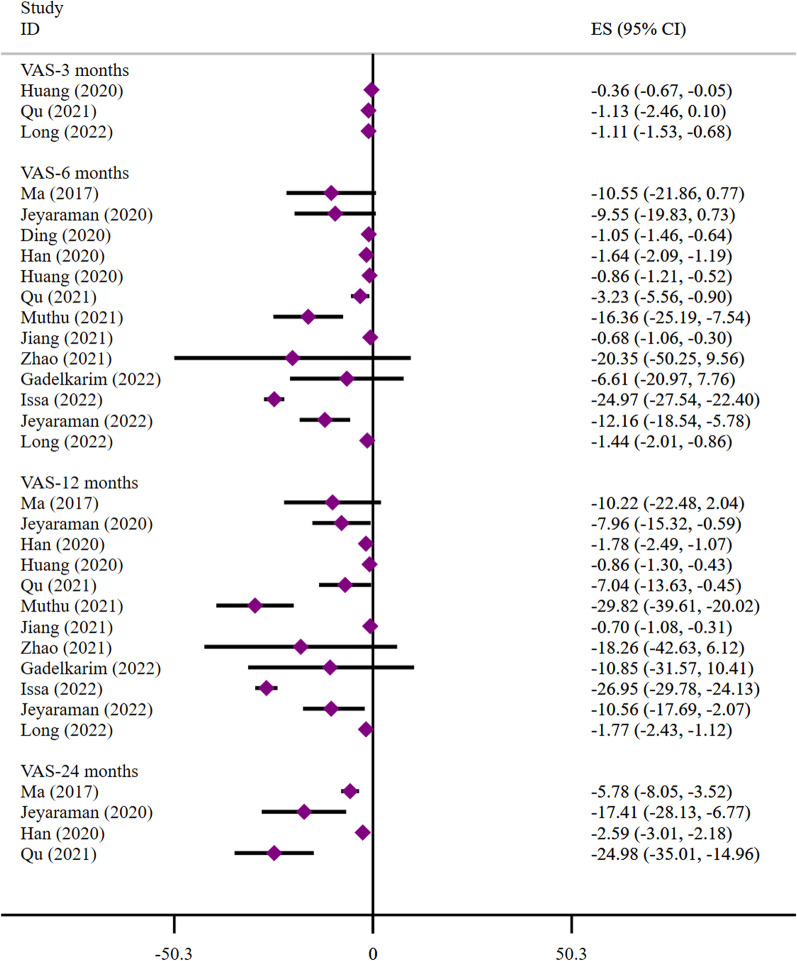
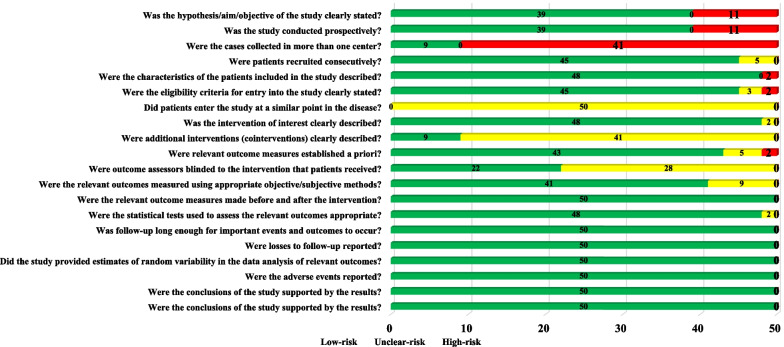
Fifty clinical studies and 13 systematic reviews/meta-analyses (SRs/MAs) were included. Nineteen ARs were reported in 50 studies, including five knee-related ARs, seven common ARs, and seven other ARs. Some studies reported over 10% prevalence of knee pain (24.5%; 95% CI [14.7%, 35.7%]), knee effusion (12.5%; 95% CI [4.8%, 22.5%]), and knee swelling (11.9%; 95% CI [3.5%, 23.5%]). Additionally, two studies have reported cases of prostate cancer and breast tumors, respectively. However, these two studies suggest that stem cell therapy does not bring significant ARs to patients. SRs/MAs results revealed that stem cell therapy relieved pain in patients over time but did not improve knee function. However, current clinical studies have limited evidence regarding study objectives, test designs, and patient populations. Similarly, SRs/MAs have inadequate evidence regarding study design, risk of bias assessment, outcome description, comprehensive discussion, and potential conflicts of interest.
The inefficacy of stem cells, the risk of potential complications, and the limited quality of evidence from current studies precluded any recommendation for using stem cell products in patients with KOA. Clinical translation of stem cell therapies remains baseless and should be cautiously approached until more robust evidence is available. PROSPERO registration number: CRD42022355875.
干细胞疗法在膝骨关节炎(KOA)的临床前动物模型中的成功,加速了其临床转化的步伐。然而,目前的科学证据是否支持干细胞治疗 KOA 的临床应用仍不确定。有必要对干细胞疗法的安全性、有效性和科学证据质量进行全面评估。
使用“干细胞”和“膝骨关节炎”作为检索词,于 2022 年 8 月 25 日检索了 PubMed、Web of Science、Cochrane、Embase 和 Clinicaltrials.gov 等多个数据库,并于 2023 年 2 月 27 日进行了更新。纳入了报告 KOA 患者干细胞治疗不良反应(ARs)的临床研究,且不限制研究类型。纳入了对 KOA 进行干细胞治疗的定量系统评价,并进行了荟萃分析。两位研究者独立进行文献筛选和数据提取,根据卫生经济学研究所和 AMSTAR 2 标准评估证据质量。
共纳入 50 项临床研究和 13 项系统评价/荟萃分析(SRs/MAs)。50 项研究报告了 19 项 ARs,包括 5 项膝关节相关 ARs、7 项常见 ARs 和 7 项其他 ARs。一些研究报告膝关节疼痛的发生率超过 10%(24.5%;95%CI [14.7%, 35.7%])、膝关节积液(12.5%;95%CI [4.8%, 22.5%])和膝关节肿胀(11.9%;95%CI [3.5%, 23.5%])。此外,有两项研究分别报告了前列腺癌和乳腺癌病例。然而,这两项研究表明干细胞治疗并未给患者带来明显的 ARs。SRs/MAs 的结果表明,干细胞治疗可随时间缓解患者的疼痛,但不能改善膝关节功能。但是,目前的临床研究在研究目标、试验设计和患者人群方面证据有限。同样,SRs/MAs 在研究设计、偏倚风险评估、结局描述、全面讨论和潜在利益冲突方面证据不足。
由于干细胞疗效不明确、潜在并发症风险以及现有研究证据质量有限,不建议将干细胞产品用于 KOA 患者。在获得更有力的证据之前,干细胞疗法的临床转化仍缺乏依据,应谨慎对待。PROSPERO 注册号:CRD42022355875。