Department of Orthopedic Surgery, La Paz University Hospital, Paseo de la Castellana 261, 28046 Madrid, Spain.
Osteoarticular Surgery Research, Hospital La Paz Institute for Health Research-IdiPAZ (La Paz University Hospital-Autonomous University of Madrid), 28046 Madrid, Spain.
Int J Mol Sci. 2022 Nov 29;23(23):14953. doi: 10.3390/ijms232314953.
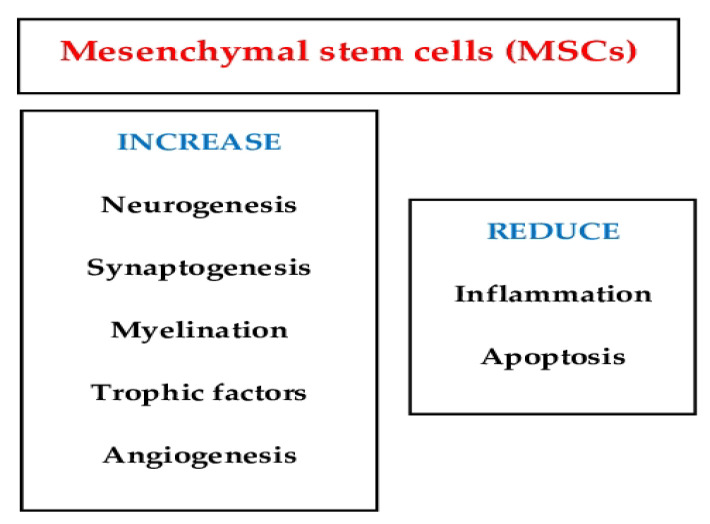
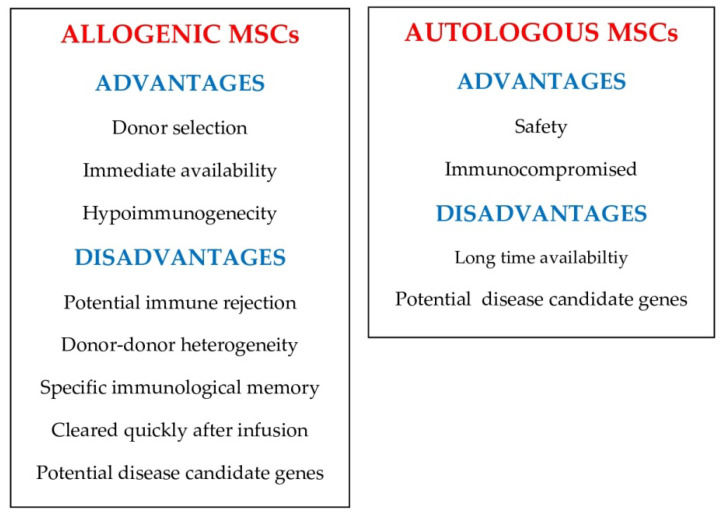
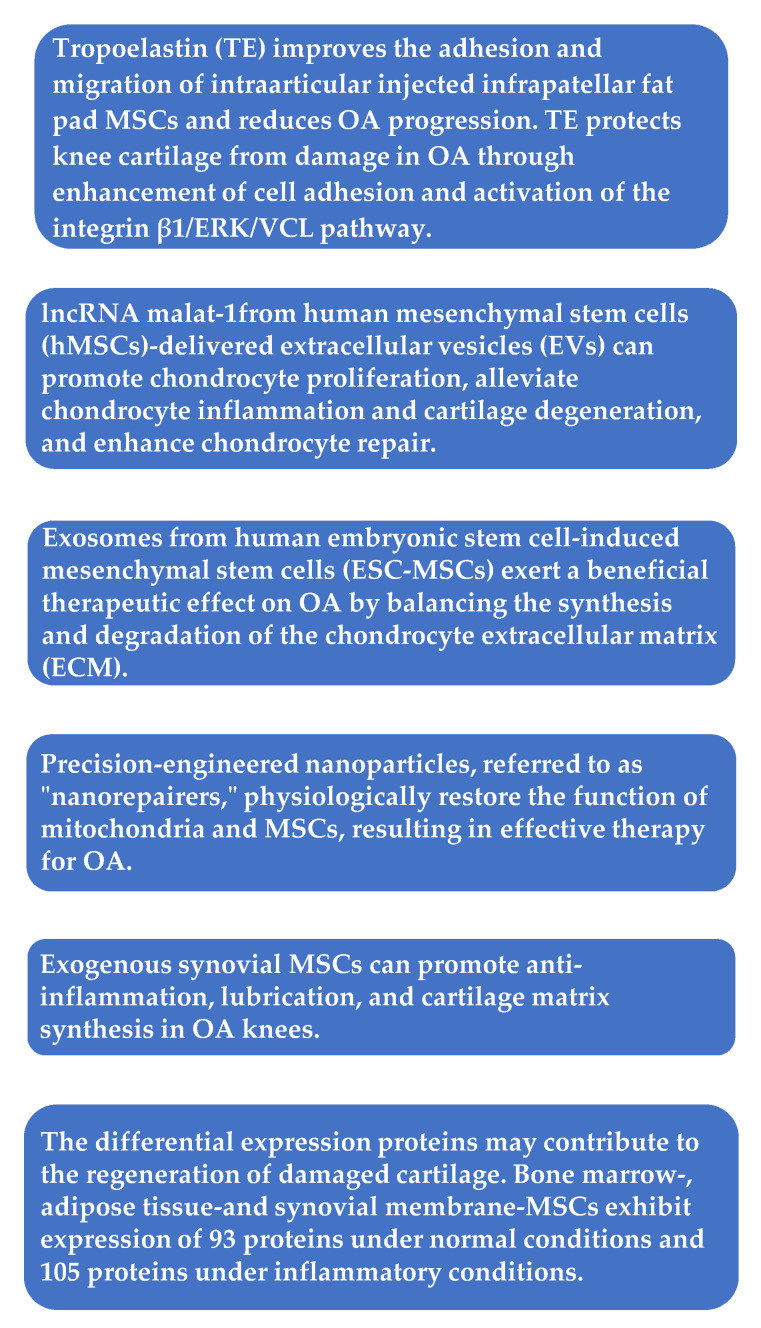
More than 10% of the world's population suffers from osteoarthritis (OA) of the knee, with a lifetime risk of 45%. Current treatments for knee OA pain are as follows: weight control; oral pharmacological treatment (non-steroidal anti-inflammatory drugs, paracetamol, opioids); mechanical aids (crutches, walkers, braces, orthotics); therapeutic physical exercise; and intraarticular injections of corticosteroids, hyaluronic acid, and platelet-rich plasma (PRP). The problem is that such treatments usually relieve joint pain for only a short period of time. With respect to intraarticular injections, corticosteroids relieve pain for several weeks, while hyaluronic acid and PRP relieve pain for several months. When the above treatments fail to control knee pain, total knee arthroplasty (TKA) is usually indicated; however, although a very effective surgical technique, it can be associated with medical and postoperative (surgery-related) complications. Therefore, it seems essential to look for safe and effective alternative treatments to TKA. Recently, there has been much research on intraarticular injections of mesenchymal stem cells (MSCs) for the management of OA of the knee joint. This article reviews the latest information on the molecular mechanisms of action of MSCs and their potential therapeutic benefit in clinical practice in patients with painful knee OA. Although most recent publications claim that intraarticular injections of MSCs relieve joint pain in the short term, their efficacy remains controversial given that the existing scientific information on MSCs is indecisive. Before recommending intraarticular MSCs injections routinely in patients with painful knee OA, more studies comparing MSCs with placebo are needed. Furthermore, a standard protocol for intraarticular injections of MSCs in knee OA is needed.
超过 10%的世界人口患有膝关节骨关节炎(OA),终身发病风险为 45%。目前膝关节 OA 疼痛的治疗方法如下:控制体重;口服药物治疗(非甾体抗炎药、扑热息痛、阿片类药物);机械辅助(拐杖、助行器、支具、矫形器);治疗性体育锻炼;关节内注射皮质类固醇、透明质酸和富含血小板的血浆(PRP)。问题是,这些治疗方法通常只能缓解关节疼痛一段时间。对于关节内注射,皮质类固醇可缓解疼痛数周,而透明质酸和 PRP 可缓解疼痛数月。当上述治疗方法无法控制膝关节疼痛时,通常需要进行全膝关节置换术(TKA);然而,尽管这是一种非常有效的手术技术,但它可能与医疗和术后(与手术相关)并发症有关。因此,似乎有必要寻找 TKA 的安全有效替代治疗方法。最近,人们对关节内注射间充质干细胞(MSCs)治疗膝关节骨关节炎进行了大量研究。本文综述了 MSCs 的作用机制及其在临床实践中治疗疼痛性膝关节 OA 患者的潜在治疗益处的最新信息。尽管最近的大多数出版物声称关节内注射 MSCs 可在短期内缓解关节疼痛,但鉴于现有的 MSCs 科学信息尚无定论,其疗效仍存在争议。在推荐常规性地对疼痛性膝关节 OA 患者进行关节内 MSC 注射之前,还需要更多比较 MSC 与安慰剂的研究。此外,还需要一个膝关节 OA 关节内注射 MSCs 的标准方案。