Department of Orthopedics, Shengjing Hospital of China Medical University, Shenyang, China.
Department of Obstetrics and Gynecology, Shengjing Hospital of China Medical University, Shenyang, China.
J Am Med Dir Assoc. 2023 Jun;24(6):846-854. doi: 10.1016/j.jamda.2023.03.011. Epub 2023 Mar 21.
This study aimed to assess (1) the prevalence of COVID-19 in patients with hip fracture; (2) the mortality rate of patients with hip fracture associated with COVID-19; (3) risk factors associated with mortality in patients with hip fracture; and (4) the effects of COVID-19 on surgical outcomes of patients with hip fracture.
Meta-analysis.
Patients with hip fractures during COVID-19.
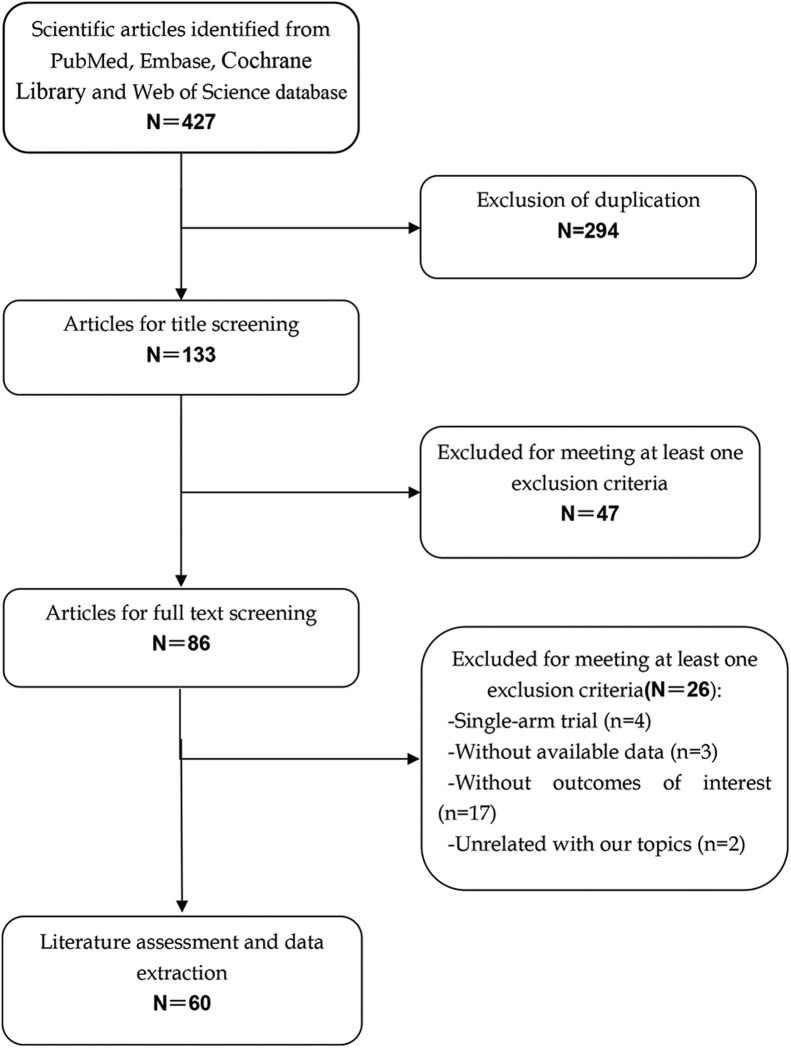
PubMed, Web of Science, and Embase were systematically reviewed. The outcomes included the prevalence of COVID-19, case fatality rate, 30-day mortality, cause of death, risk factors associated with the mortality of patients with hip fracture, time to surgery, surgical time, and length of hospitalization. Risk ratio or weight mean difference with 95% confidence intervals were used to pool the estimates.
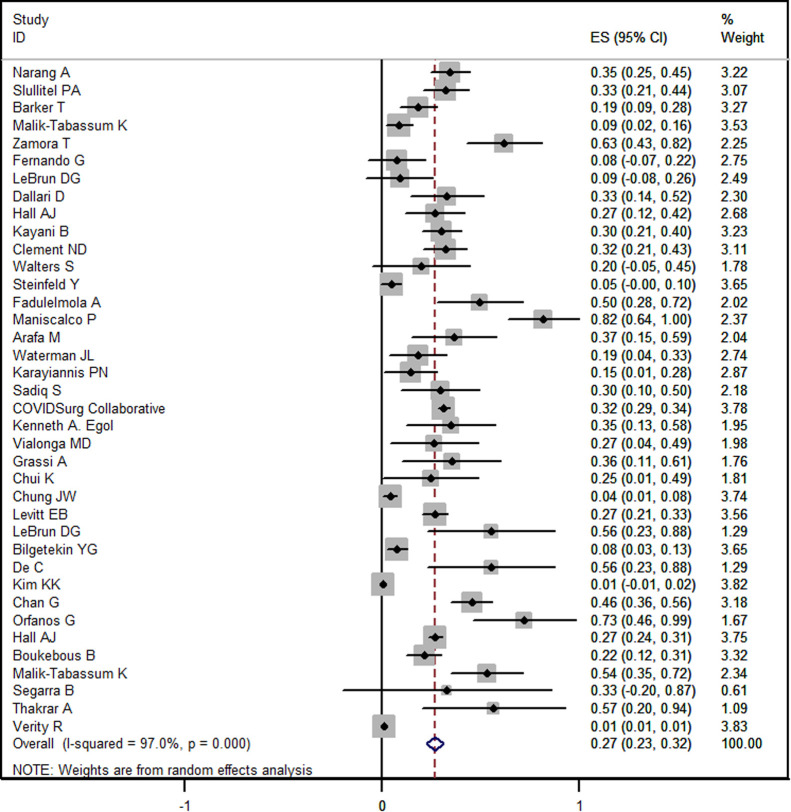
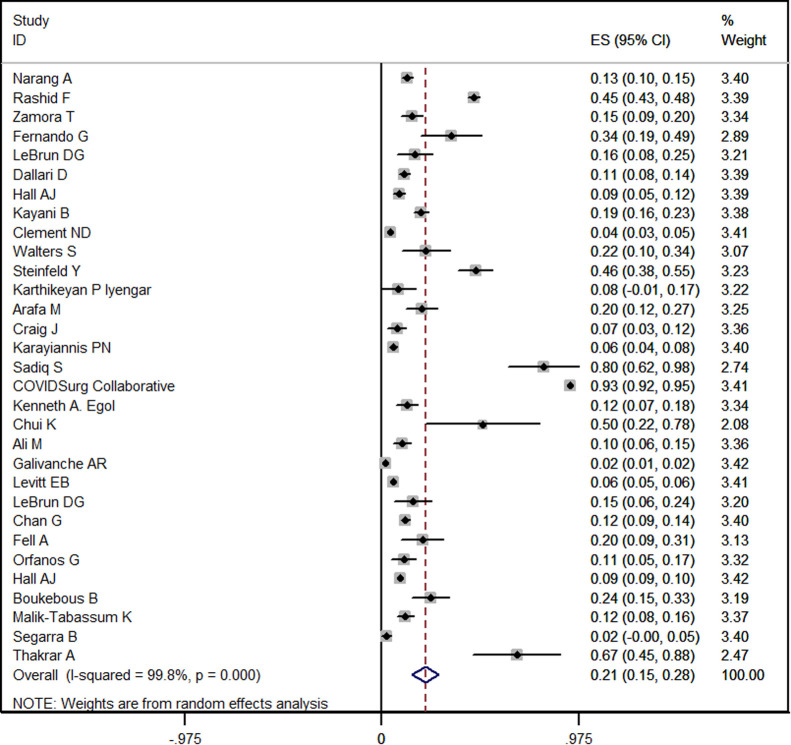
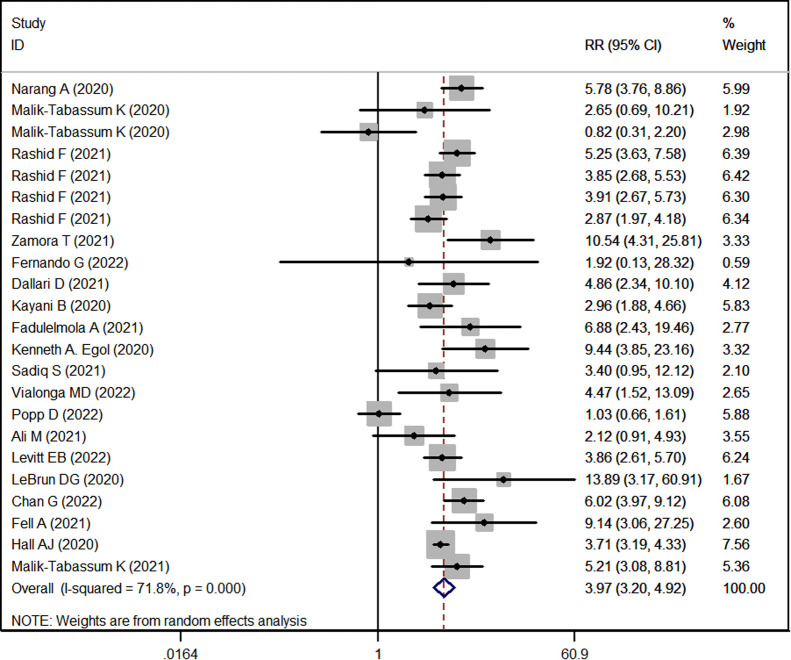
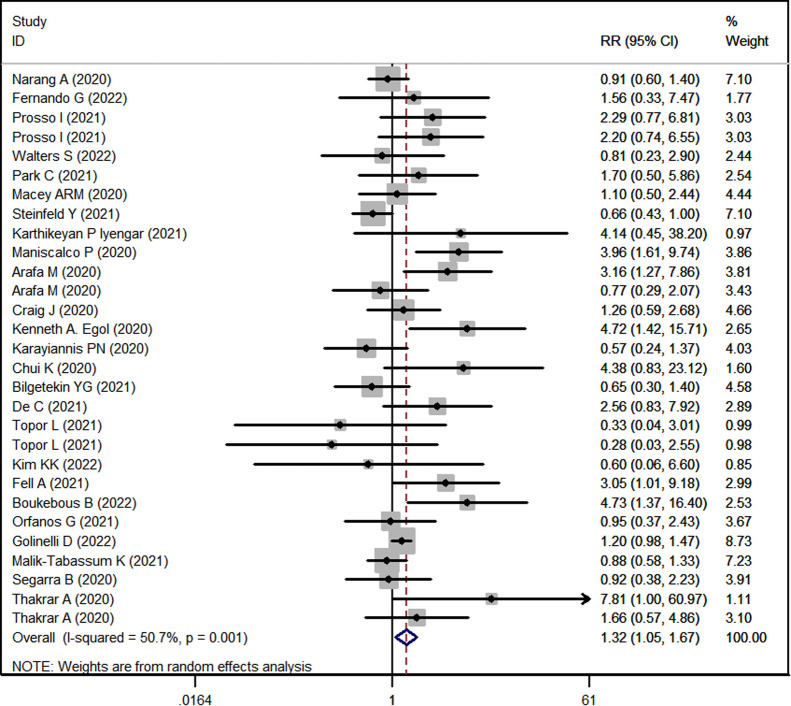
A total of 60 studies were included in this meta-analysis. The pooled estimate showed that the prevalence of COVID-19 was 21% in patents with hip fractures. Patients with hip fracture with COVID-19 had an increased 30-day mortality risk compared with those without the infection. The main causes of death were respiratory failure, COVID-19-associated pneumonia, multiorgan failure, and non-COVID-19 pneumonia. The hospitalization was longer in patients with COVID-19 when compared with those without the infection, but was shorter in patients during the pandemic period. The surgery time and time to surgery were not significantly different between patients during or before the pandemic period and in those with or without COVID-19.
The 30-day mortality rate was significantly higher in patients with hip fracture with COVID-19 infection than those without. Patients with COVID-19 had a higher all-cause mortality rate than those without. This information can be used by the medical community to guide the management of patients with hip fracture with COVID-19.
本研究旨在评估:(1) COVID-19 在髋部骨折患者中的流行情况;(2) COVID-19 相关髋部骨折患者的死亡率;(3) 与髋部骨折患者死亡相关的危险因素;以及 (4) COVID-19 对髋部骨折患者手术结果的影响。
荟萃分析。
COVID-19 期间发生髋部骨折的患者。
系统检索了 PubMed、Web of Science 和 Embase。研究结果包括 COVID-19 的流行率、病死率、30 天死亡率、死亡原因、与髋部骨折患者死亡率相关的危险因素、手术时间、手术时间和住院时间。使用风险比或加权均数差及其 95%置信区间来汇总估计值。
共有 60 项研究纳入本荟萃分析。汇总估计显示,髋部骨折患者中 COVID-19 的流行率为 21%。与未感染 COVID-19 的患者相比,患有髋部骨折合并 COVID-19 的患者 30 天死亡风险增加。主要死亡原因为呼吸衰竭、COVID-19 相关肺炎、多器官衰竭和非 COVID-19 肺炎。与未感染 COVID-19 的患者相比,COVID-19 患者的住院时间更长,但在大流行期间的住院时间更短。与大流行前相比,大流行期间和非 COVID-19 患者的手术时间和手术时间无显著差异。
COVID-19 感染的髋部骨折患者 30 天死亡率明显高于无 COVID-19 感染的患者。COVID-19 患者的全因死亡率高于无 COVID-19 患者。这些信息可被医学界用于指导 COVID-19 合并髋部骨折患者的管理。