Key Laboratory of Guizhou Province for Green Chemical Industry and Clean Energy Technology, School of Chemistry and Chemical Engineering, Guizhou University, Guiyang, 550025, Guizhou, China.
School of Chemistry and Chemical Engineering, Qiannan Normal University for Nationalities, Duyun, 558000, Guizhou, China.
Sci Rep. 2023 Apr 16;13(1):6189. doi: 10.1038/s41598-023-33191-2.
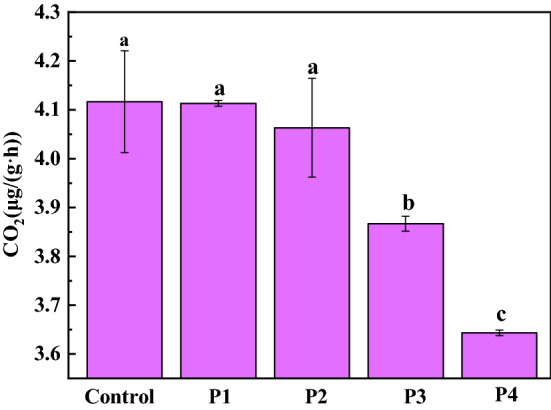
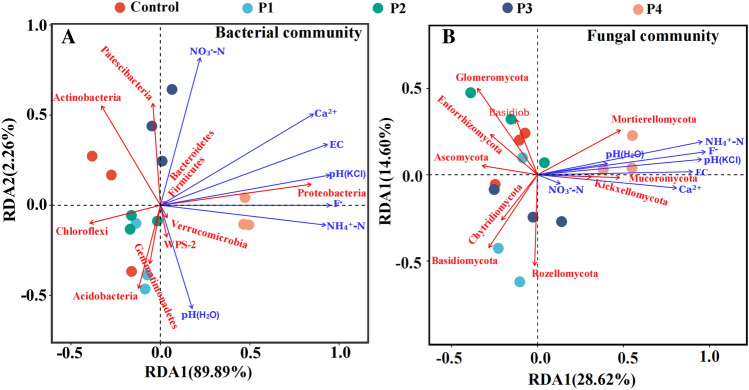
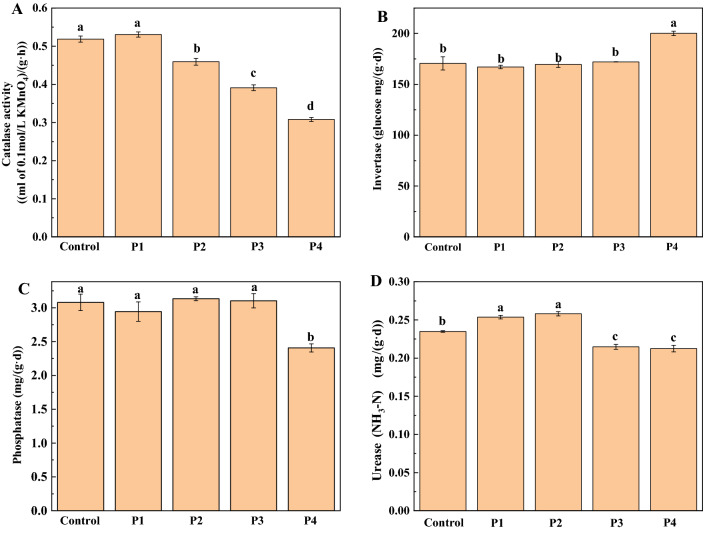
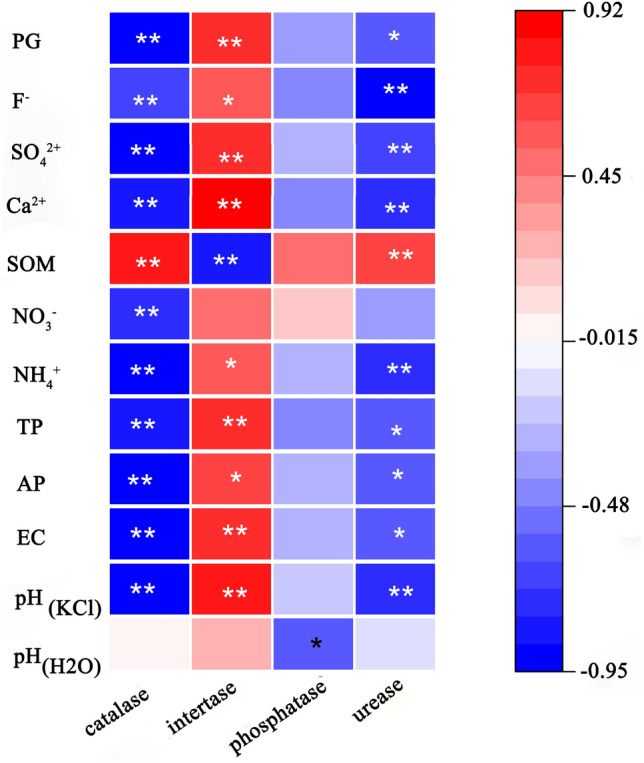
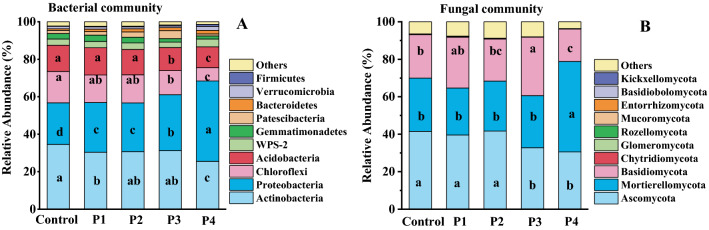
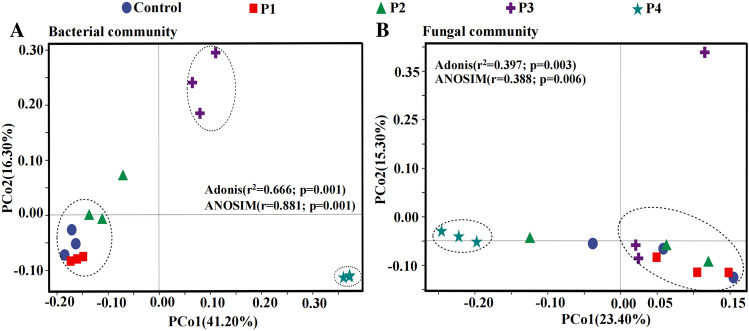
Phosphogypsum (PG) is a solid waste produced from decomposition of phosphate rock in sulfuric acid. It can improve the physicochemical properties of soil. However, the application of PG will inevitably change the living environment of soil microorganisms and lead to the evolution of the soil microbial community. The effects of PG (0, 0.01%, 0.1%, 1%, 10% PG) on soil respiration, enzyme activity and microbial community were studied systematically by indoor incubation experiments. The results showed that the addition of 0.01% PG had little effect on the soil physicochemical properties and microflora. The soil respiration rate decreased with the increase of PG; The activities of catalase, urease and phosphatase were decreased and the activities of sucrase were increased by 10% PG treatment, while 0.01% or 0.1% PG treatment improve the urease activity; Soil microbial community response was significantly separated by amount of the PG amendment, and the application of 10% PG reduced the abundance, diversity and evenness of soil bacteria and fungi. Redundancy analysis (RDA) showed that soil bacterial composition was mainly driven by electrical conductivity (EC) and Ca, while fungal composition was mainly driven by F and NH. In addition, the application of PG increased the abundance of salt-tolerant microorganisms and accelerated the degradation of soil organic matter. Overall, These results can help to revisit the current management of PG applications as soil amendments.
磷石膏(PG)是硫酸分解磷矿产生的一种固体废弃物。它可以改善土壤的物理化学性质。然而,PG 的应用不可避免地会改变土壤微生物的生存环境,导致土壤微生物群落的演变。通过室内培养实验系统地研究了 PG(0、0.01%、0.1%、1%、10%PG)对土壤呼吸、酶活性和微生物群落的影响。结果表明,添加 0.01%PG 对土壤理化性质和微生物群落影响较小。土壤呼吸速率随 PG 用量的增加而降低;10%PG 处理降低了过氧化氢酶、脲酶和磷酸酶的活性,而蔗糖酶的活性增加;0.01%或 0.1%PG 处理提高了脲酶活性;PG 用量的增加显著分离了土壤微生物群落的响应,10%PG 的应用降低了土壤细菌和真菌的丰度、多样性和均匀度。冗余分析(RDA)表明,土壤细菌组成主要受电导率(EC)和 Ca 的驱动,而真菌组成主要受 F 和 NH 的驱动。此外,PG 的应用增加了耐盐微生物的丰度,加速了土壤有机质的降解。总的来说,这些结果有助于重新审视当前作为土壤改良剂的 PG 应用管理。