Bashir Arsalan, Nabi Masarat, Tabassum Nahida, Afzal Suhaib, Ayoub Mehrose
Department of Pharmaceutical Sciences, University of Kashmir, Srinagar, Jammu and Kashmir, India.
Department of Environmental Science, University of Kashmir, Srinagar, Jammu and Kashmir, India.
Front Pharmacol. 2023 Mar 29;14:1049334. doi: 10.3389/fphar.2023.1049334. eCollection 2023.
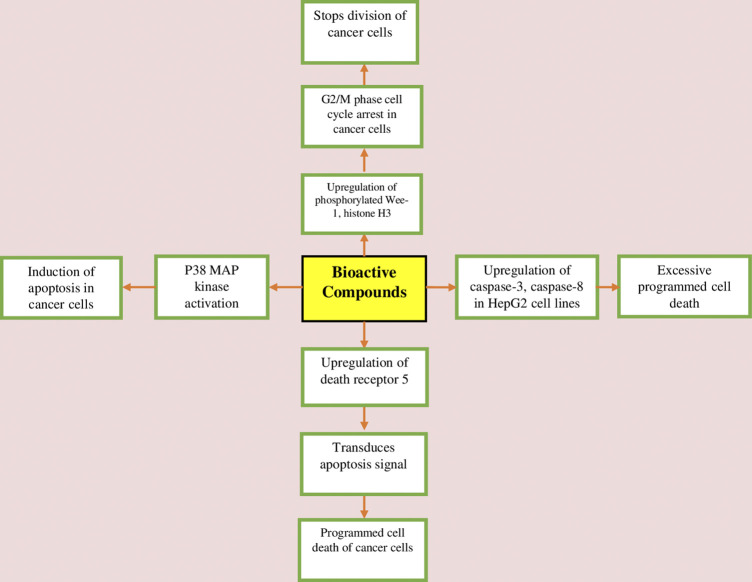
Dunal belongs to the nightshade family Solanaceae and is commonly known as Ashwagandha. It is pharmacologically a significant medicinal plant of the Indian sub-continent, used in Ayurvedic and indigenous systems of medicine for more than 3,000 years. It is a rich reservoir of pharmaceutically bioactive constituents known as withanolides (a group of 300 naturally occurring C-28 steroidal lactones with an ergostane-based skeleton). Most of the biological activities of have been attributed to two key withanolides, namely, withaferin-A and withanolide-D. In addition, bioactive constituents such as withanosides, sitoindosides, steroidal lactones, and alkaloids are also present with a broad spectrum of therapeutic potential. Several research groups worldwide have discovered various molecular targets of , such as inhibiting the activation of nuclear factor kappa-B and promoting apoptosis of cancer cells. It also enhances dopaminergic D2 receptor activity (relief in Parkinson's disease). The active principles such as sitoindosides VII-X and withaferin-A possess free radical properties. Withanolide-D increases the radio sensitivity of human cancer cells via inhibiting deoxyribonucleic acid (DNA) damage to non-homologous end-joining repair (NHEJ) pathways. Withanolide-V may serve as a potential inhibitor against the main protease (Mpro) of severe acute respiratory syndrome coronavirus 2 (SARS-CoV-2) to combat COVID. The molecular docking studies revealed that the withanolide-A inhibits acetyl-cholinesterase in the brain, which could be a potential drug to treat Alzheimer's disease. Besides, withanolide-A reduces the expression of the N-methyl-D-aspartate (NMDA) receptor, which is responsible for memory loss in epileptic rats. This review demonstrates that is a rich source of withanolides and other bioactive constituents, which can be used as a safe drug for various chronic diseases due to the minimal side effects in various pre-clinical studies. These results are interesting and signify that more clinical trials should be conducted to prove the efficacy and other potential therapeutic effects in human settings.
杜纳属茄科夜香树族,通常被称为印度人参。在药理学上,它是印度次大陆一种重要的药用植物,在阿育吠陀医学和本土医学体系中已使用了3000多年。它富含被称为睡茄内酯(一组300种天然存在的具有麦角甾烷骨架的C - 28甾体内酯)的具有药学活性的成分。其大部分生物活性归因于两种关键的睡茄内酯,即睡茄素A和睡茄内酯D。此外,诸如睡茄苷、 sitoindosides、甾体内酯和生物碱等生物活性成分也具有广泛的治疗潜力。全球多个研究小组已经发现了它的各种分子靶点,例如抑制核因子κB的激活以及促进癌细胞凋亡。它还能增强多巴胺能D2受体活性(缓解帕金森病)。诸如sitoindosides VII - X和睡茄素A等活性成分具有自由基特性。睡茄内酯D通过抑制对非同源末端连接修复(NHEJ)途径的脱氧核糖核酸(DNA)损伤来提高人类癌细胞的放射敏感性。睡茄内酯V可能作为一种潜在的抑制剂,针对严重急性呼吸综合征冠状病毒2(SARS-CoV-2)的主要蛋白酶(Mpro)来对抗新冠病毒。分子对接研究表明,睡茄内酯A抑制大脑中的乙酰胆碱酯酶,这可能是一种治疗阿尔茨海默病的潜在药物。此外,睡茄内酯A降低了N - 甲基 - D - 天冬氨酸(NMDA)受体的表达,该受体与癫痫大鼠的记忆丧失有关。这篇综述表明,它是睡茄内酯和其他生物活性成分的丰富来源,由于在各种临床前研究中副作用最小,可作为治疗各种慢性疾病的安全药物。这些结果很有趣,表明应该进行更多的临床试验来证明其在人体中的疗效和其他潜在治疗效果。