Department of Neurosciences, Université de Montréal, Montréal, QC, Canada.
Department of Physical Activity Sciences, Université du Québec à Montréal, Montréal, QC, Canada.
Front Neural Circuits. 2023 Mar 30;17:910207. doi: 10.3389/fncir.2023.910207. eCollection 2023.
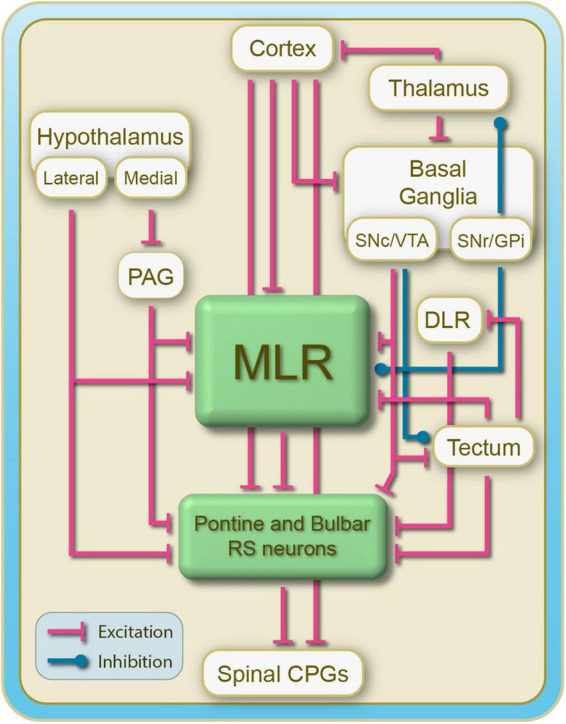
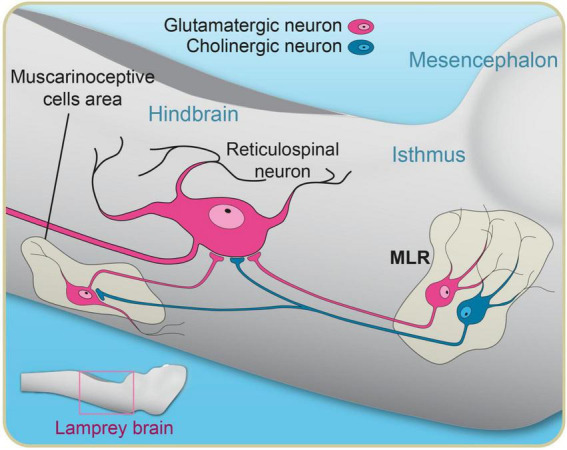
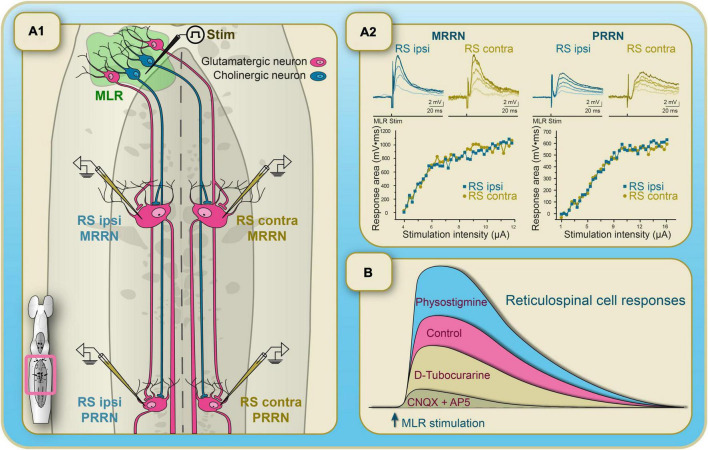
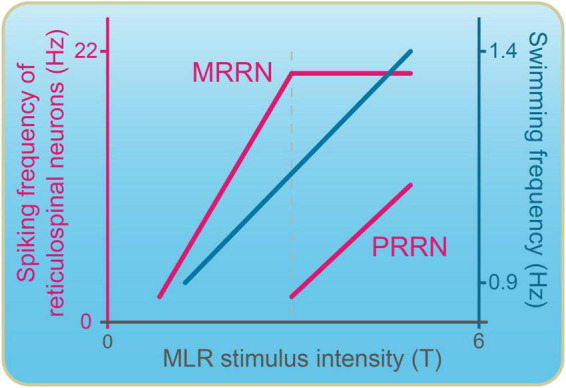
Over the last 60 years, the basic neural circuitry responsible for the supraspinal control of locomotion has progressively been uncovered. Initially, significant progress was made in identifying the different supraspinal structures controlling locomotion in mammals as well as some of the underlying mechanisms. It became clear, however, that the complexity of the mammalian central nervous system (CNS) prevented researchers from characterizing the detailed cellular mechanisms involved and that animal models with a simpler nervous system were needed. Basal vertebrate species such as lampreys, xenopus embryos, and zebrafish became models of choice. More recently, optogenetic approaches have considerably revived interest in mammalian models. The mesencephalic locomotor region (MLR) is an important brainstem region known to control locomotion in all vertebrate species examined to date. It controls locomotion through intermediary cells in the hindbrain, the reticulospinal neurons (RSNs). The MLR comprises populations of cholinergic and glutamatergic neurons and their specific contribution to the control of locomotion is not fully resolved yet. Moreover, the downward projections from the MLR to RSNs is still not fully understood. Reporting on discoveries made in different animal models, this review article focuses on the MLR, its projections to RSNs, and the contribution of these neural elements to the control of locomotion. Excellent and detailed reviews on the brainstem control of locomotion have been recently published with emphasis on mammalian species. The present review article focuses on findings made in basal vertebrates such as the lamprey, to help direct new research in mammals, including humans.
在过去的 60 年中,负责脊髓以上运动控制的基本神经回路逐渐被揭示出来。最初,在确定控制哺乳动物运动的不同脊髓上结构以及一些潜在机制方面取得了重大进展。然而,很明显,哺乳动物中枢神经系统 (CNS) 的复杂性使得研究人员无法描述涉及的详细细胞机制,并且需要具有更简单神经系统的动物模型。底栖脊椎动物物种,如七鳃鳗、非洲爪蟾胚胎和斑马鱼,成为了首选模型。最近,光遗传学方法极大地激发了人们对哺乳动物模型的兴趣。中脑运动区 (MLR) 是一个重要的脑干区域,已知它控制迄今为止检查过的所有脊椎动物物种的运动。它通过后脑的中间细胞,即网状脊髓神经元 (RSN) 来控制运动。MLR 由胆碱能和谷氨酸能神经元组成,它们对运动控制的具体贡献尚未完全解决。此外,MLR 向 RSN 的下行投射仍然不完全清楚。本文综述了不同动物模型中的发现,重点介绍了 MLR、它向 RSN 的投射以及这些神经元素对运动控制的贡献。最近发表了关于脑干运动控制的优秀和详细的综述,重点是哺乳动物物种。本文综述重点介绍了七鳃鳗等底栖脊椎动物的发现,以帮助指导包括人类在内的哺乳动物的新研究。