Department of Biological Sciences and Laboratory in Neurobiology, University of Illinois at Chicago, Chicago, Illinois, USA.
Nat Neurosci. 2010 Jun;13(6):731-8. doi: 10.1038/nn.2548. Epub 2010 May 16.
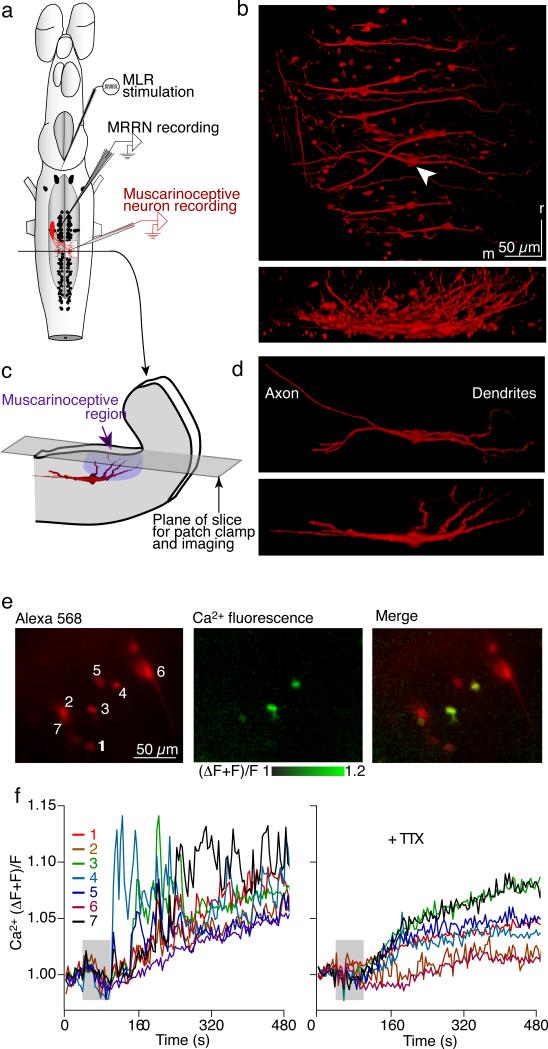
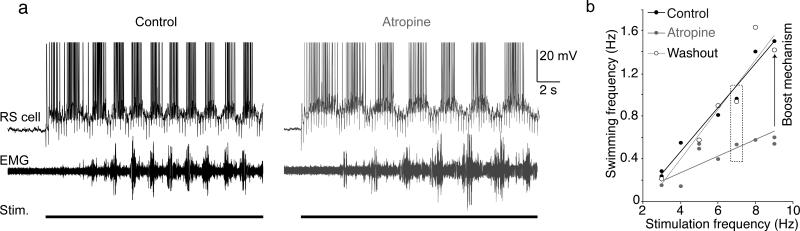
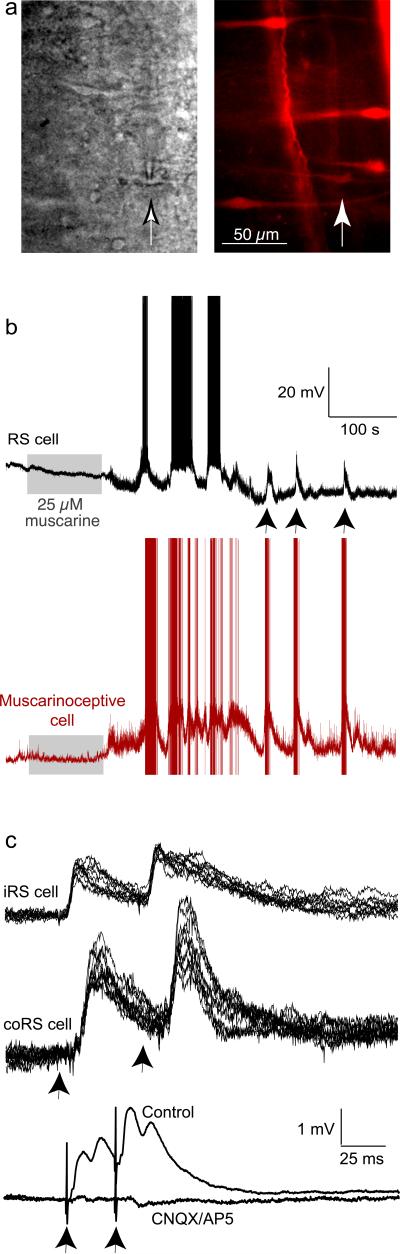
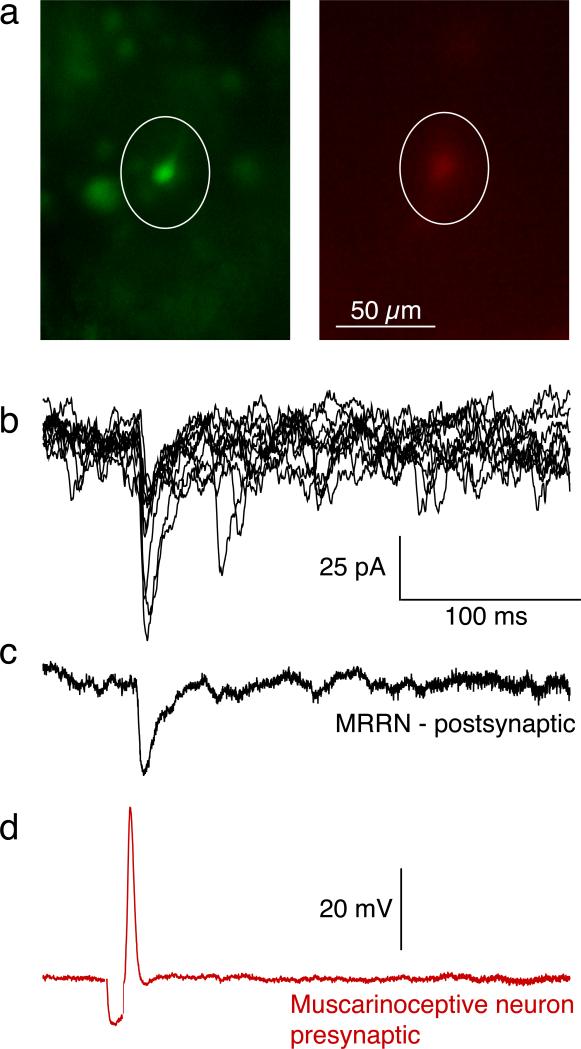
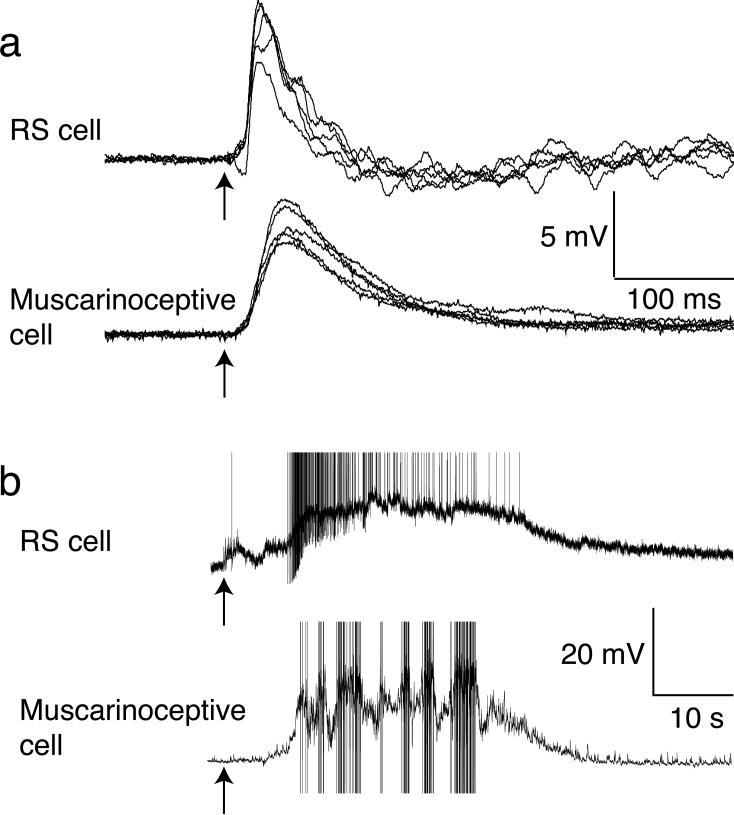
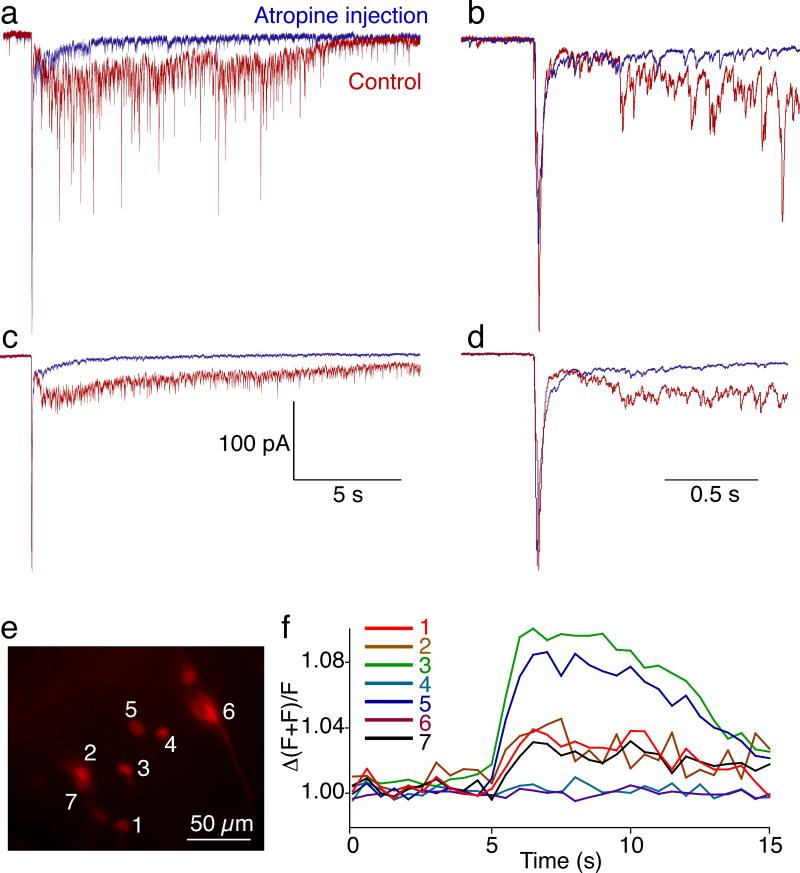
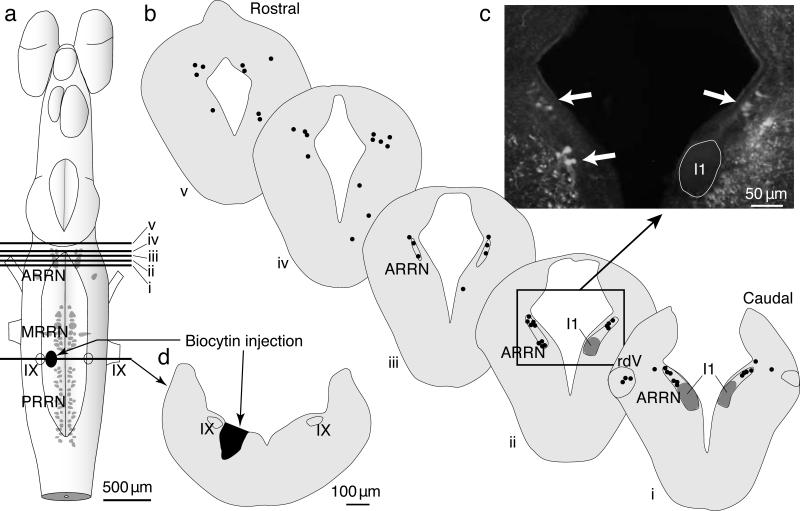
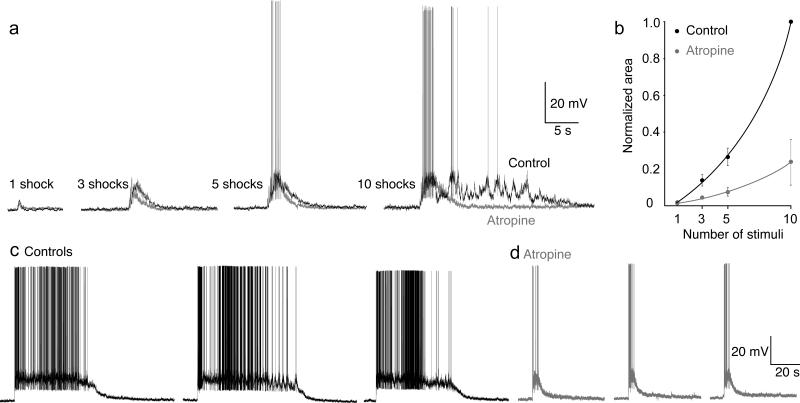
The brainstem locomotor system is believed to be organized serially from the mesencephalic locomotor region (MLR) to reticulospinal neurons, which in turn project to locomotor neurons in the spinal cord. We identified brainstem muscarinoceptive neurons in lampreys (Petromyzon marinus) that received parallel inputs from the MLR and projected back to reticulospinal cells to amplify and extend the duration of locomotor output. These cells responded to muscarine with extended periods of excitation, received direct muscarinic excitation from the MLR and projected glutamatergic excitation to reticulospinal neurons. Targeted blockade of muscarine receptors over these neurons profoundly reduced MLR-induced excitation of reticulospinal neurons and markedly slowed MLR-evoked locomotion. The presence of these neurons forces us to rethink the organization of supraspinal locomotor control, to include a sustained feedforward loop that boosts locomotor output.
脑桥运动系统被认为是从中脑运动区(MLR)到网状脊髓神经元按顺序组织的,网状脊髓神经元反过来投射到脊髓中的运动神经元。我们在七鳃鳗(Petromyzon marinus)中鉴定出脑桥毒蕈碱能神经元,它们接收来自 MLR 的平行输入,并投射回网状脊髓细胞,以放大和延长运动输出的持续时间。这些细胞对毒蕈碱的反应是长时间兴奋,直接从 MLR 接收毒蕈碱兴奋,并向网状脊髓神经元投射谷氨酸能兴奋。针对这些神经元的毒蕈碱受体的靶向阻断,显著降低了 MLR 诱导的网状脊髓神经元的兴奋,并显著减缓了 MLR 诱发的运动。这些神经元的存在迫使我们重新思考脊髓上运动控制的组织,包括一个增强运动输出的持续前馈回路。