Aljaroudi Mahdi E, Makki Murtaga, Almulaify Mohammed, Alshabib Abdullah, Alfaddagh Hind, Alzahrani Hassan, Alghamdi Sulaiman, Alsualiman Wael, Alsalman Jaafar, Alhaddad Mousa J
Gastroenterology and Hepatology, Dammam Medical Complex, Dammam, SAU.
Internal Medicine, Dammam Medical Complex, Dammam, SAU.
Cureus. 2023 Mar 14;15(3):e36157. doi: 10.7759/cureus.36157. eCollection 2023 Mar.
There are marked local inconsistencies in the Arabian Peninsula about the role of preoperative esophagogastroduodenoscopy (EGD) in bariatric surgery. Thus, this study was conducted to determine the frequency of endoscopic and histological findings in the Saudi population presenting for pre-bariatric surgery evaluation.
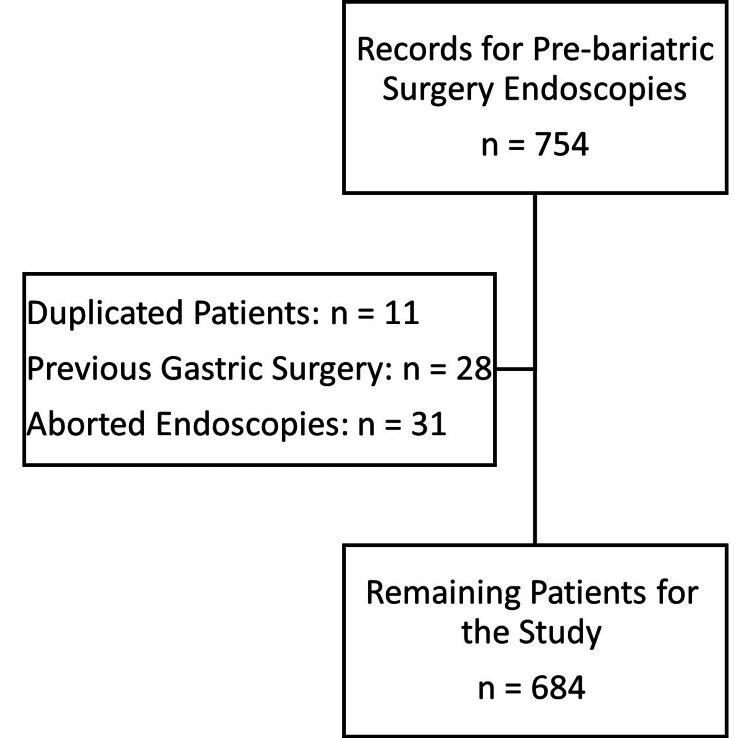
This was a retrospective study that included all the patients who were evaluated by EGD at Dammam Medical Complex, Dammam, Saudi Arabia, between 2018 and 2021 as a part of their pre-bariatric-surgery evaluation.
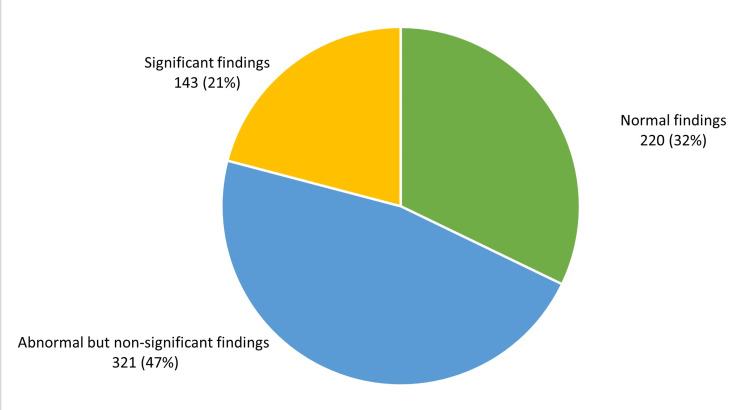
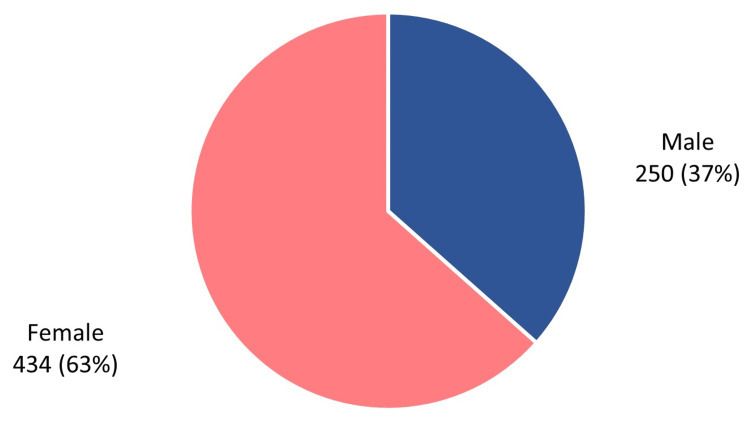
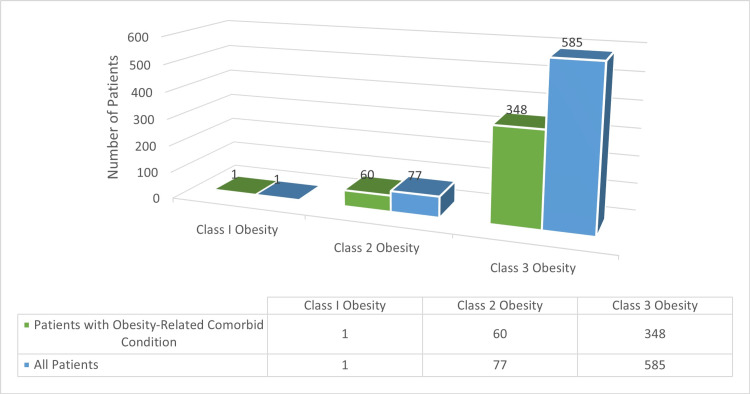
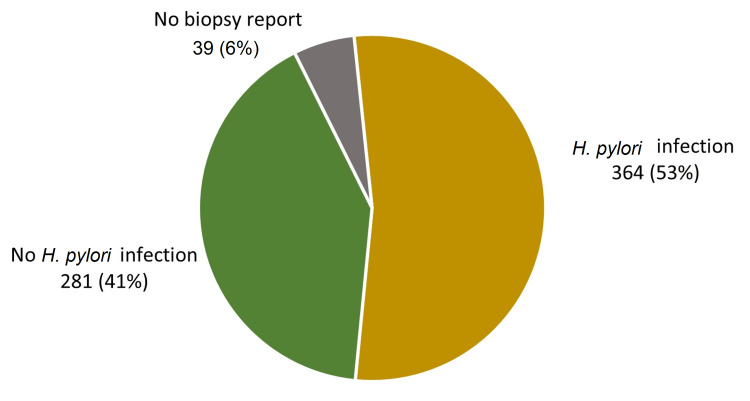
A total of 684 patients were included. They consisted of 250 male and 434 female patients (36.5% and 63.5%, respectively). The mean ± standard deviation for the patients' age and body mass index (BMI) were 36.4±10.6 years and 44.6±5.1 kg/m, respectively. Significant endoscopic or histopathological findings as defined by the presence of large (≥ 2 cm) hiatus hernia, esophagitis, gastroesophageal reflux disease (GERD), Barrett esophagus, gastric ulcer, duodenal ulcer, or intestinal metaplasia were found in 143 patients (20.9%); 364 patients (53.2%) were diagnosed to have infection.
The high number of significant endoscopic and histopathological findings in our study supports the routine use of preoperative EGD in all bariatric surgery patients. However, omitting EGD before Roux-en-Y gastric bypass (RYGB) in asymptomatic patients is still reasonable as the most frequently found significant findings, esophagitis, and hiatus hernia, are less likely to impact the operative plans in RYGB. Similarly, active surveillance and treatment of infections in obese patients are important but it is not clear whether eradication should be done before bariatric surgery.
在阿拉伯半岛,关于术前食管胃十二指肠镜检查(EGD)在减肥手术中的作用存在明显的地区差异。因此,本研究旨在确定沙特人群在接受减肥手术评估时内镜和组织学检查结果的频率。
这是一项回顾性研究,纳入了2018年至2021年期间在沙特阿拉伯达曼医疗中心接受EGD评估的所有患者,作为其减肥手术前评估的一部分。
共纳入684例患者。其中男性250例,女性434例(分别占36.5%和63.5%)。患者年龄和体重指数(BMI)的平均值±标准差分别为36.4±10.6岁和44.6±5.1kg/m²。143例患者(20.9%)发现有显著的内镜或组织病理学检查结果,定义为存在大(≥2cm)的食管裂孔疝、食管炎、胃食管反流病(GERD)、巴雷特食管、胃溃疡、十二指肠溃疡或肠化生;364例患者(53.2%)被诊断有感染。
我们研究中大量显著的内镜和组织病理学检查结果支持在所有减肥手术患者中常规使用术前EGD。然而,对于无症状患者,在进行Roux-en-Y胃旁路术(RYGB)前省略EGD仍然是合理的,因为最常发现的显著结果,即食管炎和食管裂孔疝,不太可能影响RYGB的手术计划。同样,对肥胖患者的感染进行积极监测和治疗很重要,但目前尚不清楚是否应在减肥手术前根除感染。