Ishii Kuniya, Horikoshi Tsuguhiro, Kanai Masayo, Ishiguro Akio, Iwamoto Yoichi, Ishido Hirotaka, Kikuchi Akihiko, Masutani Satoshi
Department of Pediatrics, Saitama Medical Center, Saitama Medical University, Kawagoe, JPN.
Department of Obstetrics and Gynecology, Saitama Medical Center, Saitama Medical University, Kawagoe, JPN.
Cureus. 2023 Mar 15;15(3):e36203. doi: 10.7759/cureus.36203. eCollection 2023 Mar.
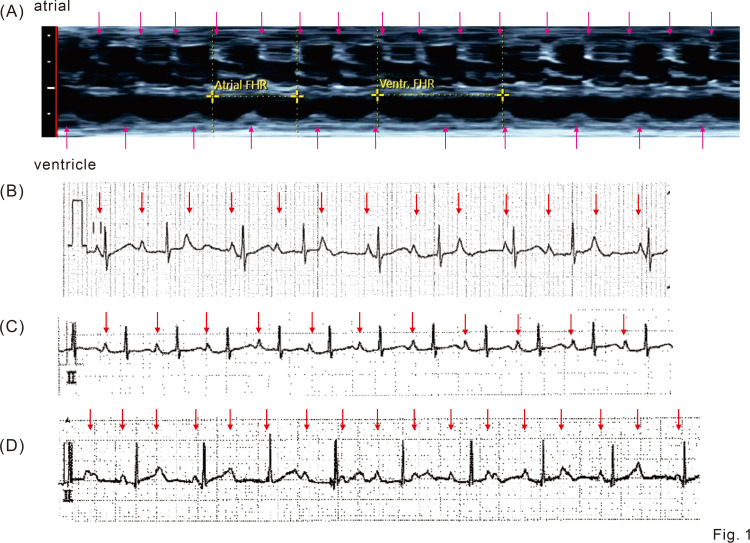
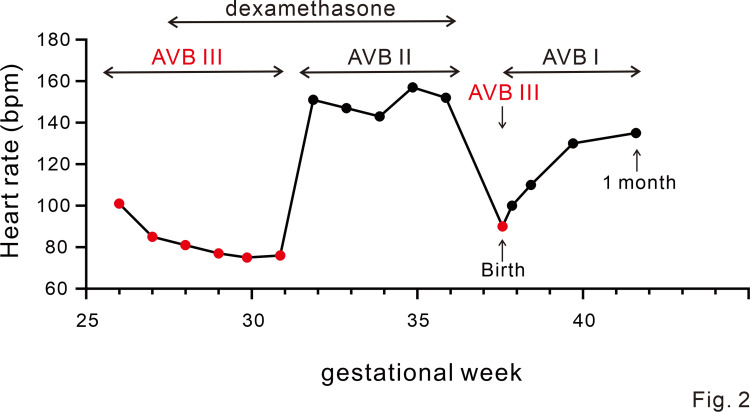
Maternal anti-SS-A antibodies may cause complete atrioventricular block or myocardial damage in a fetus. Effective treatment for this has not been established. Although antenatal steroids may be a treatment option for anti-SS-A antibody-related myocarditis or atrioventricular block, a complete atrioventricular block is usually considered irreversible once established. Previous reports have indicated that, in cases where antenatal steroids were effective for atrioventricular block, they were administered earlier in the pregnancy. Here we present a case where maternal steroid administration initiated from 27 weeks, which is beyond the recommended optimal treatment period, was effective in altering a complete atrioventricular block to a grade I atrioventricular block.
母体抗SS - A抗体可能导致胎儿完全性房室传导阻滞或心肌损伤。目前尚未确立对此的有效治疗方法。尽管产前使用类固醇可能是治疗抗SS - A抗体相关心肌炎或房室传导阻滞的一种选择,但完全性房室传导阻滞一旦形成通常被认为是不可逆的。先前的报告表明,在产前类固醇对房室传导阻滞有效的病例中,它们是在妊娠早期给药的。在此,我们报告一例病例,孕妇从27周开始使用类固醇,这超出了推荐的最佳治疗期,但仍有效地将完全性房室传导阻滞转变为I度房室传导阻滞。