Nduma Basil N, Mofor Kelly A, Tatang Jason, Ekhator Chukwuyem, Ambe Solomon, Fonkem Ekokobe
Internal Medicine, Merit Health Wesley, Hattiesburg, USA.
Gastroenterology, Texas Tech Paul L. Foster School of Medicine, El Paso, USA.
Cureus. 2023 Mar 14;15(3):e36148. doi: 10.7759/cureus.36148. eCollection 2023 Mar.
Around the world, about 15 to 40% of individuals with inflammatory bowel disease (IBD) rely on cannabis and cannabinoids to reduce the need for other medications, as well as increase appetite and reduce pain. Whereas more and more patients continue to report benefits accruing from cannabis and cannabinoid usage in IBD, agreement relative to the use of cannabis and its derivatives in IBD remains unclear. This paper reviewed the interplay between cannabinoid use and IBD disease treatment, remission, or symptom relief. The study was conducted from a systematic review perspective. It involved consulting literature from published original research articles, noting outcomes, and performing a meta-analysis to identify trends and draw conclusions. The selected articles were those that had been published in a 10-year period ranging between 2012 and 2022. The motivation was to ensure recency and also relevance to contemporary scientific research and clinical environment practices. Indeed, the Preferred Reporting Items for Systematic Reviews and Meta-Analyses (PRISMA) framework helped in answering the focal question of the investigation, which revolved around whether cannabinoids are beneficial to IBD treatment and to what extent. The aim of using this protocol was to ensure the satisfaction of the article exclusion and inclusion criteria, as well as ensure the utilization of articles directly contributing to the central subject under investigation. In the findings, it was established that on the one hand, cannabinoid usage in IBD treatment comes with promising results as reported in the majority of the selected studies which reported reduced clinical complications which were assessed using Mayo scores, Crohn's Disease Activity Index (CDAI) score, weight gain, enhanced patient health perception, Lichtiger Index and Harvey-Bradshaw Index or general wellbeing. On the other hand, cannabinoid use remains questionable because evidence of high quality is yet to surface vividly, especially in terms of the mode of administration and the appropriate dose. It is also notable that the findings were characterized by a state of high heterogeneity in terms of the study designs of the studies that were selected, disease activity indices, the duration of treatment by different scholarly researchers, the difference in the modes of administration of cannabinoid and cannabis by different researchers, variations in cannabis dosage, differences in the selected studies' inclusion criteria, and variations in their case definitions. The implication is that whereas the efficacy of cannabinoid use in IBD treatment was reported in most studies, outcome generalizability from the review was highly likely to be restricted. In the future, it is recommended that randomized controlled trials center, set universal parameters for IBD treatment using cannabis and cannabinoids to determine intervention safety and effectiveness as well as having homogenous outcomes that can be compared between different studies. In so doing, the appropriate dose and ideal mode of administration of cannabis and its derivatives might be discerned, ensuring relevance based on patient characteristics such as gender and age, as well as the appropriate administration mode and dose as per IBD symptom severity.
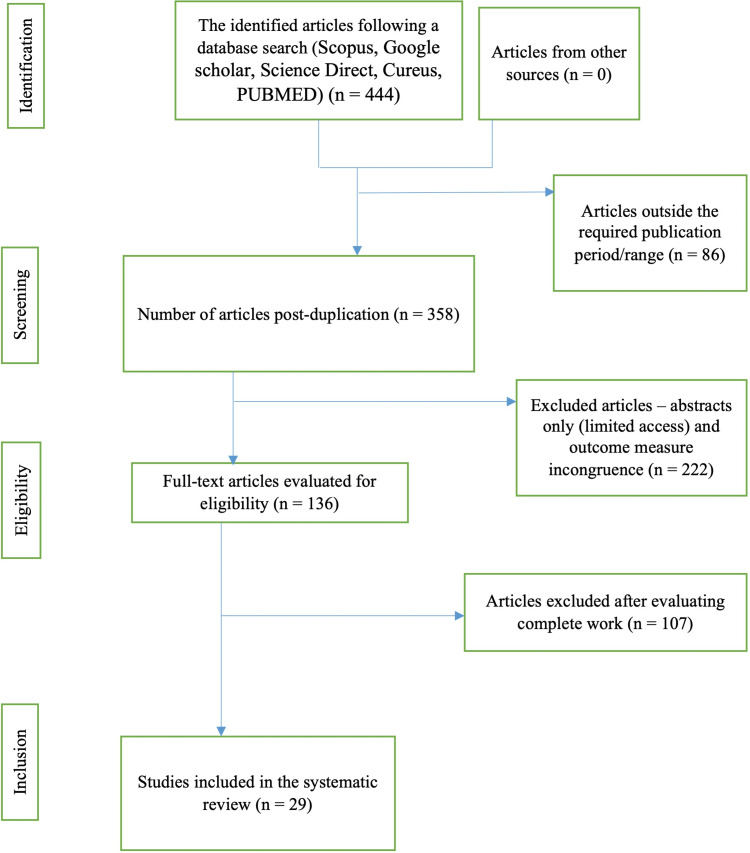
在全球范围内,约15%至40%的炎症性肠病(IBD)患者依靠大麻和大麻素减少对其他药物的需求,同时增加食欲并减轻疼痛。尽管越来越多的患者继续报告在IBD中使用大麻和大麻素带来了益处,但关于在IBD中使用大麻及其衍生物的共识仍不明确。本文回顾了大麻素使用与IBD疾病治疗、缓解或症状缓解之间的相互作用。该研究是从系统评价的角度进行的。它包括查阅已发表的原始研究文章中的文献,记录结果,并进行荟萃分析以确定趋势并得出结论。所选文章是在2012年至2022年的10年期间发表的。这样做的动机是确保时效性以及与当代科学研究和临床实践环境的相关性。事实上,系统评价和荟萃分析的首选报告项目(PRISMA)框架有助于回答调查的核心问题,该问题围绕大麻素是否对IBD治疗有益以及在何种程度上有益。使用该方案的目的是确保满足文章的排除和纳入标准,并确保利用直接有助于所调查核心主题的文章。在研究结果中发现,一方面,IBD治疗中使用大麻素带来了有前景的结果,正如大多数所选研究中所报告的那样,这些研究报告了临床并发症的减少,这些并发症是使用梅奥评分、克罗恩病活动指数(CDAI)评分、体重增加、患者健康感知增强、利希特格指数和哈维 - 布拉德肖指数或总体幸福感来评估的。另一方面,大麻素的使用仍然存在疑问,因为高质量的证据尚未清晰显现,特别是在给药方式和合适剂量方面。同样值得注意的是,就所选研究的研究设计、疾病活动指数、不同学者的治疗持续时间、不同研究人员对大麻素和大麻的给药方式差异、大麻剂量差异、所选研究的纳入标准差异以及病例定义差异而言,研究结果具有高度异质性。这意味着尽管大多数研究报告了大麻素在IBD治疗中的疗效,但该综述的结果普遍适用性很可能受到限制。未来,建议随机对照试验集中进行,为使用大麻和大麻素治疗IBD设定通用参数,以确定干预的安全性和有效性,以及具有可在不同研究之间进行比较的同质结果。这样做可能会辨别出大麻及其衍生物的合适剂量和理想给药方式,确保基于患者特征(如性别和年龄)以及根据IBD症状严重程度的合适给药方式和剂量的相关性。
