Department of Pediatric and Adolescent Endocrinology, Chair of Pediatrics, Pediatric Institute, Jagiellonian University Medical College, Kraków, Poland.
Department of Pediatric Nephrology and Hypertension, Chair of Pediatrics, Pediatric Institute, Jagiellonian University Medical College, Kraków, Poland.
Curr Hypertens Rep. 2023 Jul;25(7):117-125. doi: 10.1007/s11906-023-01241-9. Epub 2023 Apr 18.
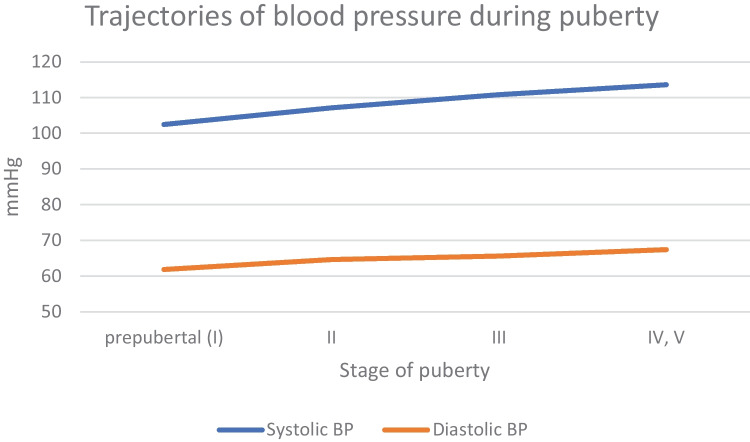
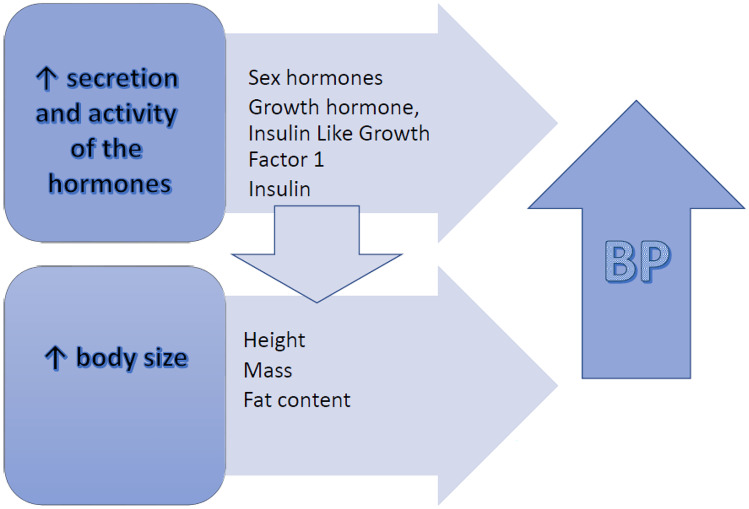
Puberty is a complex process leading to physical, sexual, and psychosocial maturation. The changes in morphology and organ function during puberty also affect blood pressure (BP) regulation, and as a consequence (BP) values change noticeably, reaching values often higher than after reaching full maturity. In children entering puberty, BP, especially systolic, increases and then reaches adult values by the end of puberty. The mechanisms responsible for this process are complex and not fully understood. Sex hormones, growth hormone, insulin-like growth factor-1, and insulin, whose production increases during puberty, significantly regulate BP through complex and overlapping mechanisms. During puberty, the incidence of arterial hypertension also increases, especially in children with excess body weight. The present paper presents the current state of knowledge regarding the influence of processes occurring during puberty on blood pressure.
青春期是一个复杂的过程,导致身体、性和心理社会的成熟。青春期期间形态和器官功能的变化也会影响血压(BP)调节,因此(BP)值会发生明显变化,达到的值通常高于完全成熟后的值。在进入青春期的儿童中,血压,特别是收缩压,会升高,然后在青春期结束时达到成人值。负责这一过程的机制很复杂,尚未完全理解。在青春期,生产增加的性激素、生长激素、胰岛素样生长因子-1 和胰岛素通过复杂和重叠的机制显著调节血压。在青春期,动脉高血压的发病率也会增加,尤其是在超重的儿童中。本文介绍了青春期发生的过程对血压的影响的现有知识状态。