The Sidney Kimmel Comprehensive Cancer Center, Johns Hopkins University School of Medicine, Baltimore, Maryland.
Division of Hematology-Oncology, Department of Medicine, Vanderbilt University Medical Center and Vanderbilt-Ingram Cancer Center, Nashville, Tennessee.
Clin Cancer Res. 2023 Jun 13;29(12):2310-2323. doi: 10.1158/1078-0432.CCR-22-2242.
Patients with small-cell lung cancer (SCLC) have an exceptionally poor prognosis, calling for improved real-time noninvasive biomarkers of therapeutic response.
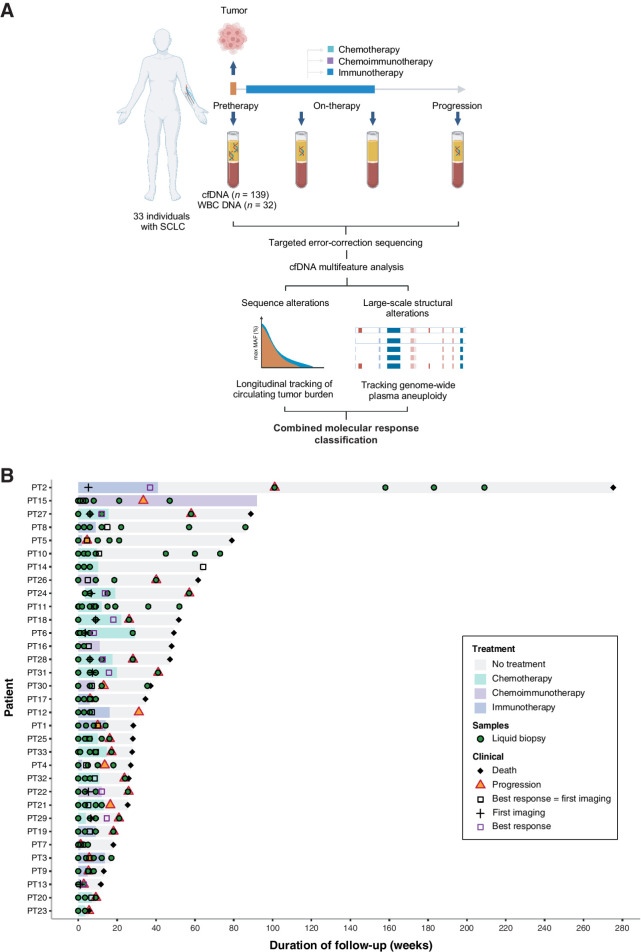
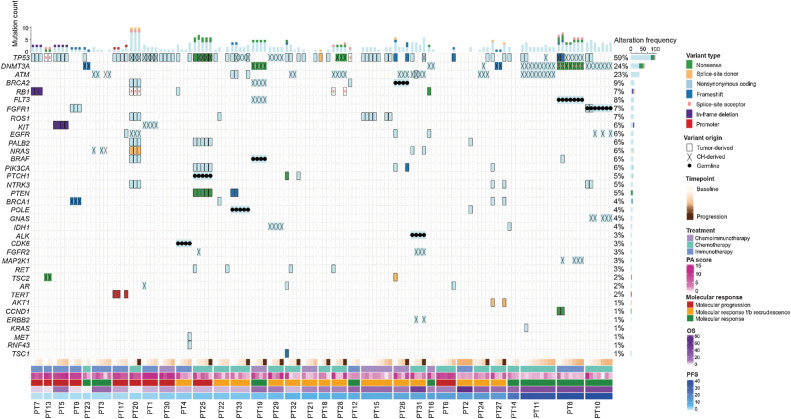
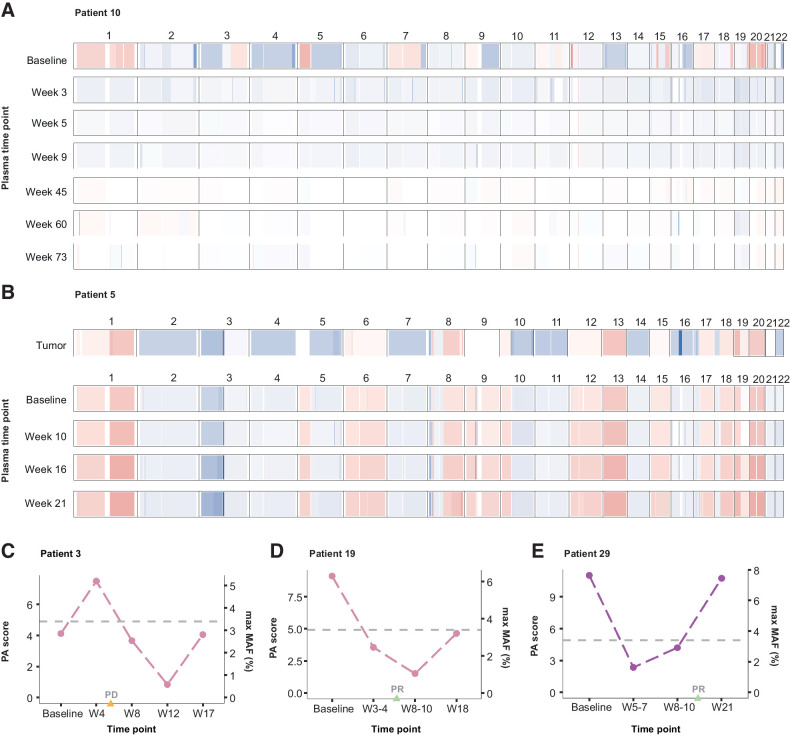
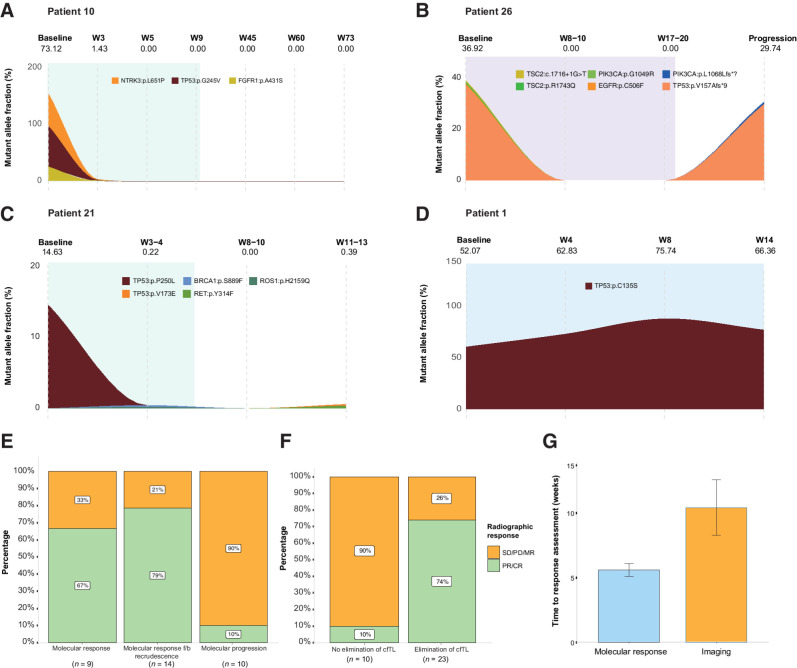
We performed targeted error-correction sequencing on 171 serial plasmas and matched white blood cell (WBC) DNA from 33 patients with metastatic SCLC who received treatment with chemotherapy (n = 16) or immunotherapy-containing (n = 17) regimens. Tumor-derived sequence alterations and plasma aneuploidy were evaluated serially and combined to assess changes in total cell-free tumor load (cfTL). Longitudinal dynamic changes in cfTL were monitored to determine circulating cell-free tumor DNA (ctDNA) molecular response during therapy.
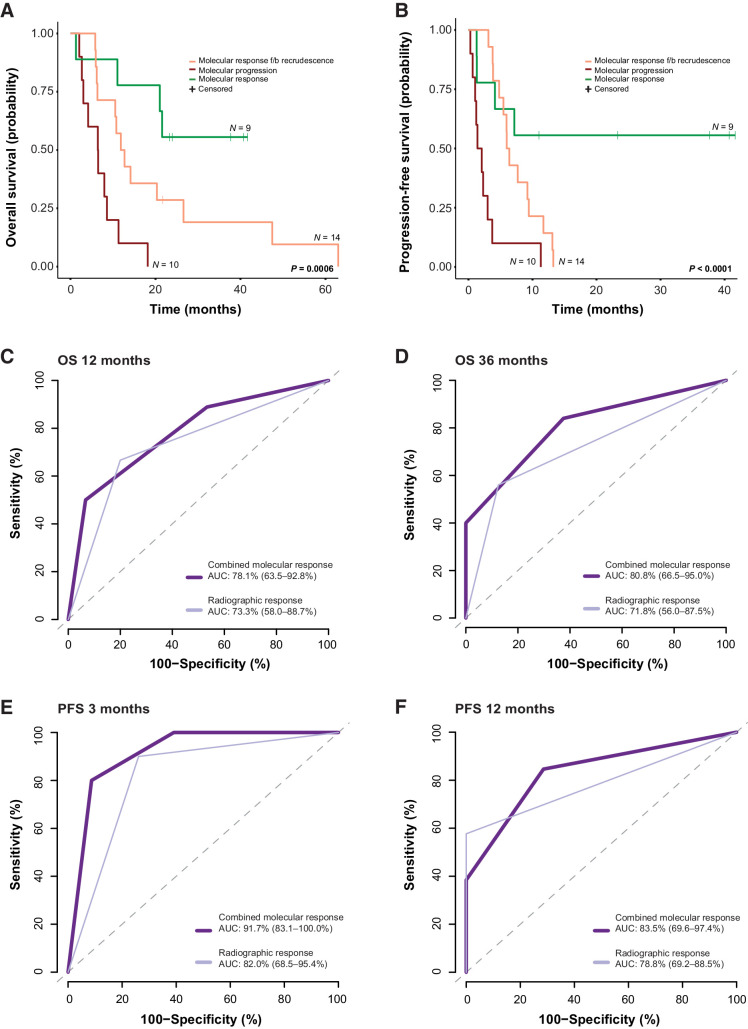
Combined tiered analyses of tumor-derived sequence alterations and plasma aneuploidy allowed for the assessment of ctDNA molecular response in all patients. Patients classified as molecular responders (n = 9) displayed sustained elimination of cfTL to undetectable levels. For 14 patients, we observed initial molecular responses, followed by ctDNA recrudescence. A subset of patients (n = 10) displayed a clear pattern of molecular progression, with persistence of cfTL across all time points. Molecular responses captured the therapeutic effect and long-term clinical outcomes in a more accurate and rapid manner compared with radiographic imaging. Patients with sustained molecular responses had longer overall (log-rank P = 0.0006) and progression-free (log-rank P < 0.0001) survival, with molecular responses detected on average 4 weeks earlier than imaging.
ctDNA analyses provide a precise approach for the assessment of early on-therapy molecular responses and have important implications for the management of patients with SCLC, including the development of improved strategies for real-time tumor burden monitoring. See related commentary by Pellini and Chaudhuri, p. 2176.
小细胞肺癌(SCLC)患者的预后极差,因此需要改进治疗反应的实时无创生物标志物。
我们对 33 名接受化疗(n=16)或含免疫治疗(n=17)方案治疗的转移性 SCLC 患者的 171 份连续血浆和匹配的白细胞(WBC)DNA 进行了靶向纠错测序。我们连续评估肿瘤衍生的序列改变和血浆非整倍性,并将其结合起来评估总游离肿瘤负荷(cfTL)的变化。监测 cfTL 的纵向动态变化,以确定治疗过程中循环游离肿瘤 DNA(ctDNA)的分子反应。
肿瘤衍生序列改变和血浆非整倍性的联合分层分析允许对所有患者进行 ctDNA 分子反应的评估。被归类为分子应答者(n=9)的患者显示 cfTL 持续消除至无法检测水平。对于 14 名患者,我们观察到初始分子应答,随后是 ctDNA 复发。一部分患者(n=10)显示出明确的分子进展模式,所有时间点的 cfTL 均持续存在。与影像学相比,分子反应更准确、更快速地捕捉治疗效果和长期临床结局。具有持续分子反应的患者具有更长的总生存期(对数秩 P=0.0006)和无进展生存期(对数秩 P<0.0001),分子反应的检测平均比影像学早 4 周。
ctDNA 分析为评估治疗早期的分子反应提供了一种精确的方法,对 SCLC 患者的管理具有重要意义,包括开发实时肿瘤负担监测的改进策略。请参阅 Pellini 和 Chaudhuri 的相关评论,第 2176 页。