INSERM UMR-996, Inserm, Inflammation, Microbiome and Immunosurveillance, Faculté de Pharmacie, Université Paris-Saclay, 17, Avenue Des Sciences, 91400, Orsay, France.
Institut de Chimie Physique, CNRS, Université Paris-Saclay, 91400, Orsay, France.
Part Fibre Toxicol. 2023 Apr 19;20(1):12. doi: 10.1186/s12989-023-00527-9.
Synthetic amorphous silica nanoparticles (SAS-NPs) are widely employed in pharmaceutics, cosmetics, food and concretes. Workers and the general population are exposed daily via diverse routes of exposure. SAS-NPs are generally recognized as safe (GRAS) by the Food and Drug Administration, but because of their nanoscale size and extensive uses, a better assessment of their immunotoxicity is required. In the presence of immune "danger signals", dendritic cells (DCs) undergo a maturation process resulting in their migration to regional lymph nodes where they activate naive T-cells. We have previously shown that fumed silica pyrogenic SAS-NPs promote the two first steps of the adaptative immune response by triggering DC maturation and T-lymphocyte response, suggesting that SAS-NPs could behave as immune "danger signals". The present work aims to identify the mechanism and the signalling pathways involved in DC phenotype modifications provoked by pyrogenic SAS-NPs. As a pivotal intracellular signalling molecule whose phosphorylation is associated with DC maturation, we hypothesized that Spleen tyrosine kinase (Syk) may play a central role in SAS-NPs-induced DC response.
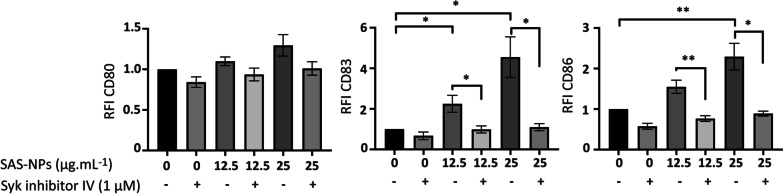
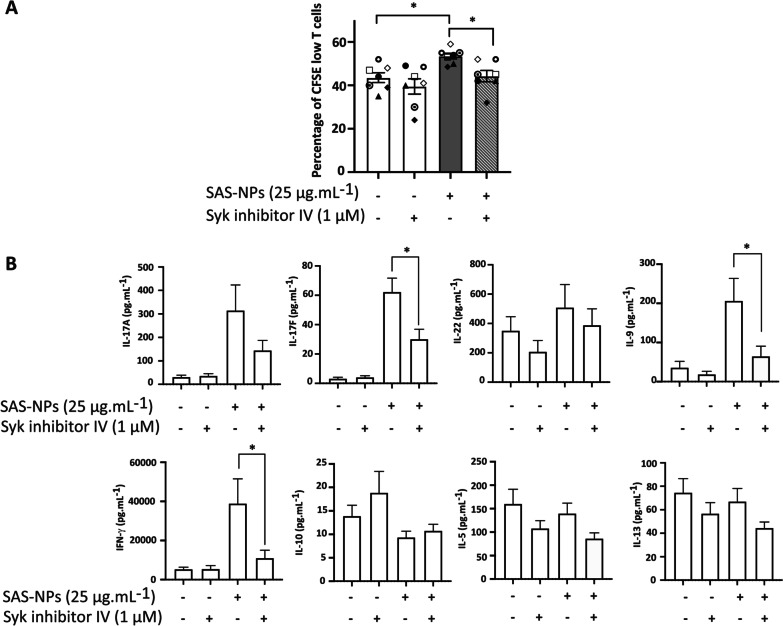
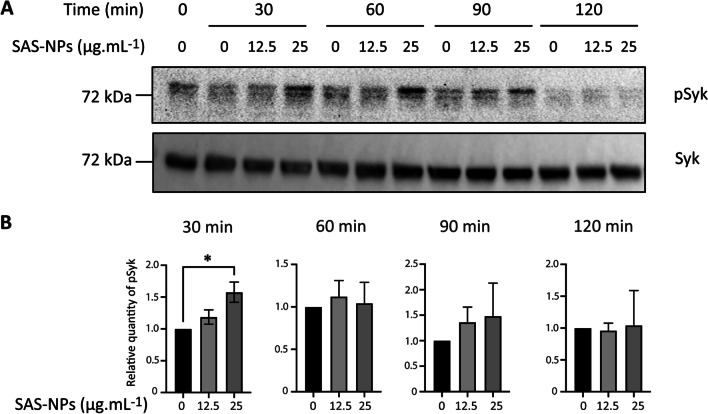
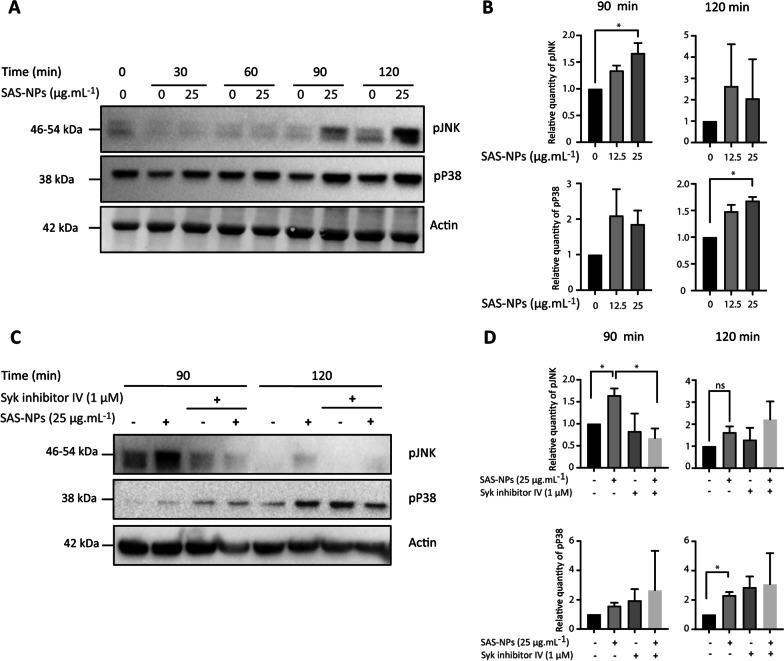
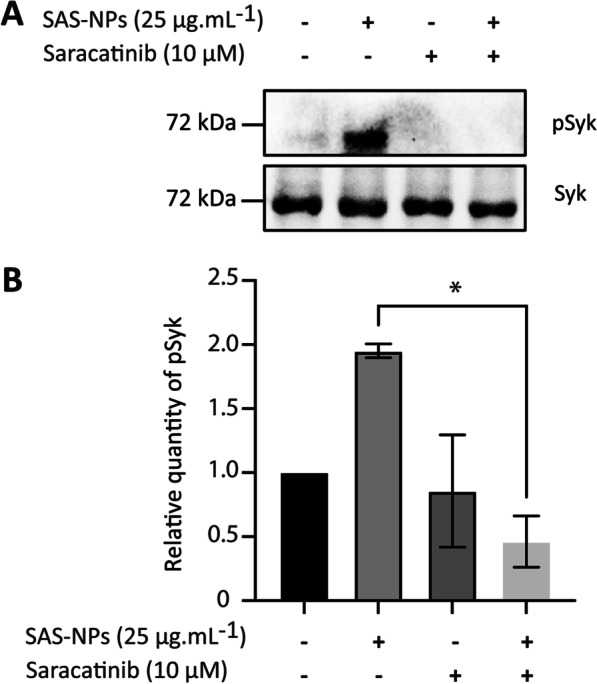
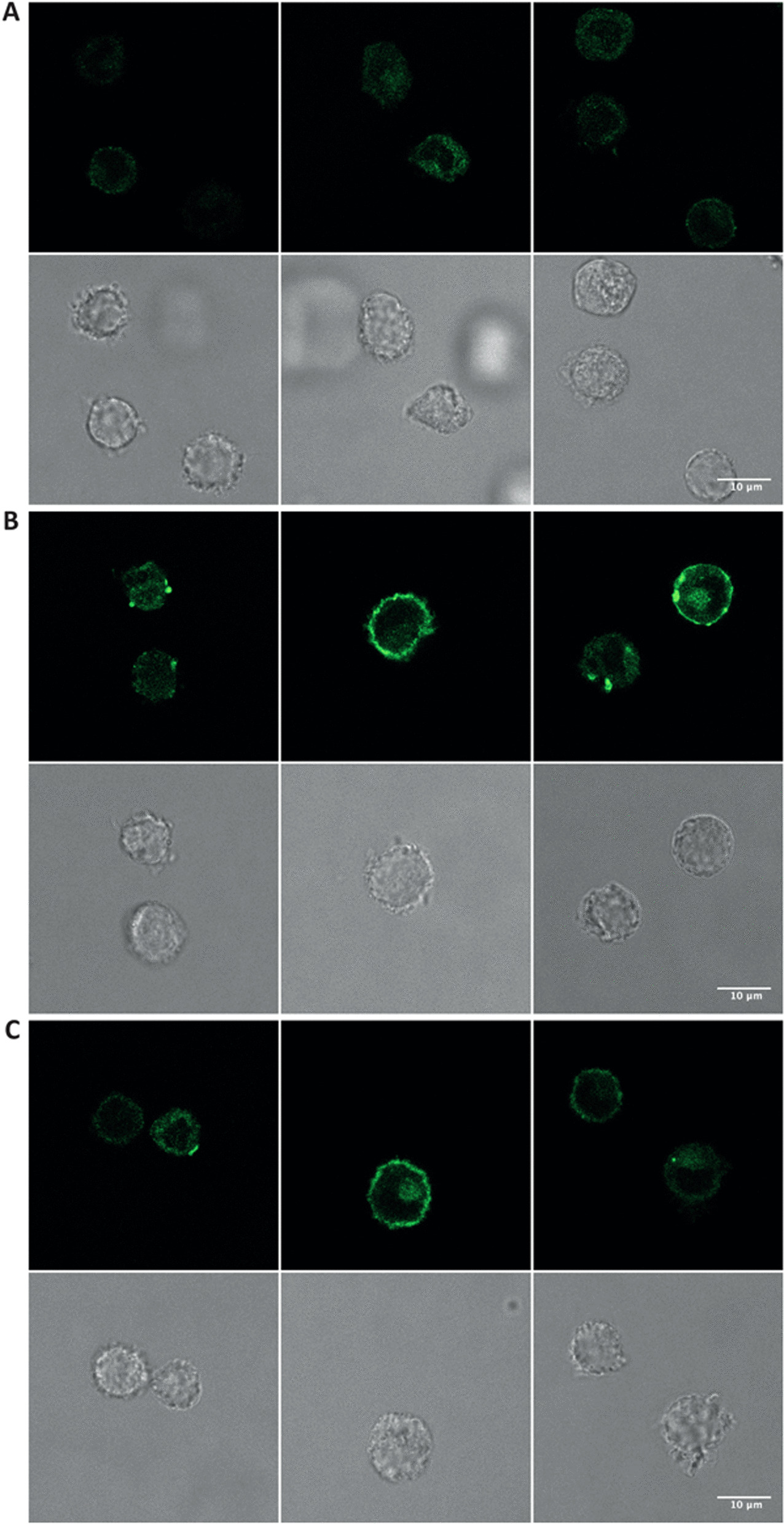
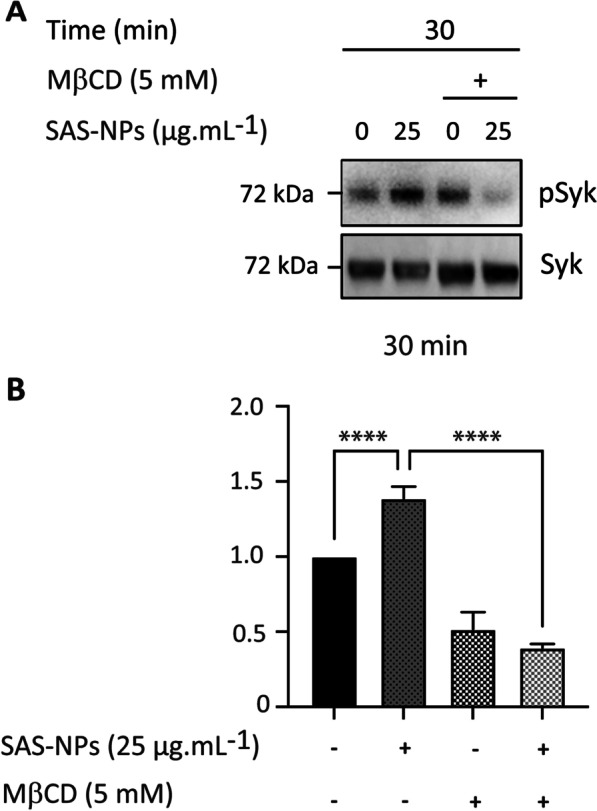
In human monocyte-derived dendritic cells (moDCs) exposed to SAS-NPs, Syk inhibition prevented the induction of CD83 and CD86 marker expression. A significant decrease in T-cell proliferation and IFN-γ, IL-17F and IL-9 production was found in an allogeneic moDC:T-cell co-culture model. These results suggested that the activation of Syk was necessary for optimal co-stimulation of T-cells. Moreover, Syk phosphorylation, observed 30 min after SAS-NP exposure, occurred upstream of the c-Jun N-terminal kinase (JNK) Mitogen-activated protein kinases (MAPK) and was elicited by the Src family of protein tyrosine kinases. Our results also showed for the first time that SAS-NPs provoked aggregation of lipid rafts in moDCs and that MβCD-mediated raft destabilisation altered Syk activation.
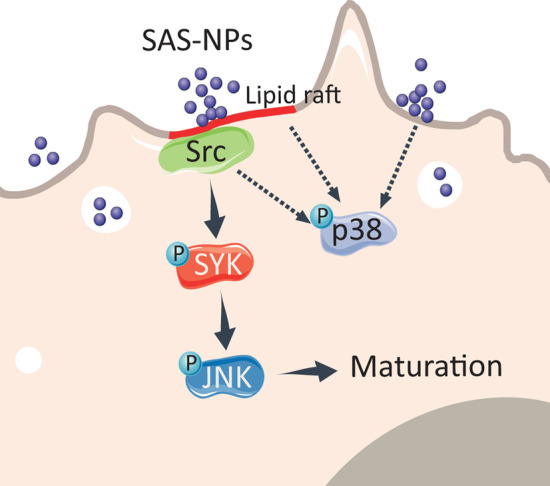
We showed that SAS-NPs could act as an immune danger signal in DCs through a Syk-dependent pathway. Our findings revealed an original mechanism whereby the interaction of SAS-NPs with DC membranes promoted aggregation of lipid rafts, leading to a Src kinase-initiated activation loop triggering Syk activation and functional DC maturation.
合成无定形二氧化硅纳米颗粒(SAS-NPs)广泛应用于制药、化妆品、食品和混凝土中。工人和普通大众每天通过不同的暴露途径接触它们。SAS-NPs 已被美国食品和药物管理局(FDA)认定为一般认为是安全的(GRAS),但由于其纳米尺寸和广泛用途,需要更好地评估其免疫毒性。在存在免疫“危险信号”的情况下,树突状细胞(DCs)会经历成熟过程,导致其迁移到区域淋巴结,在那里激活幼稚 T 细胞。我们之前已经表明,发烟二氧化硅热解法 SAS-NPs 通过触发 DC 成熟和 T 淋巴细胞反应来促进适应性免疫反应的前两个步骤,这表明 SAS-NPs 可能表现为免疫“危险信号”。本研究旨在确定热解法 SAS-NPs 引起 DC 表型改变的机制和信号通路。作为一种关键的细胞内信号分子,其磷酸化与 DC 成熟相关,我们假设脾酪氨酸激酶(Syk)可能在 SAS-NPs 诱导的 DC 反应中发挥核心作用。
在暴露于 SAS-NPs 的人单核细胞衍生的树突状细胞(moDCs)中,Syk 抑制阻止了 CD83 和 CD86 标志物的诱导表达。在同种异体 moDC:T 细胞共培养模型中,发现 T 细胞增殖和 IFN-γ、IL-17F 和 IL-9 产生显著减少。这些结果表明,Syk 的激活对于 T 细胞的最佳共刺激是必要的。此外,在暴露于 SAS-NP 后 30 分钟观察到的 Syk 磷酸化发生在 c-Jun N 末端激酶(JNK)丝裂原活化蛋白激酶(MAPK)的上游,并且由 Src 家族蛋白酪氨酸激酶引发。我们的结果还首次表明,SAS-NPs 可引发 moDC 中脂筏的聚集,并且 MβCD 介导的筏破坏改变了 Syk 激活。
我们表明,SAS-NPs 可以通过依赖 Syk 的途径在 DCs 中充当免疫危险信号。我们的研究结果揭示了一种原始机制,其中 SAS-NPs 与 DC 膜的相互作用促进了脂筏的聚集,导致Src 激酶引发的激活环触发 Syk 激活和功能性 DC 成熟。