Yin Liqian, Ding Yansheng, Wang Yang, Wang Chengdong, Sun Kuisheng, Wang Liquan
College of Medical Laboratory Medicine, Weifang Medical University, Weifang, Shandong, People's Republic of China.
Clinical Laboratory, Weifang People's Hospital, Weifang, Shandong, People's Republic of China.
Int J Gen Med. 2023 Apr 13;16:1279-1294. doi: 10.2147/IJGM.S406802. eCollection 2023.
MicroRNAs influence the growth and metastasis of breast cancer (BC) by regulating their target genes. Our study aims to screen and identify miRNAs that are closely related to the development of breast cancer, and explore the role of these miRNAs and their target genes in breast cancer.
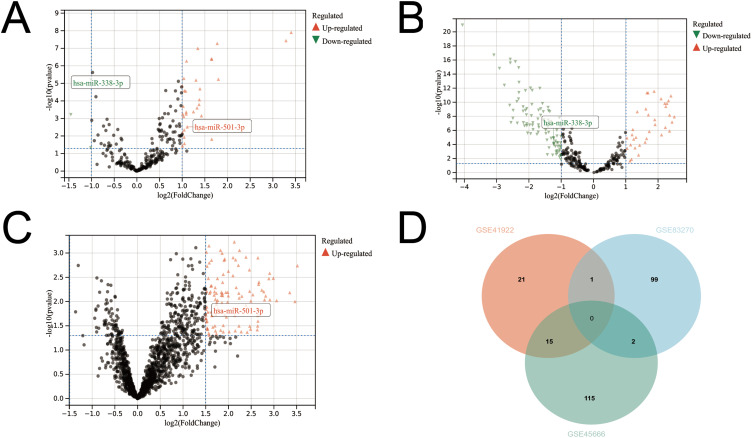
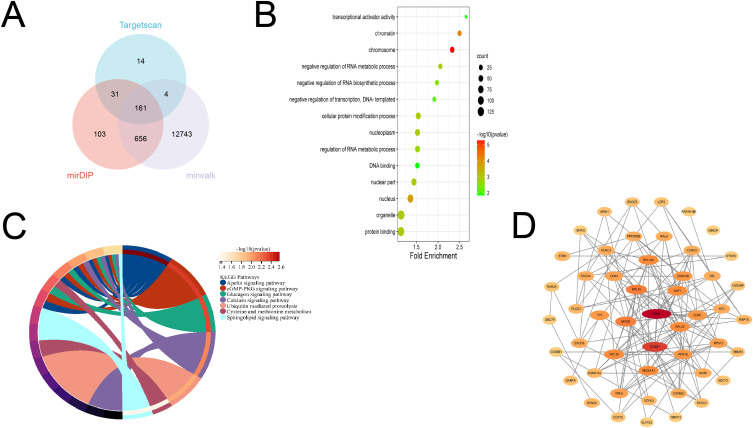
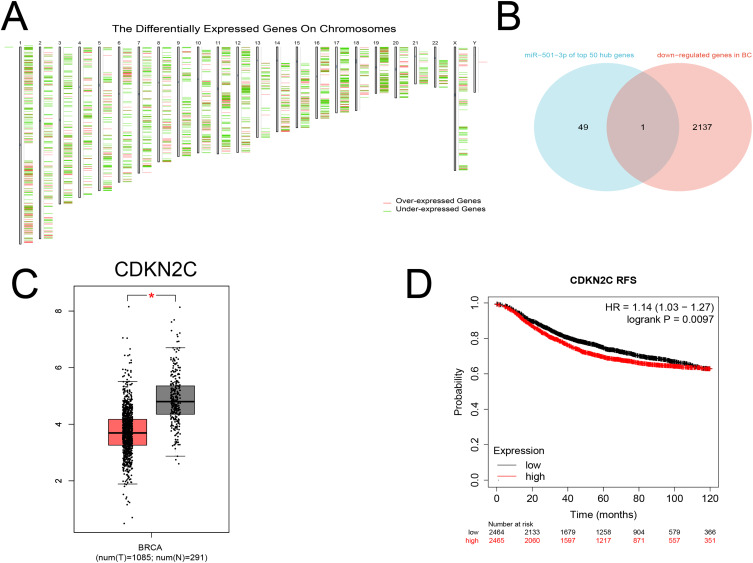
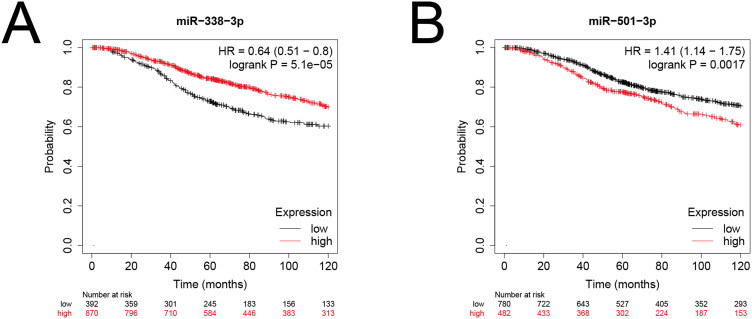
Bioinformatics tools were applied to screen breast cancer-associated miRNAs and predict their potential target genes. Serum miRNAs were measured using RT-PCR. The correlation between miRNA expression and different clinicopathological features of BC patients was analyzed. Receiver operating characteristic (ROC) curve was used to evaluate the diagnostic value. GEPIA, Kaplan-Meier Plotter, TIMER, and TISIDB databases were used to validate the expression levels and their prognostic value, as well as their target gene associated with immune infiltrating cells and immune checkpoints.
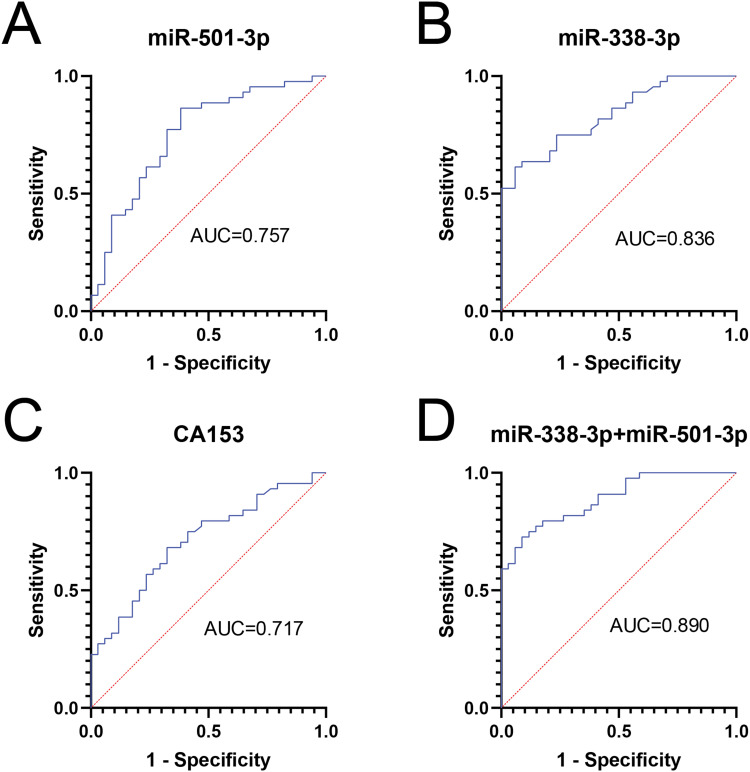
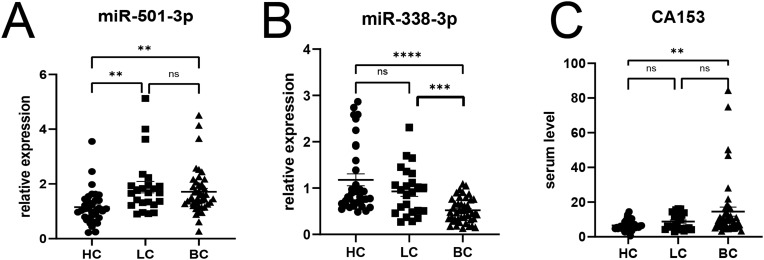
Breast cancer-associated serum miR-338-3p and miR-501-3p were screened and verified for the first time. Serum miR-501-3p was elevated in BC and was closely linked to the ki-67 index and histological grade. CDKN2C, as a potential target gene of miR-501-3p, was enriched in the cGMP-PKG signaling pathway. Serum miR-338-3p was reduced in BC and was strongly linked to lymph node metastasis and histological grading. ACTR2, CDH1, COL1A1, RBBP5, RRM1, and TPM3, as potential target genes of miR-338-3p, were enriched in MAPK, PI3K-Akt, and RAS signaling pathways. These target genes were found to be linked to breast cancer prognosis, immune infiltrating cells, and immune checkpoint inhibitors. Analysis of ROC curve showed that serum miR-501-3p combined with serum miR-338-3p had a high diagnostic value in breast cancer (AUC: 0.89, 95% CI: 0.821-0.958).
Serum miR-501-3p combined with serum miR-338-3p show obvious clinical significance in the diagnosis and prognosis of breast cancer, which suggests that they may act as novel diagnostic biomarkers for breast cancer.
微小RNA通过调控其靶基因影响乳腺癌(BC)的生长和转移。本研究旨在筛选和鉴定与乳腺癌发生密切相关的微小RNA,并探讨这些微小RNA及其靶基因在乳腺癌中的作用。
应用生物信息学工具筛选与乳腺癌相关的微小RNA并预测其潜在靶基因。采用逆转录聚合酶链反应(RT-PCR)检测血清微小RNA。分析微小RNA表达与BC患者不同临床病理特征之间的相关性。采用受试者工作特征(ROC)曲线评估诊断价值。利用GEPIA、Kaplan-Meier Plotter、TIMER和TISIDB数据库验证表达水平及其预后价值,以及与免疫浸润细胞和免疫检查点相关的靶基因。
首次筛选并验证了与乳腺癌相关的血清miR-338-3p和miR-501-3p。血清miR-501-3p在BC中升高,且与ki-67指数和组织学分级密切相关。CDKN2C作为miR-501-3p的潜在靶基因,在cGMP-PKG信号通路中富集。血清miR-338-3p在BC中降低,且与淋巴结转移和组织学分级密切相关。ACTR2、CDH1、COL1A1、RBBP5、RRM1和TPM3作为miR-338-3p的潜在靶基因,在MAPK、PI3K-Akt和RAS信号通路中富集。发现这些靶基因与乳腺癌预后、免疫浸润细胞和免疫检查点抑制剂有关。ROC曲线分析显示,血清miR-501-3p联合血清miR-338-3p对乳腺癌具有较高的诊断价值(AUC:0.89, 95%CI:0.821-0.958)。
血清miR-501-3p联合血清miR-338-3p在乳腺癌的诊断和预后中具有明显的临床意义,提示它们可能作为乳腺癌的新型诊断生物标志物。