Chakrapani Venkatesan, Newman Peter A, Shunmugam Murali, Rawat Shruta, Mohan Biji R, Baruah Dicky, Tepjan Suchon
Centre for Sexuality and Health Research and Policy (C-SHaRP), Chennai, India.
The Humsafar Trust, Mumbai, India.
PLOS Glob Public Health. 2023 Apr 20;3(4):e0001362. doi: 10.1371/journal.pgph.0001362. eCollection 2023.
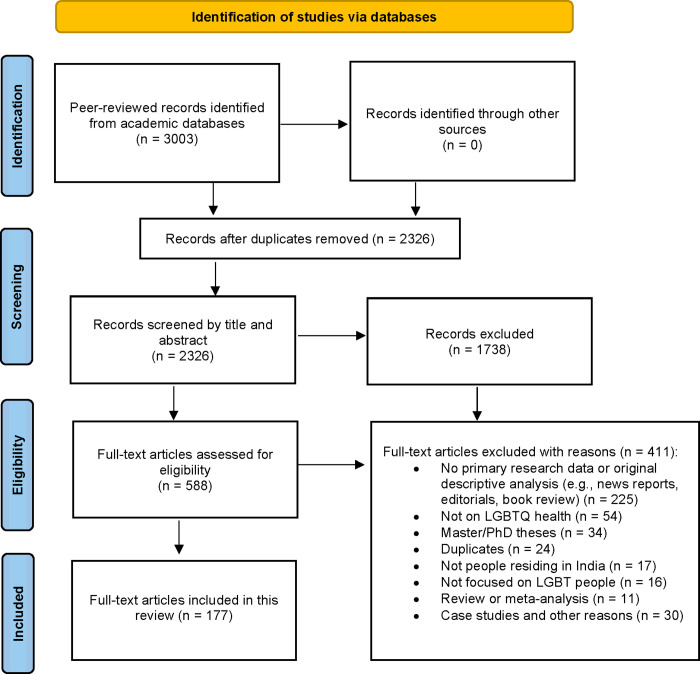
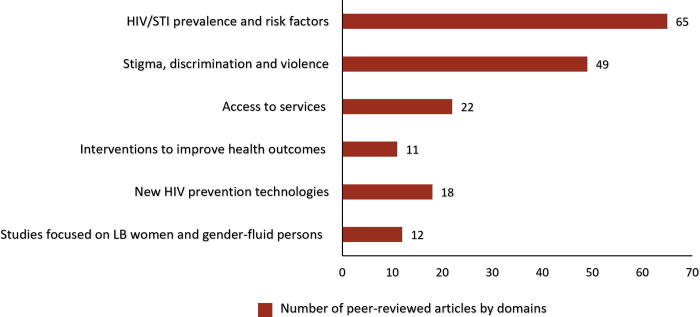
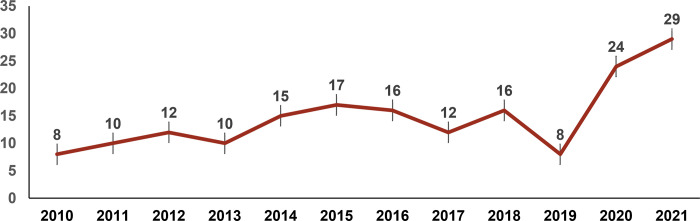
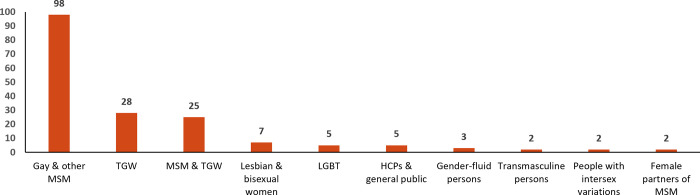
Amid incremental progress in establishing an enabling legal and policy environment for lesbian, gay, bisexual, transgender and queer-identified people, and people with intersex variations (LGBTQI+) in India, evidence gaps on LGBTQI+ health are of increasing concern. To that end, we conducted a scoping review to map and synthesize the current evidence base, identify research gaps, and provide recommendations for future research. We conducted a scoping review using the Joanna Briggs Institute methodology. We systematically searched 14 databases to identify peer-reviewed journal articles published in English language between January 1, 2010 and November 20, 2021, that reported empirical qualitative, quantitative or mixed methods data on LGBTQI+ people's health in India. Out of 3,003 results in total, we identified 177 eligible articles; 62% used quantitative, 31% qualitative, and 7% mixed methods. The majority (55%) focused on gay and other men who have sex with men (MSM), 16% transgender women, and 14% both of these populations; 4% focused on lesbian and bisexual women, and 2% on transmasculine people. Overall, studies reported high prevalence of HIV and sexually transmitted infections; multilevel risk factors for HIV; high levels of mental health burden linked to stigma, discrimination, and violence victimization; and non-availability of gender-affirmative medical care in government hospitals. Few longitudinal studies and intervention studies were identified. Findings suggest that LGBTQI+ health research in India needs to move beyond the predominant focus on HIV, and gay men/MSM and transgender women, to include mental health and non-communicable diseases, and individuals across the LGBTQI+ spectrum. Future research should build on largely descriptive studies to include explanatory and intervention studies, beyond urban to rural sites, and examine healthcare and service needs among LGBTQI+ people across the life course. Increased Indian government funding for LGBTQI+ health research, including dedicated support and training for early career researchers, is crucial to building a comprehensive and sustainable evidence base to inform targeted health policies and programs moving forward.
在为印度的女同性恋、男同性恋、双性恋、跨性别者及酷儿群体(LGBTQI+)以及具有双性特征的人建立有利的法律和政策环境方面虽有渐进式进展,但LGBTQI+健康方面的证据缺口日益受到关注。为此,我们开展了一项范围综述,以梳理和综合当前的证据基础,识别研究缺口,并为未来研究提供建议。我们采用乔安娜·布里格斯研究所的方法进行了范围综述。我们系统地检索了14个数据库,以识别2010年1月1日至2021年11月20日期间发表的、以英文撰写的同行评审期刊文章,这些文章报告了关于印度LGBTQI+人群健康的实证定性、定量或混合方法数据。在总共3003条结果中,我们识别出177篇符合条件的文章;62%采用定量方法,31%采用定性方法,7%采用混合方法。大多数(55%)关注男同性恋者和其他男男性行为者(MSM),16%关注跨性别女性,14%关注这两类人群;4%关注女同性恋者和双性恋女性,2%关注跨性别男性。总体而言,研究报告了艾滋病毒和性传播感染的高流行率;艾滋病毒的多层次风险因素;与耻辱感、歧视和暴力受害相关的高心理健康负担;以及政府医院缺乏性别肯定性医疗服务。识别出的纵向研究和干预研究很少。研究结果表明,印度的LGBTQI+健康研究需要超越对艾滋病毒以及男同性恋者/MSM和跨性别女性的主要关注,纳入心理健康和非传染性疾病,以及LGBTQI+群体中的所有个体。未来的研究应在主要描述性研究的基础上,纳入解释性和干预性研究,从城市扩展到农村地区,并研究LGBTQI+人群在整个生命历程中的医疗保健和服务需求。印度政府增加对LGBTQI+健康研究的资金投入,包括为早期职业研究人员提供专门支持和培训,对于建立全面且可持续的证据基础以指导未来有针对性的健康政策和项目至关重要。