Sun Weiwei, Dai Lili, Cao Yuqing, Pan Pengtao, Zhi Lijuan, Wang Xinke, Yuan Xinzhong, Gao Zi, Guo Sheng, Liu Guoyan, Yin Junlei, Xie Liangliang, Wang Liping, Wang Yanling, Li Wensheng, Li Hong, Jia Yunjie
School of Medicine, Xinxiang University, Jinsui Road 191, Xinxiang, 453003 China.
Department of Immunology, School of Basic Medical Sciences, Xinxiang Medical University, Xinxiang, China.
Cancer Nanotechnol. 2023;14(1):34. doi: 10.1186/s12645-023-00190-x. Epub 2023 Apr 17.
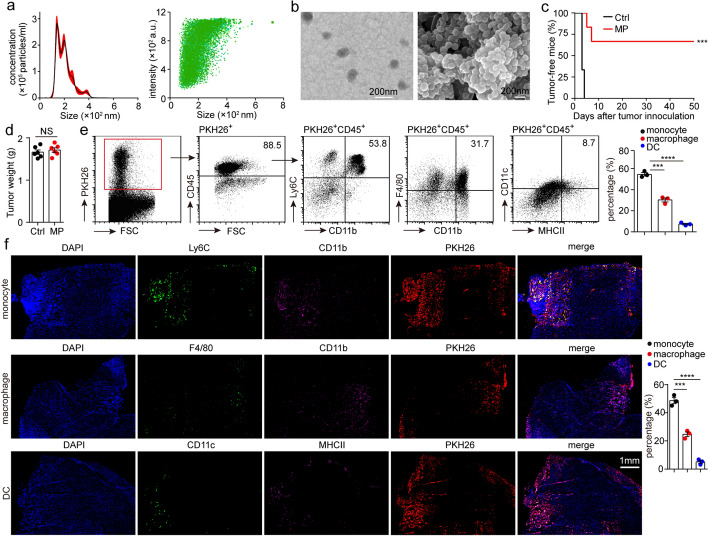
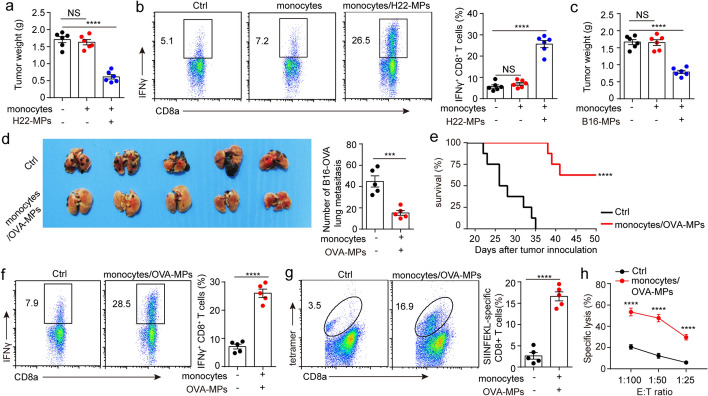
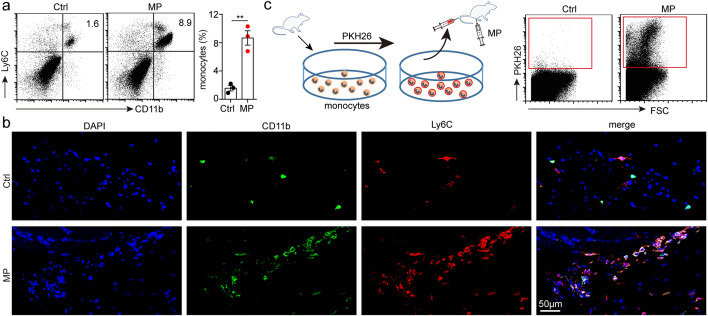
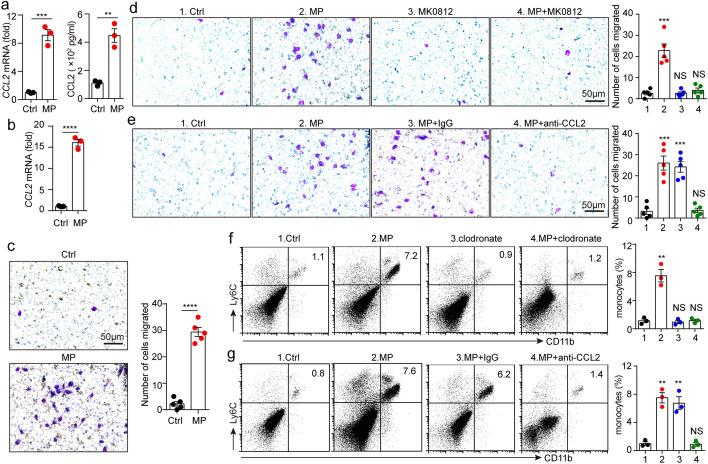
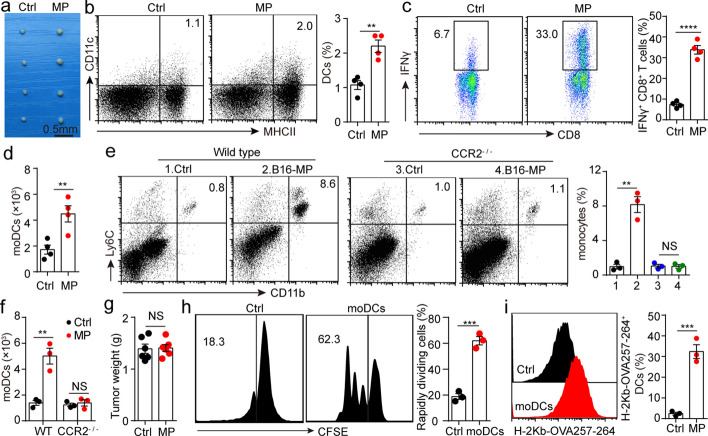
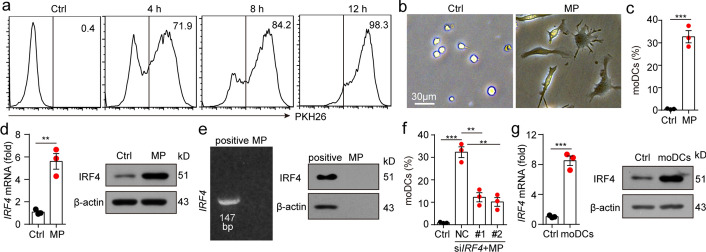
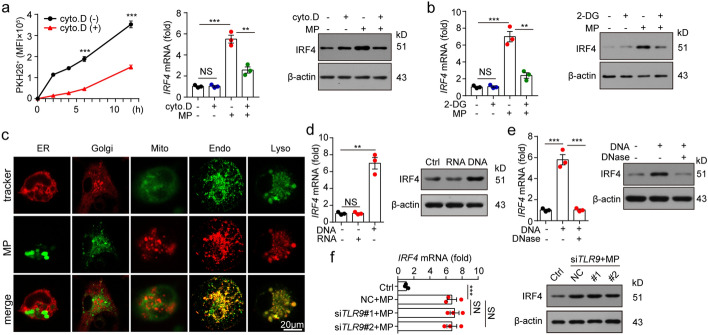
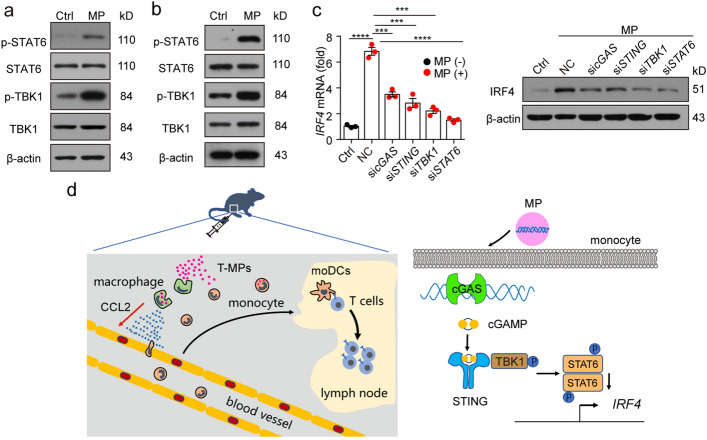
Tumor microparticles (T-MPs) are considered as a tumor vaccine candidate. Although some studies have analyzed the mechanism of T-MPs as tumor vaccine, we still lack understanding of how T-MPs stimulate a strong anti-tumor immune response. Here, we show that T-MPs induce macrophages to release a key chemotactic factor CCL2, which attracts monocytes to the vaccine injection site and enhances endocytosis of antigen. Monocytes subsequently enter the draining lymph node, and differentiate into monocyte-derived DCs (moDCs), which present tumor antigens to T lymphocytes and deliver a potent anti-tumor immune response. Mechanically, T-MPs activate the cGAS-STING signaling through DNA fragments, and then induce monocytes to upregulate the expression of IRF4, which is a key factor for monocyte differentiation into moDCs. More importantly, monocytes that have endocytosed T-MPs acquire the ability to treat tumors. Collectively, this work might provide novel vaccination strategy for the development of tumor vaccines and facilitate the application of T-MPs for clinic oncotherapy.
The online version contains supplementary material available at 10.1186/s12645-023-00190-x.
肿瘤微颗粒(T-MPs)被认为是一种肿瘤疫苗候选物。尽管一些研究分析了T-MPs作为肿瘤疫苗的机制,但我们仍然缺乏对T-MPs如何刺激强烈抗肿瘤免疫反应的了解。在此,我们表明T-MPs诱导巨噬细胞释放关键趋化因子CCL2,CCL2吸引单核细胞至疫苗注射部位并增强抗原的内吞作用。单核细胞随后进入引流淋巴结,并分化为单核细胞衍生的树突状细胞(moDCs),moDCs将肿瘤抗原呈递给T淋巴细胞并引发有效的抗肿瘤免疫反应。从机制上讲,T-MPs通过DNA片段激活cGAS-STING信号通路,然后诱导单核细胞上调IRF4的表达,IRF4是单核细胞分化为moDCs的关键因子。更重要的是,内吞了T-MPs的单核细胞获得了治疗肿瘤的能力。总的来说,这项工作可能为肿瘤疫苗的开发提供新的疫苗接种策略,并促进T-MPs在临床肿瘤治疗中的应用。
在线版本包含可在10.1186/s12645-023-00190-x获取的补充材料。