Chen Qichao, Li Liang, Guo Shibang, Liu Zhankui, Liu Lixinjie, Tan Chen, Chen Huanchun, Wang Xiangru
State Key Laboratory of Agricultural Microbiology, College of Veterinary Medicine, Huazhong Agricultural University, Wuhan, China.
Key Laboratory of Preventive Veterinary Medicine in Hubei Province, The Cooperative Innovation Center for Sustainable Pig Production, Wuhan, China.
Front Microbiol. 2023 Apr 6;14:1169699. doi: 10.3389/fmicb.2023.1169699. eCollection 2023.
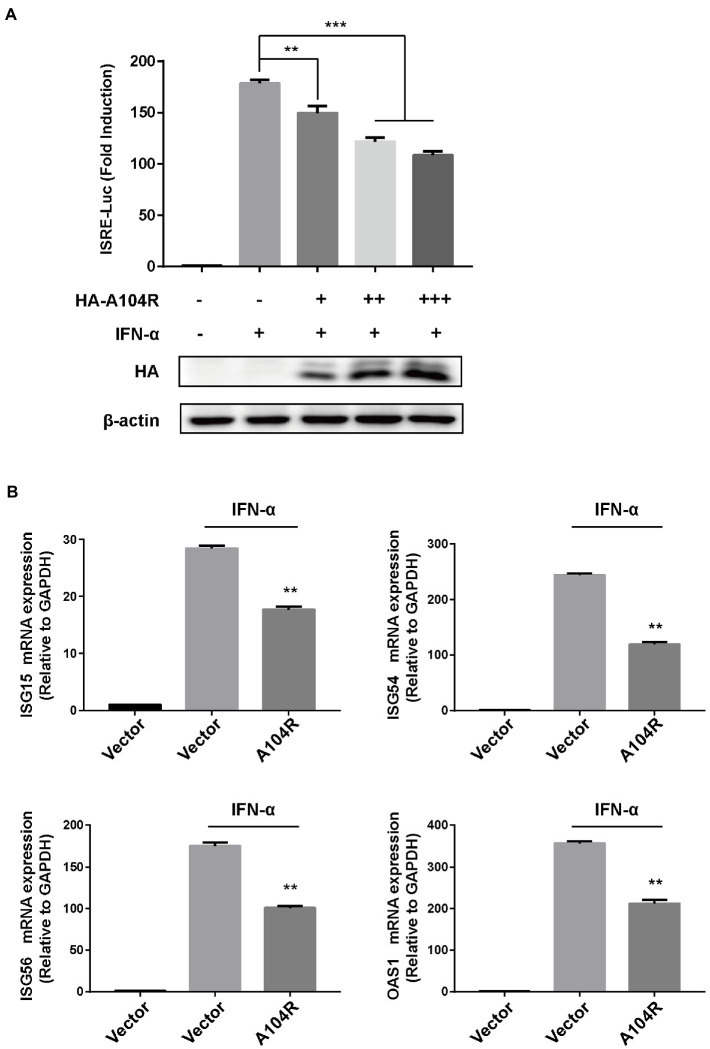
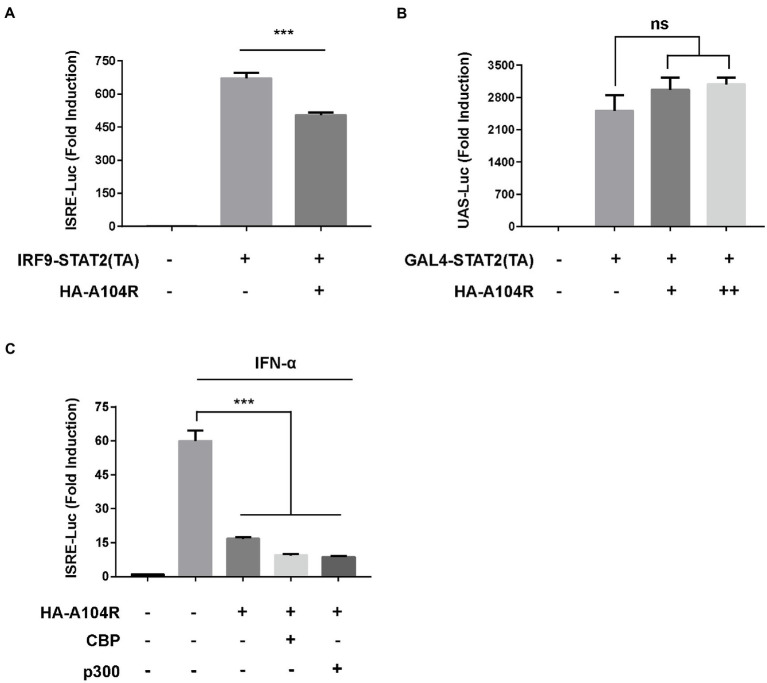
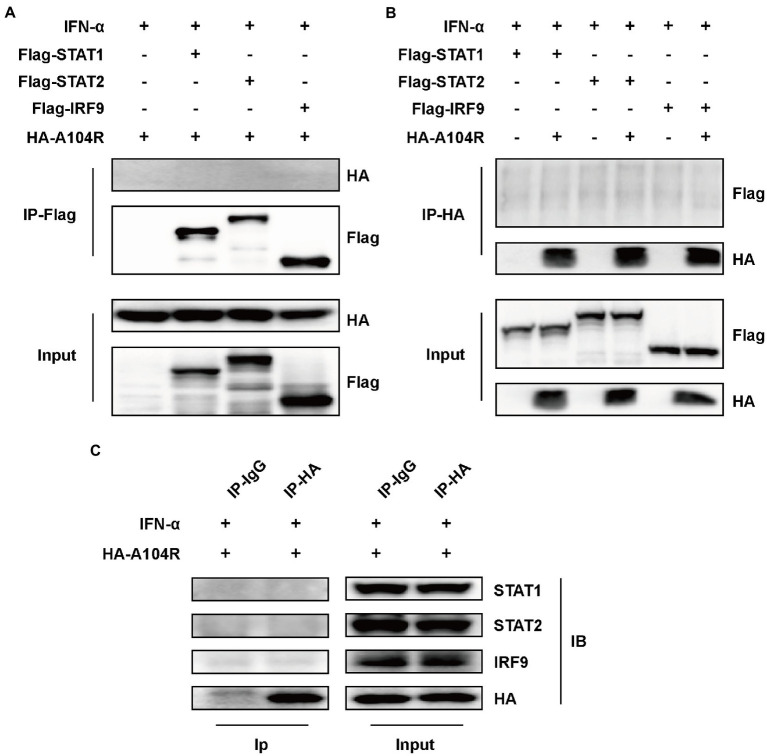
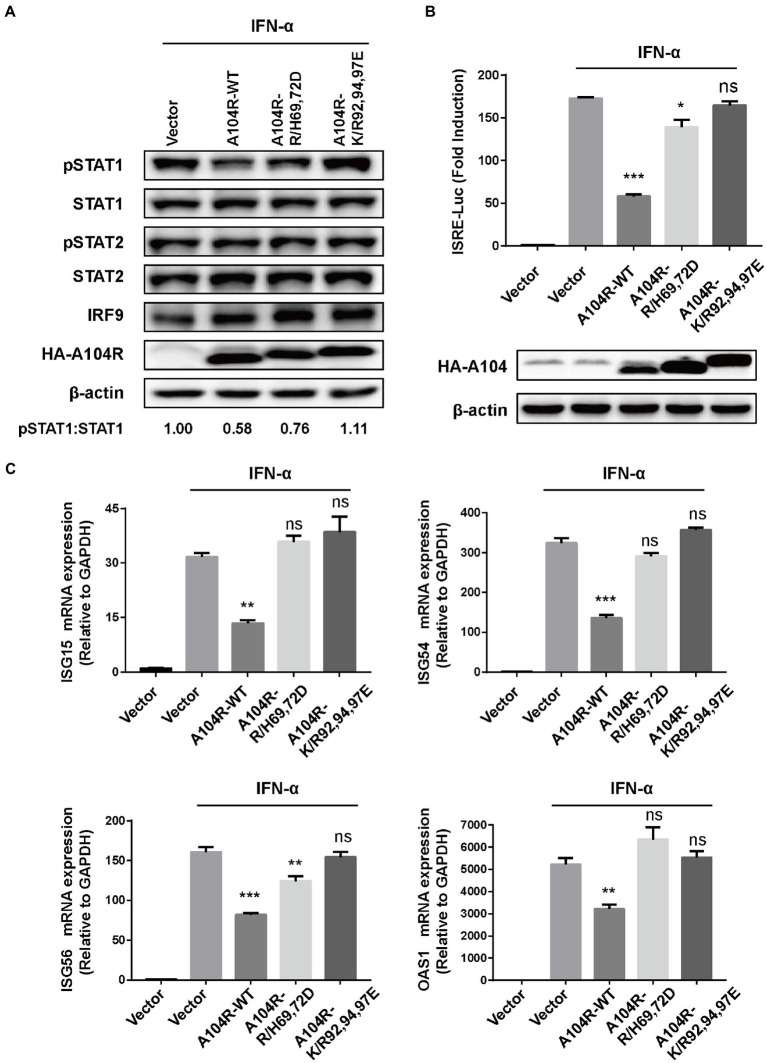
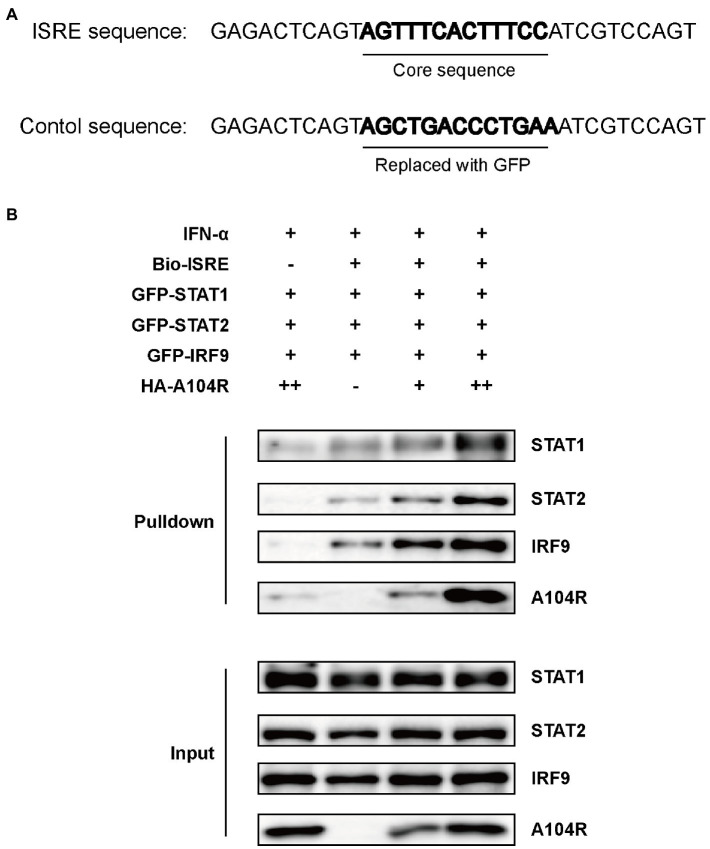
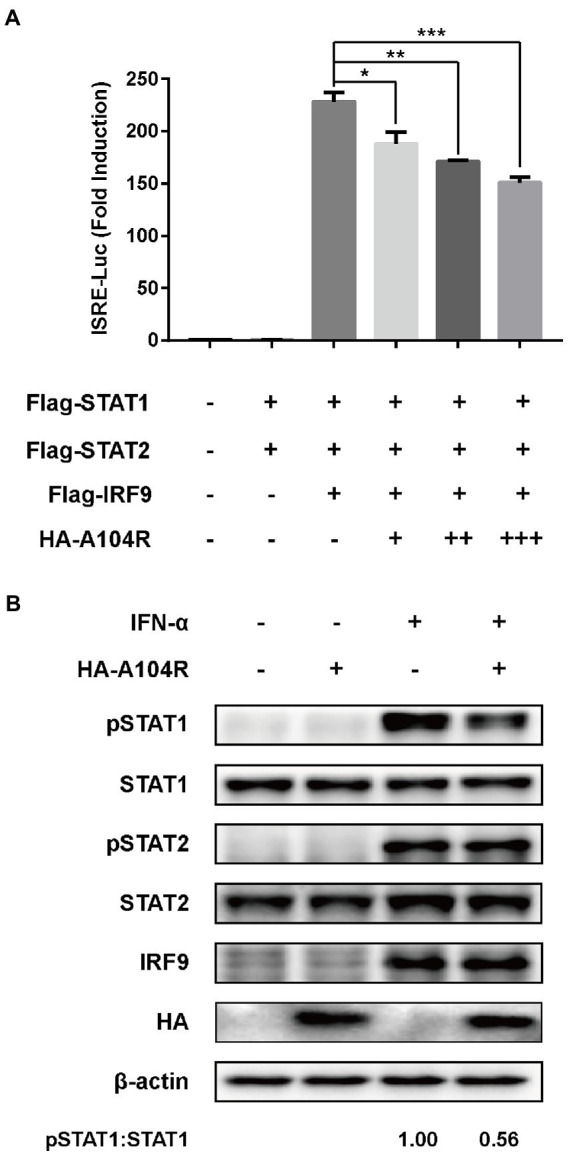
This study evaluates the role of the late viral protein, pA104R, in African swine fever virus immunosuppression. ASFV-encoded pA104R is a putative histone-like protein that is highly conserved throughout different virulent and non-virulent isolates. Previous studies have demonstrated that pA104R plays a vital role in the ASFV replication cycle and is a potential target for antiviral therapy. Here, we demonstrated that pA104R is a potent antagonist of type I interferon signaling. IFN-stimulated response element activity and subsequent transcription of co-transfected and endogenous interferon-stimulated genes were attenuated by pA104R treatment in HEK-293 T cells. Immunoprecipitation assay and reciprocal pull-down showed that pA104R does not interact directly with STAT1, STAT2, or IRF9. However, pA104R could inhibit IFN signaling by attenuating STAT1 phosphorylation, and we identified the critical amino acid residues (R/H69,72 and K/R92,94,97) involved through the targeted mutation functional assays. Although pA104R is a histone-like protein localized to the nucleus, it did not inhibit IFN signaling through its DNA-binding capacity. In addition, activation of the ISRE promoter by IRF9-Stat2(TA), a STAT1-independent pathway, was inhibited by pA104R. Further results revealed that both the transcriptional activation and recruitment of transcriptional stimulators by interferon-stimulated gene factor 3 were not impaired. Although we failed to determine a mechanism for pA104R-mediated IFN signaling inhibition other than attenuating the phosphorylation of STAT1, these results might imply a possible involvement of epigenetic modification by ASFV pA104R. Taken together, these findings support that pA104R is an antagonist of type I interferon signaling, which may interfere with multiple signaling pathways.
本研究评估了非洲猪瘟病毒晚期病毒蛋白pA104R在免疫抑制中的作用。非洲猪瘟病毒编码的pA104R是一种假定的组蛋白样蛋白,在不同的强毒株和无毒株中高度保守。先前的研究表明,pA104R在非洲猪瘟病毒复制周期中起着至关重要的作用,是抗病毒治疗的潜在靶点。在此,我们证明pA104R是I型干扰素信号的有效拮抗剂。在HEK-293 T细胞中,pA104R处理可减弱干扰素刺激反应元件活性以及共转染和内源性干扰素刺激基因的后续转录。免疫沉淀试验和相互下拉实验表明,pA104R不直接与信号转导和转录激活因子1(STAT1)、信号转导和转录激活因子2(STAT2)或干扰素调节因子9(IRF9)相互作用。然而,pA104R可通过减弱STAT1磷酸化来抑制干扰素信号,并且我们通过靶向突变功能试验确定了相关的关键氨基酸残基(R/H69,72和K/R92,94,97)。尽管pA104R是一种定位于细胞核的组蛋白样蛋白,但它并非通过其DNA结合能力来抑制干扰素信号。此外,pA104R可抑制由IRF9-Stat2(TA)(一种不依赖STAT1的途径)激活的干扰素刺激反应元件启动子。进一步的结果显示,干扰素刺激基因因子3的转录激活和转录刺激因子的募集均未受损。尽管除了减弱STAT1磷酸化外,我们未能确定pA104R介导的干扰素信号抑制机制,但这些结果可能暗示非洲猪瘟病毒pA104R可能参与表观遗传修饰。综上所述,这些发现支持pA104R是I型干扰素信号的拮抗剂,可能会干扰多种信号通路。