Department of Rheumatology and Immunology, First Affiliated Hospital of Anhui Medical University, Hefei, China.
Division of Rheumatology/Allergy and Clinical Immunology, University of California, Davis, Davis, CA, United States.
Front Immunol. 2023 Apr 6;14:1156212. doi: 10.3389/fimmu.2023.1156212. eCollection 2023.
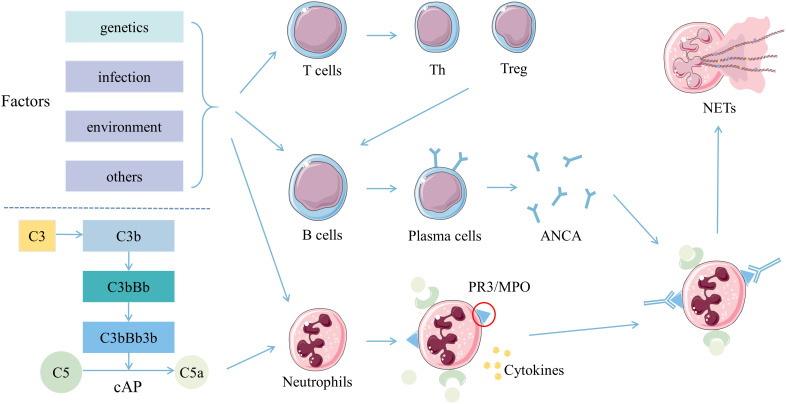
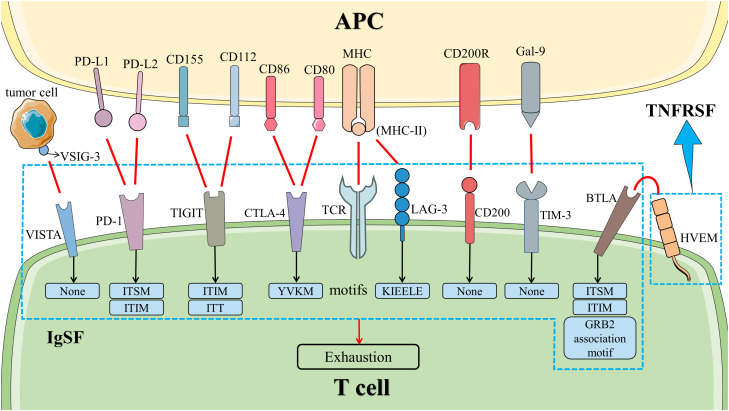
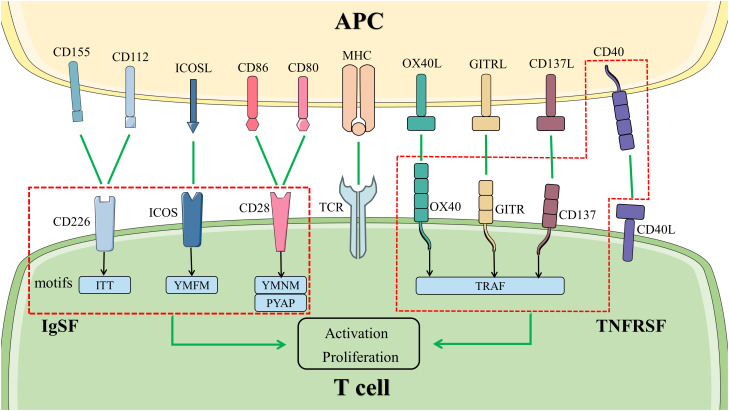
Anti-neutrophil cytoplasmic autoantibodies (ANCA) associated vasculitis (AAV) is a necrotizing vasculitis mainly involving small blood vessels. It is demonstrated that T cells are important in the pathogenesis of AAV, including regulatory T cells (Treg) and helper T cells (Th), especially Th2, Th17, and follicular Th cells (Tfh). In addition, the exhaustion of T cells predicted the favorable prognosis of AAV. The immune checkpoints (ICs) consist of a group of co-stimulatory and co-inhibitory molecules expressed on the surface of T cells, which maintains a balance between the activation and exhaustion of T cells. CD28, inducible T-cell co-stimulator (ICOS), OX40, CD40L, glucocorticoid induced tumor necrosis factor receptor (GITR), and CD137 are the common co-stimulatory molecules, while the programmed cell death 1 (PD-1), cytotoxic T lymphocyte-associated molecule 4 (CTLA-4), T cell immunoglobulin (Ig) and mucin domain-containing protein 3 (TIM-3), B and T lymphocyte attenuator (BTLA), V-domain Ig suppressor of T cell activation (VISTA), T-cell Ig and ITIM domain (TIGIT), CD200, and lymphocyte activation gene 3 (LAG-3) belong to co-inhibitory molecules. If this balance was disrupted and the activation of T cells was increased, autoimmune diseases (AIDs) might be induced. Even in the treatment of malignant tumors, activation of T cells by immune checkpoint inhibitors (ICIs) may result in AIDs known as rheumatic immune-related adverse events (Rh-irAEs), suggesting the importance of ICs in AIDs. In this review, we summarized the features of AAV induced by immunotherapy using ICIs in patients with malignant tumors, and then reviewed the biological characteristics of different ICs. Our aim was to explore potential targets in ICs for future treatment of AAV.
抗中性粒细胞胞质抗体(ANCA)相关性血管炎(AAV)是一种主要累及小血管的坏死性血管炎。研究表明,T 细胞在 AAV 的发病机制中起重要作用,包括调节性 T 细胞(Treg)和辅助性 T 细胞(Th),尤其是 Th2、Th17 和滤泡辅助性 T 细胞(Tfh)。此外,T 细胞衰竭预测 AAV 的预后良好。免疫检查点(ICs)由一组在 T 细胞表面表达的共刺激和共抑制分子组成,它们维持着 T 细胞激活和衰竭之间的平衡。CD28、诱导型 T 细胞共刺激分子(ICOS)、OX40、CD40L、糖皮质激素诱导的肿瘤坏死因子受体(GITR)和 CD137 是常见的共刺激分子,而程序性细胞死亡 1(PD-1)、细胞毒性 T 淋巴细胞相关抗原 4(CTLA-4)、T 细胞免疫球蛋白和粘蛋白结构域蛋白 3(TIM-3)、B 和 T 淋巴细胞衰减器(BTLA)、V 结构域 Ig 抑制 T 细胞激活(VISTA)、T 细胞免疫球蛋白和 ITIM 结构域(TIGIT)、CD200 和淋巴细胞激活基因 3(LAG-3)属于共抑制分子。如果这种平衡被打破,T 细胞的激活增加,自身免疫性疾病(AIDs)可能会被诱导。即使在治疗恶性肿瘤时,免疫检查点抑制剂(ICIs)激活 T 细胞也可能导致风湿免疫相关不良事件(Rh-irAEs),这表明 ICs 在 AIDs 中的重要性。在这篇综述中,我们总结了免疫治疗在恶性肿瘤患者中使用 ICIs 诱导 AAV 的特点,然后综述了不同 ICs 的生物学特性。我们的目的是探索 ICs 中的潜在靶点,为未来 AAV 的治疗提供依据。