O'Grady Megan A, Randrianarivony Rina, Martin Keith, Perez-Cubillan Yaberci, Collymore David C, Shapiro-Luft Dina, Beacham Alexa, Heyward Nyasia, Greenfield Belinda, Neighbors Charles J
Departmet of Public Health Sciences, University of Connecticut School of Medicine, Farmington, CT, USA.
Partnership to End Addiction, New York, NY, USA.
Implement Res Pract. 2022 Nov 4;3:26334895221135265. doi: 10.1177/26334895221135265. eCollection 2022 Jan-Dec.
Integrated care programs that systematically and comprehensively address both behavioral and physical health may improve patient outcomes. However, there are few examples of such programs in addiction treatment settings. This article is a practical implementation report describing the implementation of an integrated care program into two opioid treatment programs (OTPs).
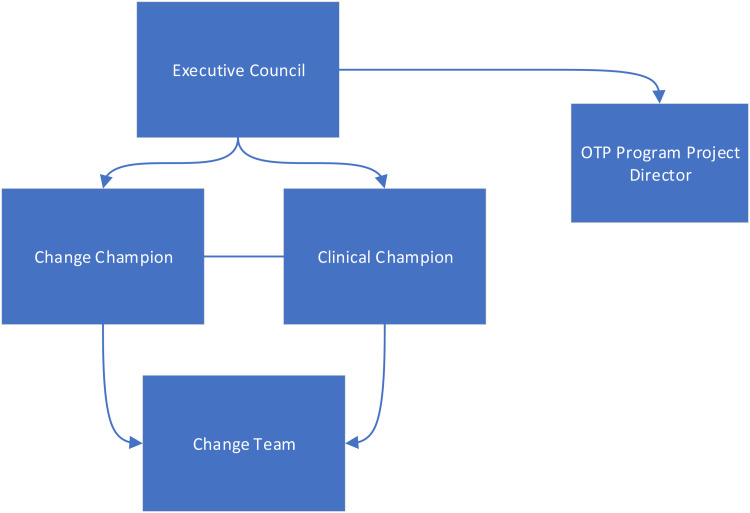
Strategies used to implement integrated care into two OTPs included external facilitation, quality improvement (QI) processes, staff training, and an integrated organizational structure. Service, implementation, and client outcomes were examined using qualitative interviews with program staff (n = 16), program enrollment data, and client outcome data (n = 593) on mental health (MH), physical health, and functional indicators.
Staff found the program to generally be acceptable and appropriate, but also noted that the new services added to already busy workflows and more staffing were needed to fully reach the program's potential. The program had a high level of penetration (∼60%-70%), enrolling over 1,200 clients. Staff noted difficulties in connecting clients with some services. Client general functioning and MH symptoms improved, and heavy smoking decreased. The organizational structure and QI activities provided a strong foundation for interactive problem-solving and adaptations that were needed during implementation.
This article highlights an example of the intersection of QI and implementation practice. Simplified QI processes, consistent post-implementation meetings, and change teams and champions facilitated implementation; however, ongoing training and support, especially related to data are needed. The OTP setting provided a strong foundation to build integrated care, but careful consideration of new workflows and changes in philosophy for staff is necessary. Providing medical and behavioral health treatment services in the same clinic using coordinated treatment teams, also known as integrated care, improves outcomes among those with chronic physical and behavioral health conditions. However, there are few practical examples of implementation of such programs in addiction treatment settings, which are promising, yet underutilized settings for integrated care programs. A multi-sectoral team used quality improvement (QI) and implementation strategies to implement integrated care into two opioid treatment programs (OTPs). The program enrolled over 1,200 clients and client general functioning and mental health (MH) symptoms improved, and heavy smoking decreased. Qualitative interviews provided important information about the barriers, facilitators, and context around implementation of this program. The OTP setting provided a strong foundation to build integrated care, but careful consideration of new workflows and changes in philosophy for staff, as well as ongoing training and supports for staff, are necessary. This project may help to advance the implementation of integrated care in OTPs by identifying barriers and facilitators to implementation, lessons learned, as well as providing a practical example of potentially useful QI and implementation strategies.
系统且全面地兼顾行为健康和身体健康的综合护理项目可能会改善患者的治疗效果。然而,在成瘾治疗环境中,此类项目的实例很少。本文是一份实践实施报告,描述了将一个综合护理项目引入两个阿片类药物治疗项目(OTP)的过程。
将综合护理引入两个OTP所采用的策略包括外部推动、质量改进(QI)流程、员工培训和综合组织结构。通过对项目工作人员进行定性访谈(n = 16)、项目注册数据以及关于心理健康(MH)、身体健康和功能指标的客户结果数据(n = 593),对服务、实施情况和客户结果进行了检查。
工作人员发现该项目总体上是可接受且合适的,但也指出,新服务被添加到本已繁忙的工作流程中,并且需要更多人员配备才能充分发挥该项目的潜力。该项目的渗透率很高(约60%-70%),登记了1200多名客户。工作人员指出在将客户与某些服务联系起来方面存在困难。客户的总体功能和MH症状有所改善,重度吸烟情况减少。组织结构和QI活动为实施过程中所需的交互式问题解决和调整提供了坚实基础。
本文突出了一个QI与实施实践相结合的实例。简化的QI流程、实施后持续的会议以及变革团队和支持者促进了实施;然而,仍需要持续的培训和支持,特别是与数据相关的支持。OTP环境为建立综合护理提供了坚实基础,但需要仔细考虑新的工作流程以及员工理念的变化。在同一诊所使用协调治疗团队提供医疗和行为健康治疗服务,即综合护理,可改善患有慢性身体和行为健康问题者的治疗效果。然而,在成瘾治疗环境中,此类项目实施的实际例子很少,而成瘾治疗环境对于综合护理项目来说很有前景但未得到充分利用。一个多部门团队运用QI和实施策略将综合护理引入两个OTP。该项目登记了1200多名客户,客户的总体功能和心理健康(MH)症状得到改善,重度吸烟情况减少。定性访谈提供了关于该项目实施过程中的障碍、促进因素和背景的重要信息。OTP环境为建立综合护理提供了坚实基础,但需要仔细考虑新的工作流程以及员工理念的变化,以及对员工持续的培训和支持。该项目通过识别实施过程中的障碍和促进因素、吸取的经验教训,并提供潜在有用的QI和实施策略的实际例子,可能有助于推进OTP中综合护理的实施。