Department of Anaesthesiology, Intensive Care, Emergency and Pain Medicine, University Hospital Würzburg, Julius-Maximilians-University Wuerzburg, Würzburg, Germany.
Institute for Clinical Epidemiology and Biometry, Julius-Maximilians-University Würzburg, Würzburg, Germany.
Sci Rep. 2023 Apr 26;13(1):6785. doi: 10.1038/s41598-023-33783-y.
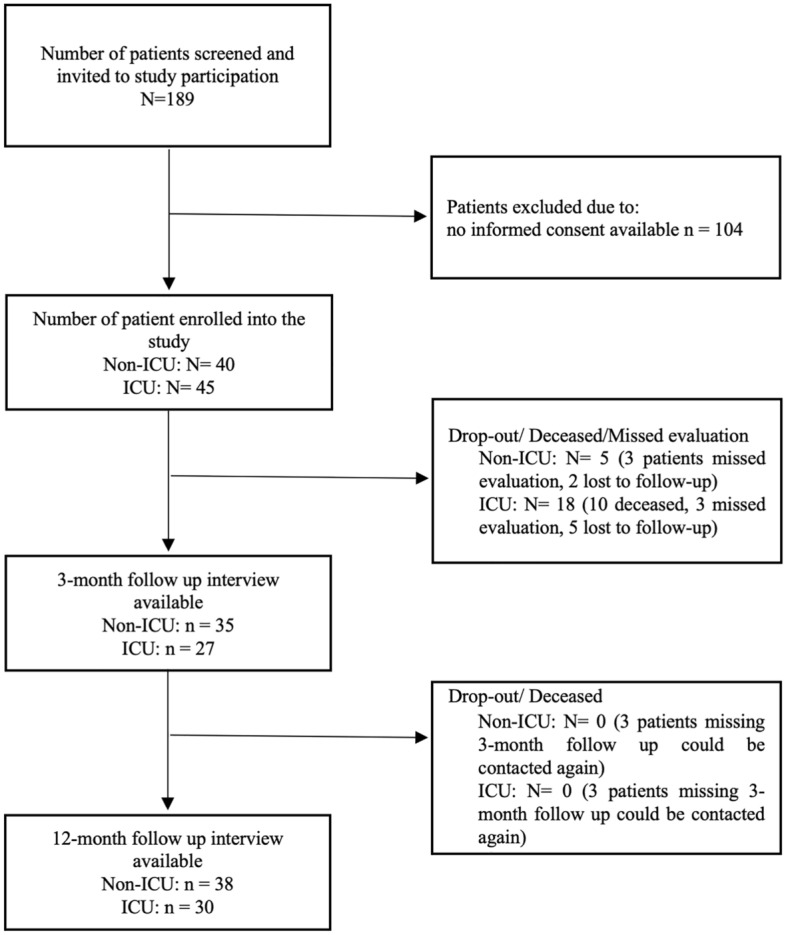
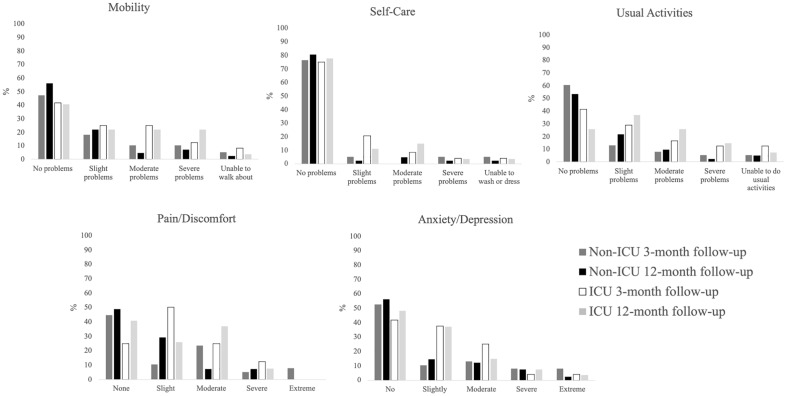
Long-term sequelae in hospitalized Coronavirus Disease 2019 (COVID-19) patients may result in limited quality of life. The current study aimed to determine health-related quality of life (HRQoL) after COVID-19 hospitalization in non-intensive care unit (ICU) and ICU patients. This is a single-center study at the University Hospital of Wuerzburg, Germany. Patients eligible were hospitalized with COVID-19 between March 2020 and December 2020. Patients were interviewed 3 and 12 months after hospital discharge. Questionnaires included the European Quality of Life 5 Dimensions 5 Level (EQ-5D-5L), patient health questionnaire-9 (PHQ-9), the generalized anxiety disorder 7 scale (GAD-7), FACIT fatigue scale, perceived stress scale (PSS-10) and posttraumatic symptom scale 10 (PTSS-10). 85 patients were included in the study. The EQ5D-5L-Index significantly differed between non-ICU (0.78 ± 0.33 and 0.84 ± 0.23) and ICU (0.71 ± 0.27; 0.74 ± 0.2) patients after 3- and 12-months. Of non-ICU 87% and 80% of ICU survivors lived at home without support after 12 months. One-third of ICU and half of the non-ICU patients returned to work. A higher percentage of ICU patients was limited in their activities of daily living compared to non-ICU patients. Depression and fatigue were present in one fifth of the ICU patients. Stress levels remained high with only 24% of non-ICU and 3% of ICU patients (p = 0.0186) having low perceived stress. Posttraumatic symptoms were present in 5% of non-ICU and 10% of ICU patients. HRQoL is limited in COVID-19 ICU patients 3- and 12-months post COVID-19 hospitalization, with significantly less improvement at 12-months compared to non-ICU patients. Mental disorders were common highlighting the complexity of post-COVID-19 symptoms as well as the necessity to educate patients and primary care providers about monitoring mental well-being post COVID-19.
长期的 2019 冠状病毒病(COVID-19)住院患者后遗症可能导致生活质量受限。本研究旨在确定非重症监护病房(ICU)和 ICU 住院 COVID-19 患者的健康相关生活质量(HRQoL)。这是德国维尔茨堡大学医院的一项单中心研究。符合条件的患者于 2020 年 3 月至 2020 年 12 月因 COVID-19 住院。患者在出院后 3 个月和 12 个月接受访谈。问卷包括欧洲生活质量 5 维度 5 级量表(EQ-5D-5L)、患者健康问卷-9(PHQ-9)、广泛性焦虑症 7 量表(GAD-7)、功能评估癌症治疗-疲劳量表(FACIT-Fatigue)、感知压力量表(PSS-10)和创伤后症状量表 10(PTSS-10)。85 名患者纳入研究。EQ5D-5L-Index 在非 ICU(3 个月时 0.78±0.33 和 12 个月时 0.84±0.23)和 ICU(3 个月时 0.71±0.27;12 个月时 0.74±0.2)患者之间存在显著差异。12 个月后,非 ICU 患者中有 87%和 80%的幸存者无需支持在家居住,而 ICU 幸存者中,三分之一的 ICU 患者和一半的非 ICU 患者重返工作岗位。与非 ICU 患者相比,更多的 ICU 患者日常生活活动受限。五分之一的 ICU 患者有抑郁和疲劳症状。只有 24%的非 ICU 和 3%的 ICU 患者(p=0.0186)感知压力低,压力水平仍然很高。5%的非 ICU 和 10%的 ICU 患者存在创伤后症状。COVID-19 住院后 3 个月和 12 个月,COVID-19 ICU 患者的 HRQoL 受限,与非 ICU 患者相比,12 个月时的改善明显较少。精神障碍很常见,这突出了 COVID-19 后症状的复杂性,以及教育患者和初级保健提供者监测 COVID-19 后心理健康的必要性。