Department of Microbiology, College of Basic Medical Sciences, Key Laboratory of Microbial Engineering Under the Educational Committee in Chongqing, Army Medical University, Chongqing, 400038, China.
Department of Microbiology, School of Medicine, Chongqing University, Chongqing, 400044, China.
J Biomed Sci. 2023 Apr 26;30(1):29. doi: 10.1186/s12929-023-00919-1.
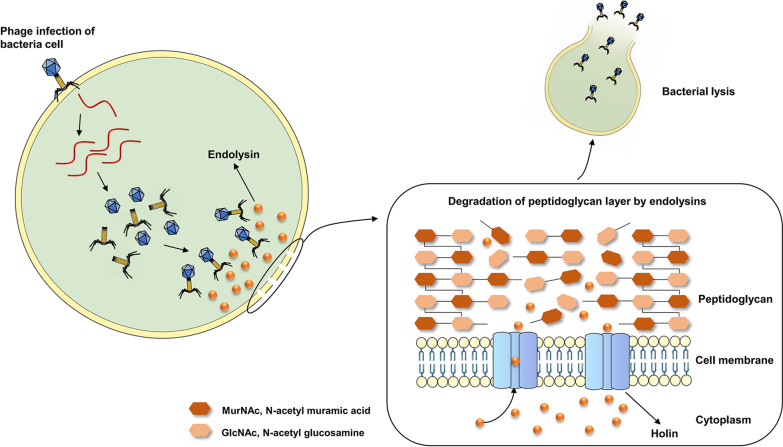
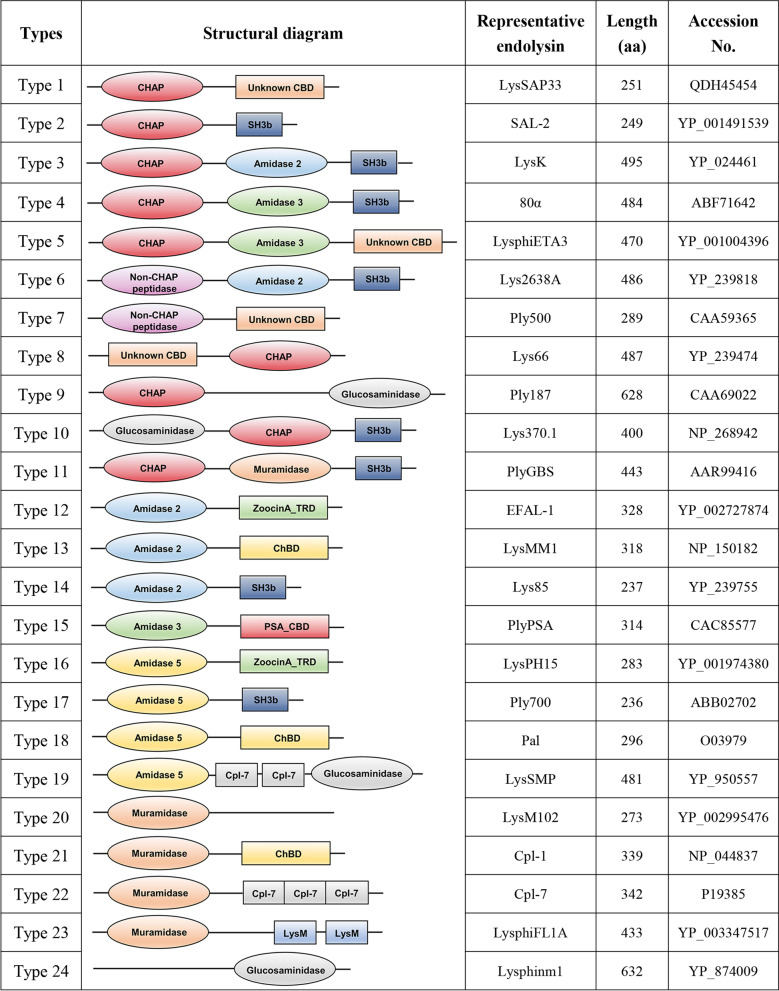
Gram-positive (G) bacterial infection is a great burden to both healthcare and community medical resources. As a result of the increasing prevalence of multidrug-resistant G bacteria such as methicillin-resistant Staphylococcus aureus (MRSA), novel antimicrobial agents must urgently be developed for the treatment of infections caused by G bacteria. Endolysins are bacteriophage (phage)-encoded enzymes that can specifically hydrolyze the bacterial cell wall and quickly kill bacteria. Bacterial resistance to endolysins is low. Therefore, endolysins are considered promising alternatives for solving the mounting resistance problem. In this review, endolysins derived from phages targeting G bacteria were classified based on their structural characteristics. The active mechanisms, efficacy, and advantages of endolysins as antibacterial drug candidates were summarized. Moreover, the remarkable potential of phage endolysins in the treatment of G bacterial infections was described. In addition, the safety of endolysins, challenges, and possible solutions were addressed. Notwithstanding the limitations of endolysins, the trends in development indicate that endolysin-based drugs will be approved in the near future. Overall, this review presents crucial information of the current progress involving endolysins as potential therapeutic agents, and it provides a guideline for biomaterial researchers who are devoting themselves to fighting against bacterial infections.
革兰氏阳性(G+)细菌感染给医疗保健和社区医疗资源带来了巨大负担。由于耐甲氧西林金黄色葡萄球菌(MRSA)等多种耐药 G+细菌的流行率不断上升,因此必须紧急开发新型抗菌药物来治疗 G+细菌感染。溶菌酶是噬菌体(phage)编码的酶,能够特异性地水解细菌细胞壁并迅速杀死细菌。细菌对溶菌酶的耐药性较低。因此,溶菌酶被认为是解决日益严重的耐药问题的有前途的替代品。在这篇综述中,根据结构特征对靶向 G+细菌的噬菌体衍生的溶菌酶进行了分类。总结了溶菌酶作为抗菌药物候选物的作用机制、功效和优势。此外,还描述了噬菌体溶菌酶在治疗 G+细菌感染方面的显著潜力。此外,还讨论了溶菌酶的安全性、挑战和可能的解决方案。尽管溶菌酶存在局限性,但发展趋势表明,基于溶菌酶的药物将在不久的将来获得批准。总的来说,这篇综述介绍了溶菌酶作为潜在治疗剂的当前进展的关键信息,并为致力于对抗细菌感染的生物材料研究人员提供了指导。