Department of Pharmaceutical/Medicinal Chemistry, Institute of Pharmacy, Friedrich-Schiller University, Jena, Germany.
Leibniz Institute for Natural Product Research and Infection Biology - Hans Knoell Institute (HKI), Jena, Germany.
Aging Cell. 2023 Jul;22(7):e13856. doi: 10.1111/acel.13856. Epub 2023 Apr 26.
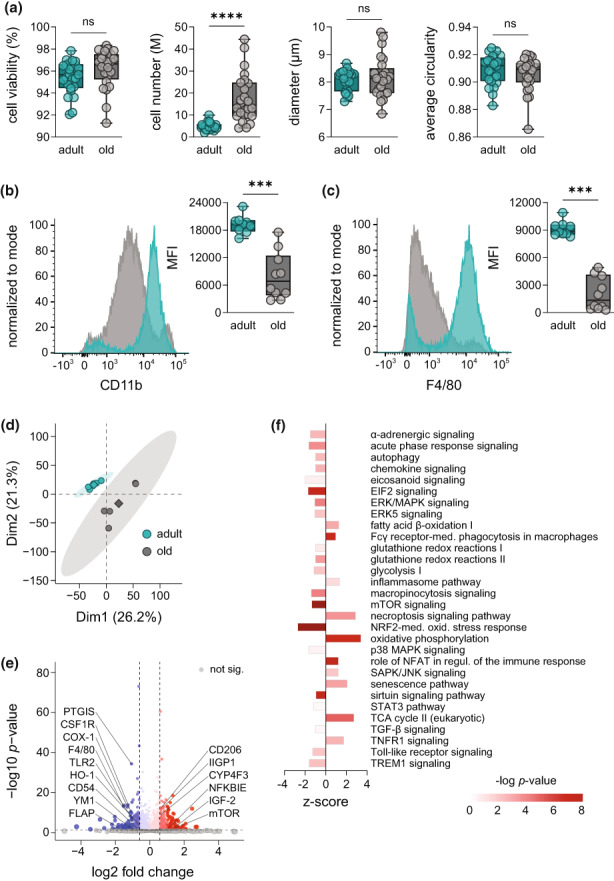
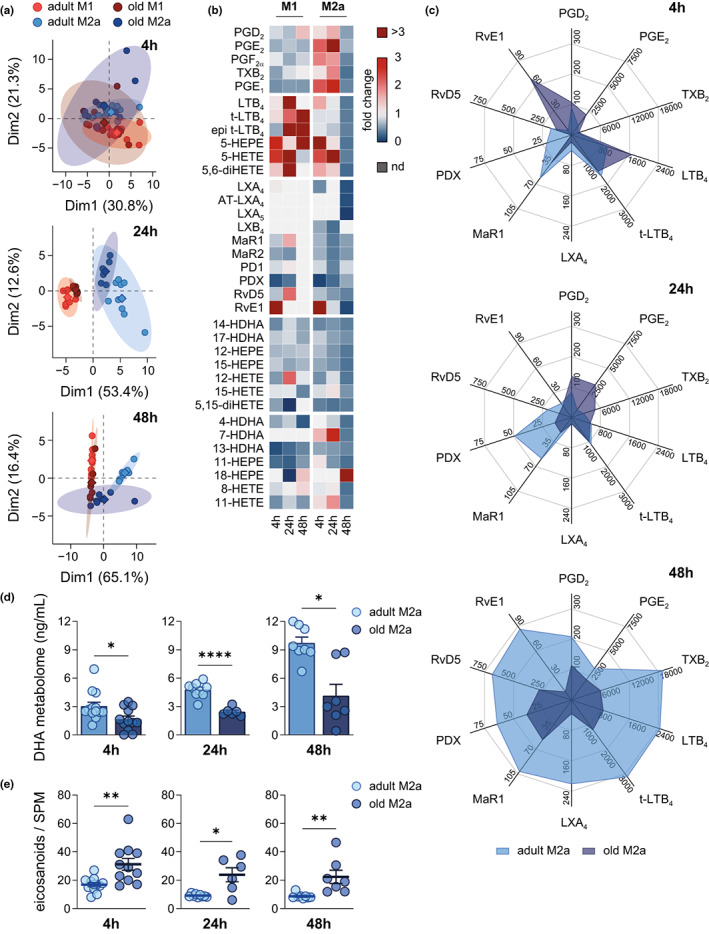
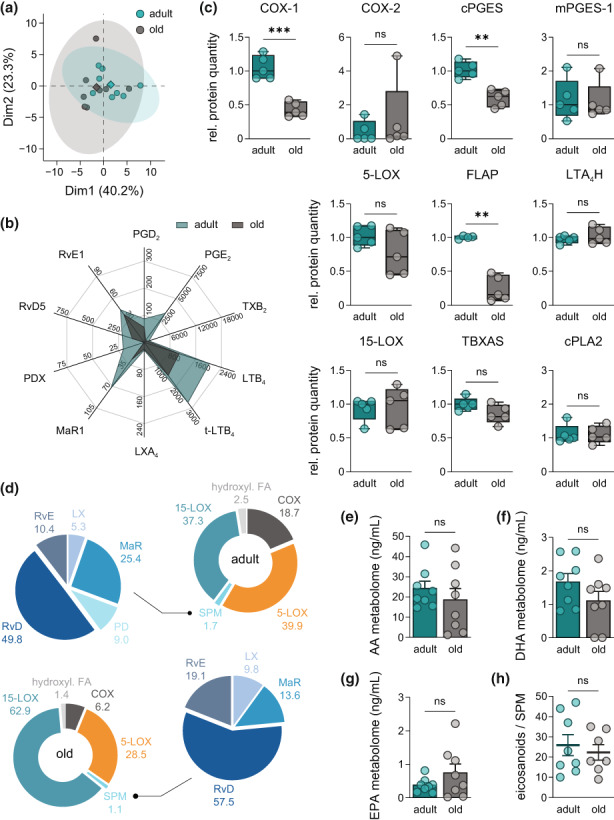
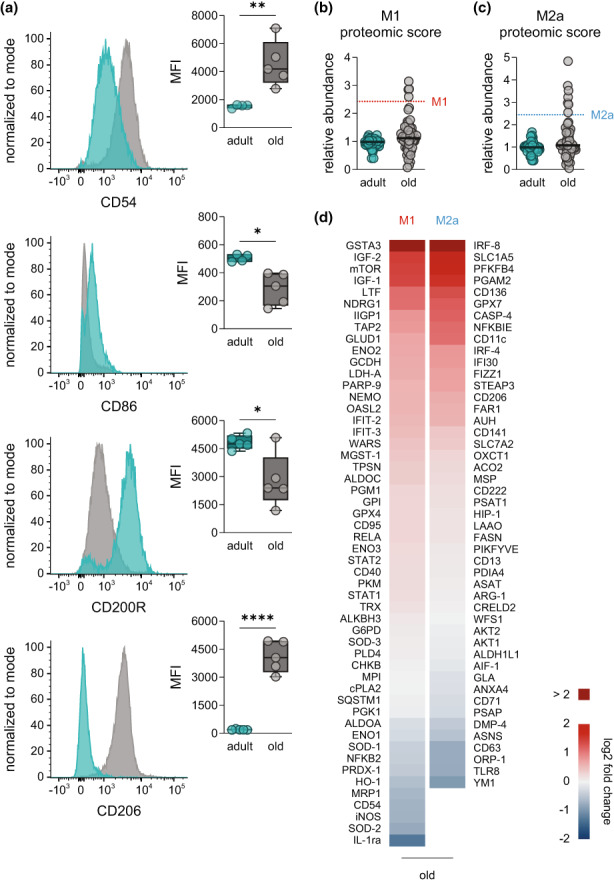
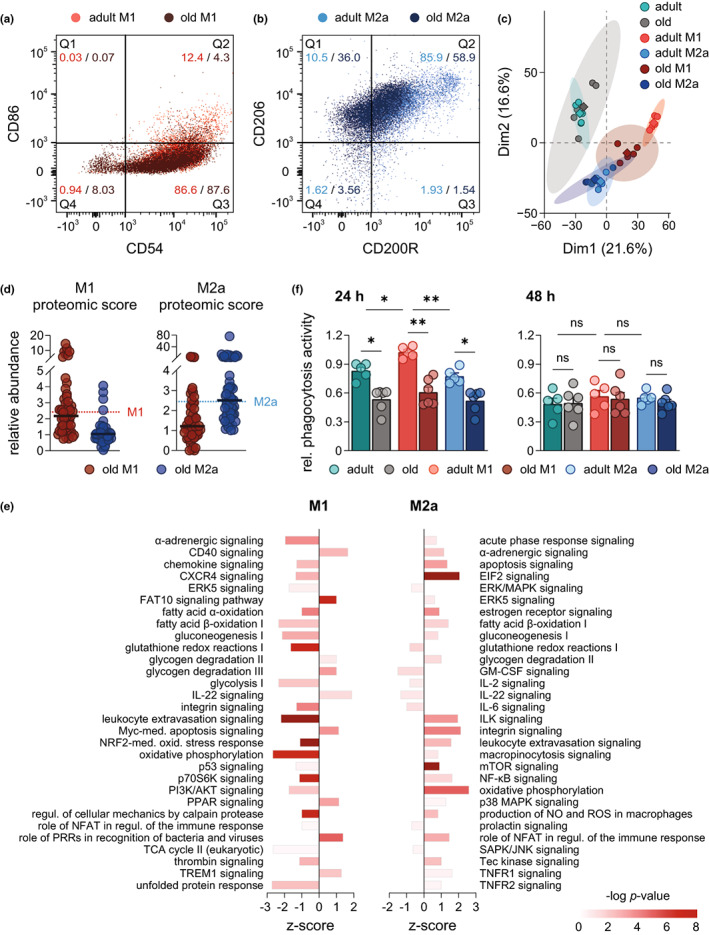
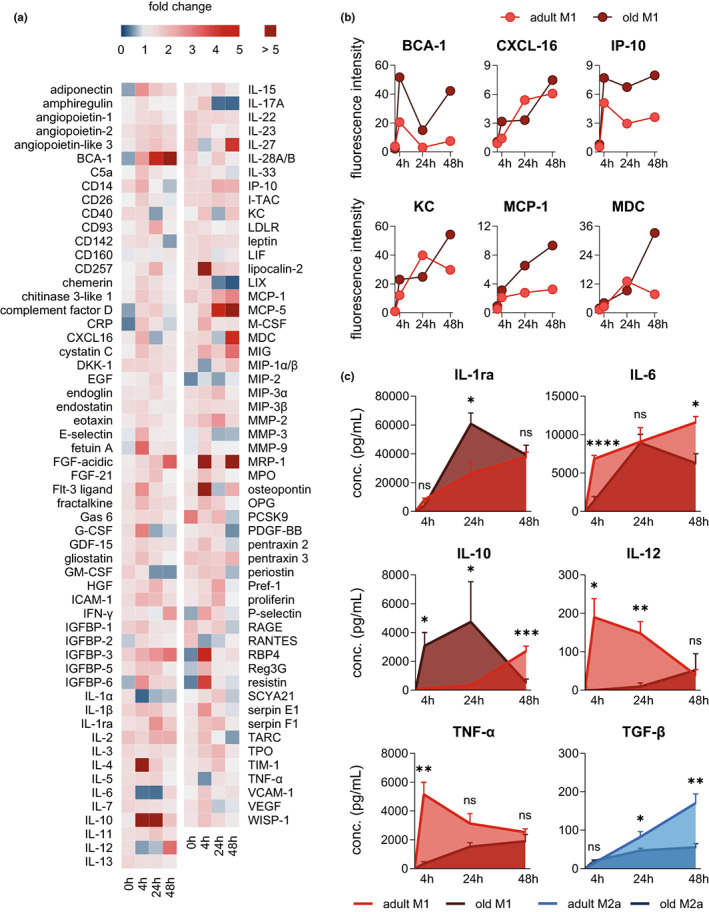
Macrophages adapt distinct pro-inflammatory (M1-like) and pro-resolving (M2-like) phenotypes with specific tasks in the immune response and tissue homeostasis. Altered macrophage responses with age are causative for unresolved inflammation, so-called inflammaging, and lead to higher infection susceptibility with unfavorable progression. Here, we reveal molecular determinants of age-related changes in phenotypic functions of murine peritoneal macrophages (PM) by employing comprehensive mass spectrometry-based proteomics (4746 protein groups) and metabololipidomics (>40 lipid mediators). Divergent expression of various macrophage-specific marker proteins and signaling pathways indicates aberrant PM phenotypes in old mice which detrimentally impact their capabilities to release immunomodulatory chemokines and cytokines. We show that aging strikingly compromises the polarization process of macrophages to adapt either pro-inflammatory or pro-resolving phenotypes, thereby yielding aberrant and afunctional macrophage subtypes that cannot be readily assigned to either a typical M1 or M2 phenotype. In particular, the phenotypic adaptation of the bacteria-challenged metabololipidome in macrophages related to inflammation is severely limited by age, which persists across ex vivo polarization towards M1 and M2a macrophages. Our results establish distinct age-associated PM phenotypes outside of the simplified M1 and M2 dichotomy and challenge the dogma of increased pro-inflammatory macrophage pre-activation due to aging by revealing maladaptive functions throughout all phases of inflammation, including resolution.
巨噬细胞具有独特的促炎(M1 样)和抗炎(M2 样)表型,在免疫反应和组织稳态中具有特定的功能。随着年龄的增长,巨噬细胞反应的改变是未解决炎症的原因,即所谓的炎症衰老,并导致更高的感染易感性和不利的进展。在这里,我们通过采用综合基于质谱的蛋白质组学(4746 种蛋白质组)和代谢脂质组学(>40 种脂质介质),揭示了与年龄相关的小鼠腹腔巨噬细胞(PM)表型功能变化的分子决定因素。各种巨噬细胞特异性标记蛋白和信号通路的差异表达表明,老年小鼠的 PM 表型异常,这对其释放免疫调节趋化因子和细胞因子的能力产生不利影响。我们表明,衰老显著损害了巨噬细胞向促炎或抗炎表型的极化过程,从而产生了异常的、无功能的巨噬细胞亚型,这些亚型不能轻易归为典型的 M1 或 M2 表型。特别是,与炎症相关的细菌挑战的代谢脂质组在巨噬细胞中的表型适应在很大程度上受到年龄的限制,这种限制在体外向 M1 和 M2a 巨噬细胞极化时仍然存在。我们的研究结果建立了不同于简化的 M1 和 M2 二分法的特定与年龄相关的 PM 表型,并通过揭示整个炎症阶段(包括解决阶段)的适应性不良功能,挑战了由于衰老导致促炎巨噬细胞预激活增加的教条,包括解决阶段。