Immunobiology Laboratory, Centro Nacional de Investigaciones Cardiovasculares (CNIC), Melchor Fernández Almagro 3, Madrid, 28029, Spain.
Cell Mol Immunol. 2022 Mar;19(3):384-408. doi: 10.1038/s41423-021-00791-9. Epub 2021 Dec 7.
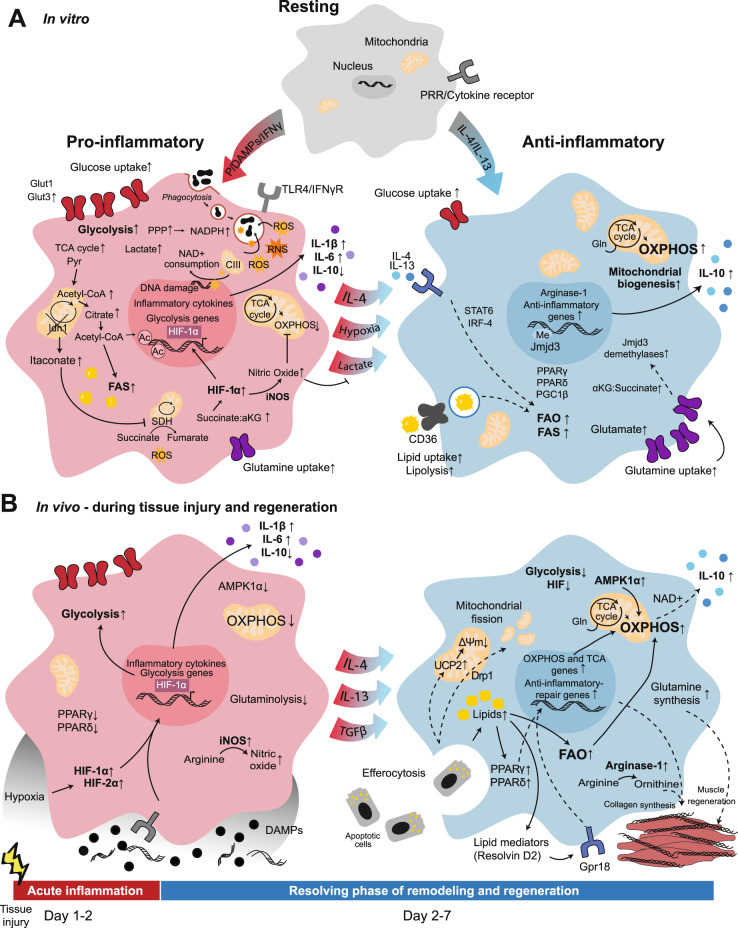
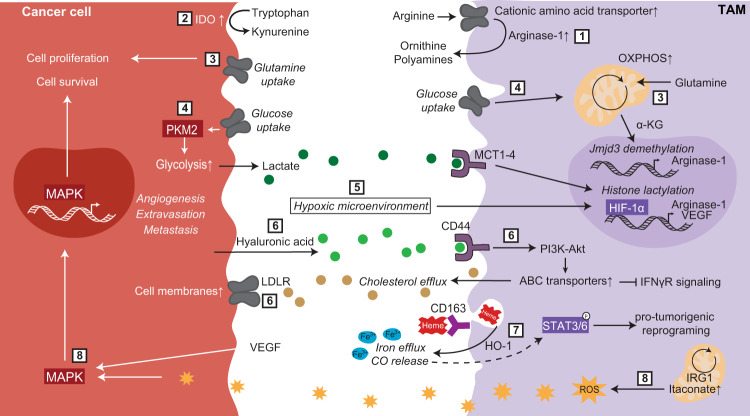
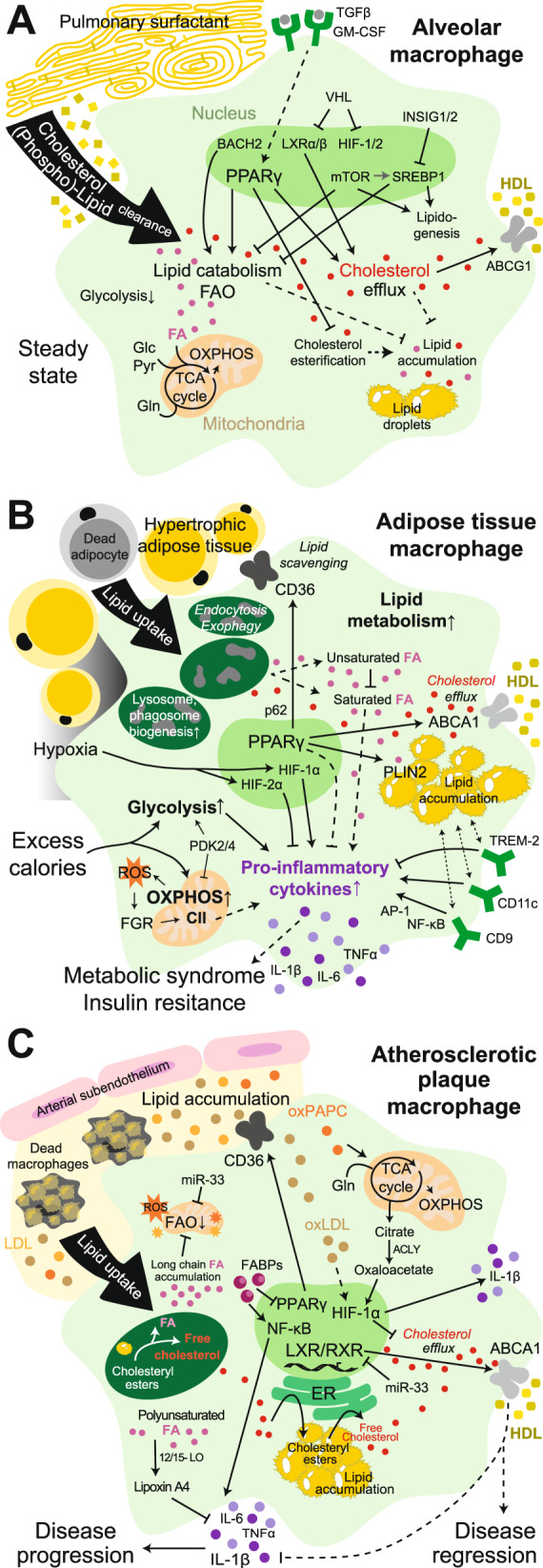
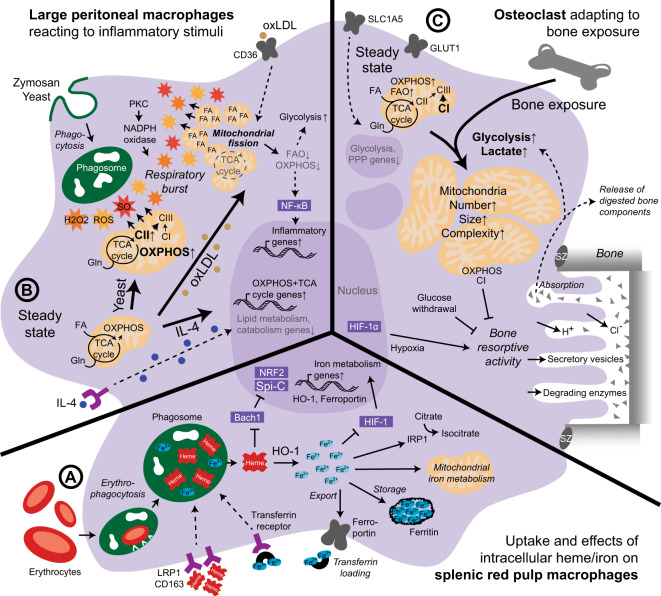
Cellular metabolism orchestrates the intricate use of tissue fuels for catabolism and anabolism to generate cellular energy and structural components. The emerging field of immunometabolism highlights the importance of cellular metabolism for the maintenance and activities of immune cells. Macrophages are embryo- or adult bone marrow-derived leukocytes that are key for healthy tissue homeostasis but can also contribute to pathologies such as metabolic syndrome, atherosclerosis, fibrosis or cancer. Macrophage metabolism has largely been studied in vitro. However, different organs contain diverse macrophage populations that specialize in distinct and often tissue-specific functions. This context specificity creates diverging metabolic challenges for tissue macrophage populations to fulfill their homeostatic roles in their particular microenvironment and conditions their response in pathological conditions. Here, we outline current knowledge on the metabolic requirements and adaptations of macrophages located in tissues during homeostasis and selected diseases.
细胞代谢协调组织燃料的复杂利用,用于分解代谢和合成代谢,以产生细胞能量和结构成分。免疫代谢学这一新兴领域强调了细胞代谢对于维持和激活免疫细胞的重要性。巨噬细胞是胚胎或成人骨髓来源的白细胞,对于健康的组织稳态至关重要,但也可能导致代谢综合征、动脉粥样硬化、纤维化或癌症等疾病。巨噬细胞代谢在很大程度上已经在体外进行了研究。然而,不同的器官包含不同的巨噬细胞群体,这些群体专门从事不同的、通常是组织特异性的功能。这种上下文特异性为组织巨噬细胞群体在其特定微环境中发挥其稳态作用以及在病理条件下的反应带来了不同的代谢挑战。在这里,我们概述了在稳态和选定疾病期间,位于组织中的巨噬细胞的代谢需求和适应的现有知识。