Jarmakiewicz-Czaja Sara, Ferenc Katarzyna, Filip Rafał
Institute of Health Sciences, Medical College of Rzeszow University, 35-959 Rzeszow, Poland.
Institute of Medicine, Medical College of Rzeszow University, 35-959 Rzeszow, Poland.
Metabolites. 2023 Apr 18;13(4):573. doi: 10.3390/metabo13040573.
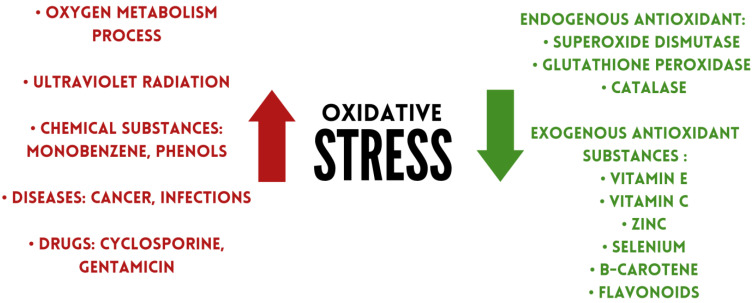
Inflammatory bowel disease (IBD) belongs to a group of chronic diseases characterised by periods of exacerbation and remission. Despite many studies and observations, its aetiopathogenesis is still not fully understood. The interactions of genetic, immunological, microbiological, and environmental factors can induce disease development and progression, but there is still a lack of information on these mechanisms. One of the components that can increase the risk of occurrence of IBD, as well as disease progression, is oxidative stress. Oxidative stress occurs when there is an imbalance between reactive oxygen species (ROS) and antioxidants. The endogenous and exogenous components that make up the body's antioxidant defence can significantly affect IBD prophylaxis and reduce the risk of exacerbation by neutralising and removing ROS, as well as influencing the inflammatory state.
炎症性肠病(IBD)属于一组以病情加重期和缓解期交替为特征的慢性疾病。尽管有许多研究和观察,但仍未完全了解其发病机制。遗传、免疫、微生物和环境因素之间的相互作用可诱发疾病的发生和进展,但关于这些机制的信息仍然不足。氧化应激是可增加IBD发生风险以及疾病进展的因素之一。当活性氧(ROS)与抗氧化剂之间出现失衡时,就会发生氧化应激。构成机体抗氧化防御的内源性和外源性成分可通过中和及清除ROS以及影响炎症状态,显著影响IBD的预防并降低病情加重的风险。