Anderson Jeremy, Bender Georgia, Minh Thang Cao, Quang Thanh Le, Thi Trang Dai Vo, Van Thanh Phan, Thi Hong Nhu Bui, Ngoc Xuan Trang Do, Thi Phuong Trinh Phan, Vu Thuong Nguyen, Trong Toan Nguyen, Mulholland Kim, Pellicci Daniel G, Anh Ha Do Lien, Licciardi Paul V
Murdoch Children's Research Institute, Melbourne, VIC 3052, Australia.
Department of Paediatrics, University of Melbourne, Melbourne, VIC 3010, Australia.
Pathogens. 2023 Apr 14;12(4):596. doi: 10.3390/pathogens12040596.
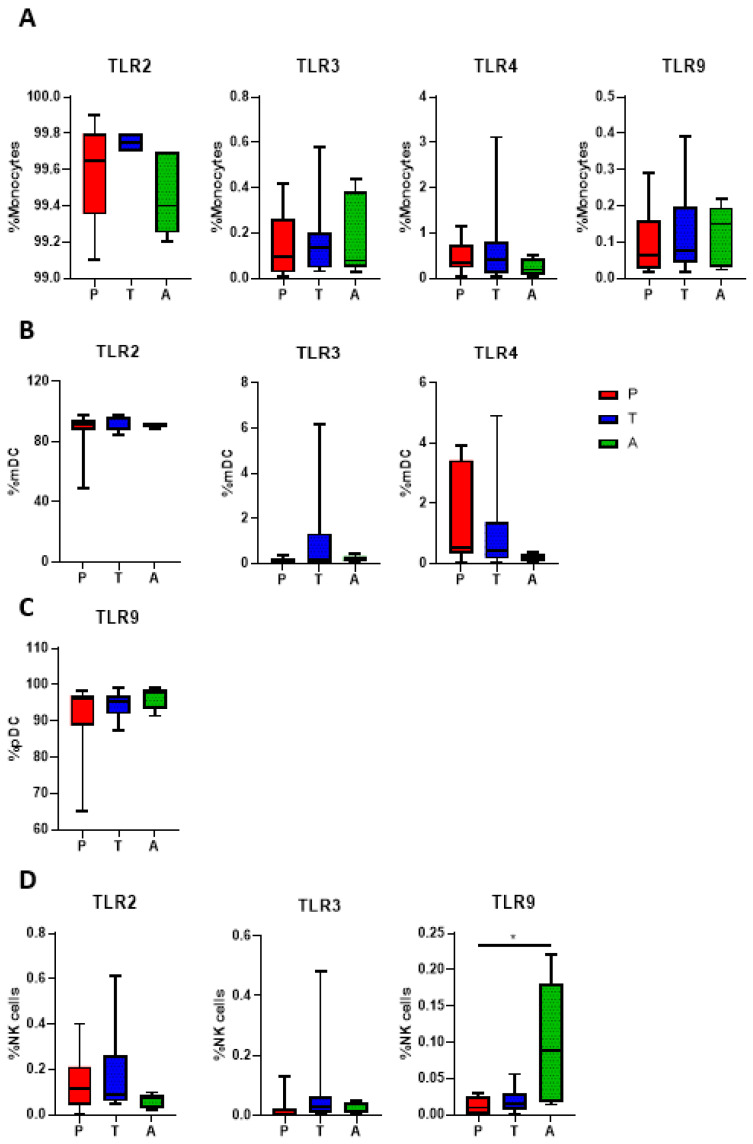
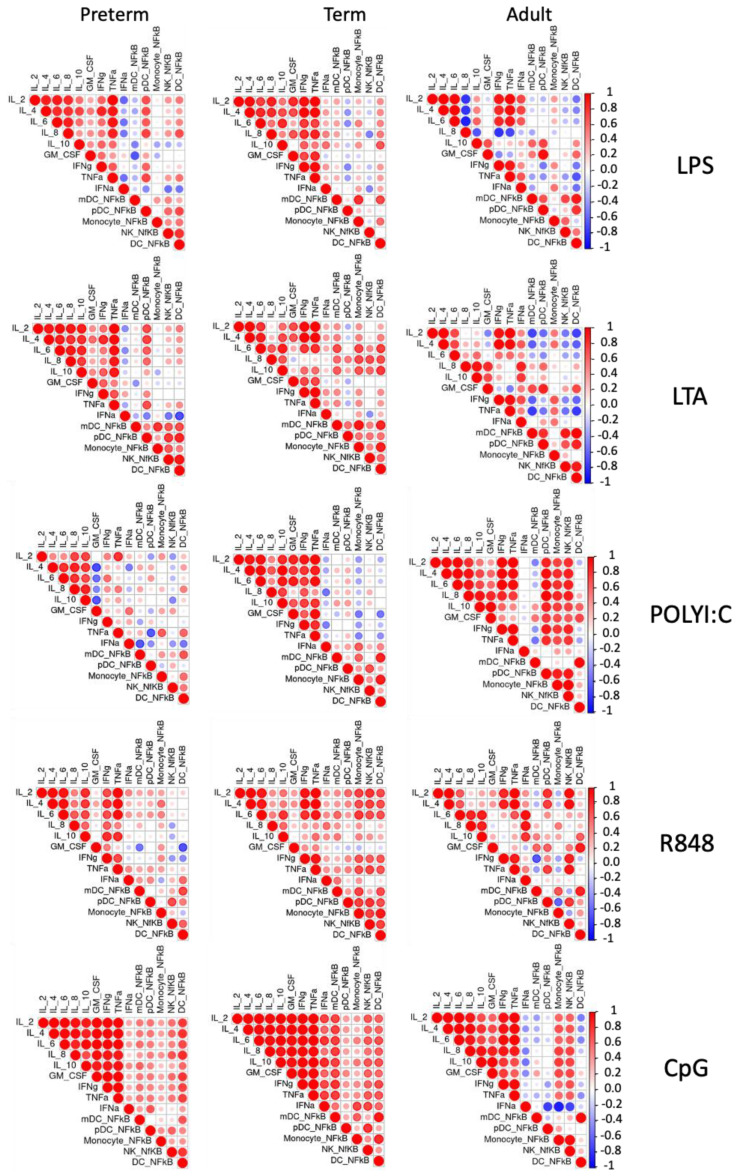
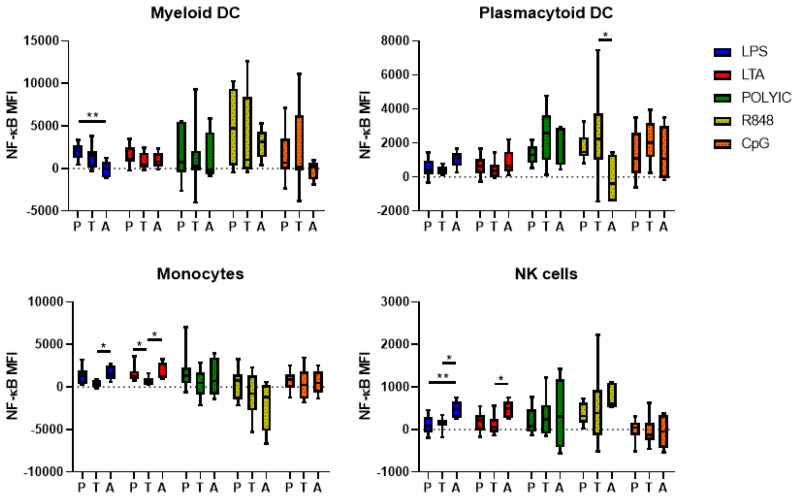
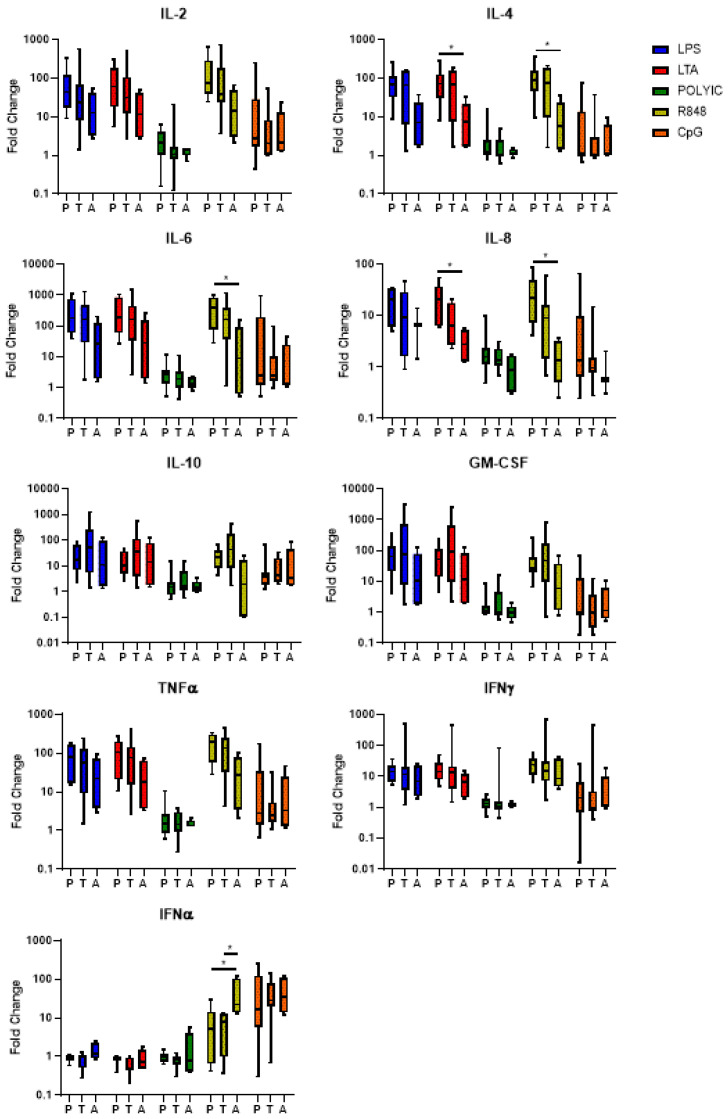
Preterm infants are more susceptible to severe bacterial and viral infectious diseases than their full-term counterparts. A major contributor to this increased susceptibility may be due to differences in their ability to respond to pathogens. While studies have demonstrated altered bacterial Toll-like receptor (TLR) responses, there is limited data on viral TLR responses in preterm infants. In this study, cord blood mononuclear cells (CBMCs) from 10 moderately preterm (30.4-34.1 wGA), 10 term (37-39.5 wGA) infants, and 5 adults were stimulated with TLR2 (lipoteichoic acid), TLR3 (poly I:C), TLR4 (lipopolysaccharide), TLR7/8 (R848), and TLR9 (CpG-ODN 2216) agonists. Following stimulation, the cellular response was measured by intracellular flow cytometry to detect cell-specific NF-κB (as a marker of the inflammatory response), and multiplex assays were used to measure the cytokine response. This study found that preterm and term infants exhibit very similar baseline TLR expression. In response to both bacterial and viral TLR agonists comparing cell-specific NF-κB activation, preterm infants exhibited increased monocyte activation following LTA stimulation; however, no other differences were observed. Similarly, no difference in cytokine response was observed following stimulation with TLRs. However, a stronger correlation between NF-κB activation and cytokine responses was observed in term infants following poly I:C and R848 stimulation compared to preterm infants. In contrast, despite similar TLR expression, adults produced higher levels of IFN-α following R848 stimulation compared to preterm and term infants. These findings suggest preterm and term infants have a similar capacity to respond to both bacterial and viral TLR agonists. As preterm infants are more likely to develop severe infections, further research is required to determine the immunological factors that may be driving this and develop better interventions for this highly vulnerable group.
与足月儿相比,早产儿更容易患严重的细菌和病毒感染性疾病。这种易感性增加的一个主要原因可能是他们对病原体的反应能力存在差异。虽然研究表明细菌Toll样受体(TLR)反应有所改变,但关于早产儿病毒TLR反应的数据有限。在本研究中,用TLR2(脂磷壁酸)、TLR3(聚肌胞苷酸)、TLR4(脂多糖)、TLR7/8(R848)和TLR9(CpG-ODN 2216)激动剂刺激了10名中度早产儿(孕龄30.4 - 34.1周)、10名足月儿(孕龄37 - 39.5周)的脐带血单个核细胞(CBMC)以及5名成年人的细胞。刺激后,通过细胞内流式细胞术检测细胞特异性NF-κB(作为炎症反应的标志物)来测量细胞反应,并使用多重检测法测量细胞因子反应。本研究发现,早产儿和足月儿表现出非常相似的基线TLR表达。在比较细胞特异性NF-κB激活情况时,对于细菌和病毒TLR激动剂的反应,早产儿在脂磷壁酸刺激后单核细胞激活增加;然而,未观察到其他差异。同样,在用TLR刺激后,未观察到细胞因子反应的差异。但是,与早产儿相比,足月儿在聚肌胞苷酸和R848刺激后,NF-κB激活与细胞因子反应之间的相关性更强。相比之下,尽管TLR表达相似,但与早产儿和足月儿相比,成年人在R848刺激后产生的IFN-α水平更高。这些发现表明,早产儿和足月儿对细菌和病毒TLR激动剂的反应能力相似。由于早产儿更有可能发生严重感染,需要进一步研究以确定可能导致这种情况的免疫因素,并为这个高度脆弱的群体开发更好的干预措施。