Sergazy Shynggys, Shulgau Zarina, Kamyshanskiy Yevgeniy, Zhumadilov Zhaxybay, Krivyh Elena, Gulyayev Alexander, Aljofan Mohamad
National Center for Biotechnology, Astana, Kazakhstan.
National Laboratory Astana, Nazarbayev University, Astana, Kazakhstan.
Heliyon. 2023 Apr 17;9(4):e15370. doi: 10.1016/j.heliyon.2023.e15370. eCollection 2023 Apr.
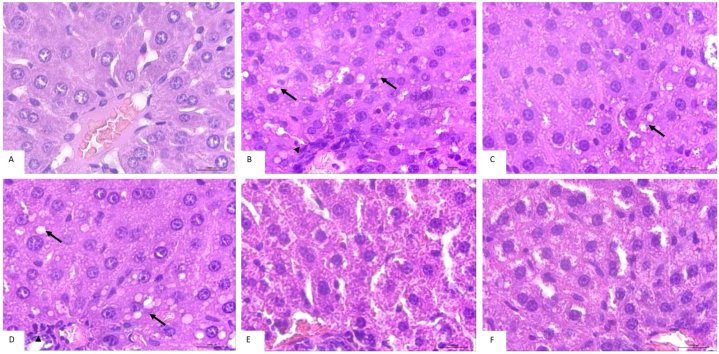
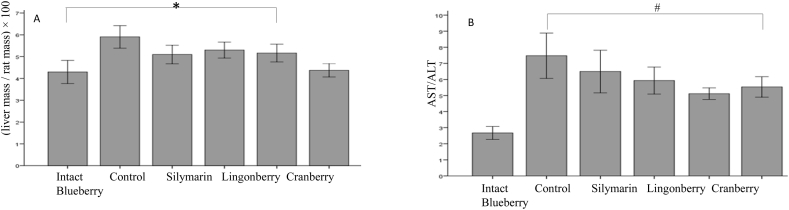
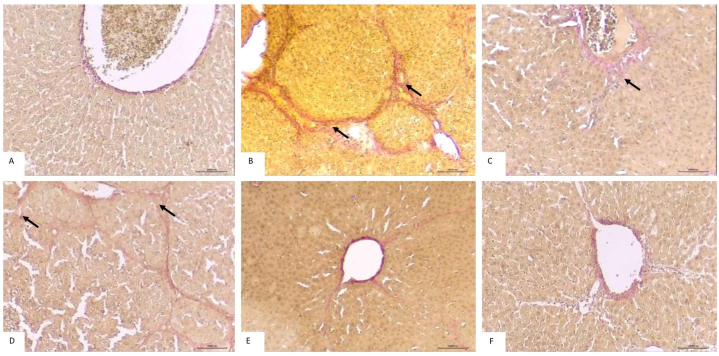
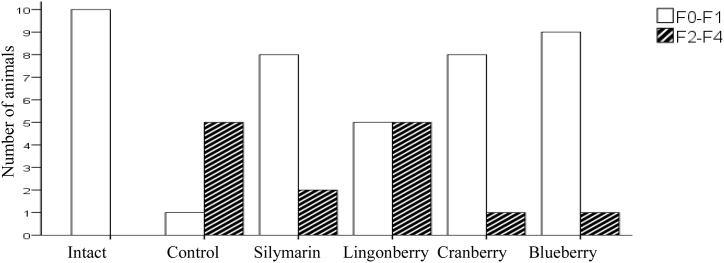
The current study aims to evaluate potential hepatoprotective effect of lingonberry, cranberry and blueberry polyphenols on carbon tetrachloride (CCL-4)-induced acute and subacute liver injury in rats. A total of 55 male Wistar rats, divided into six experimental and control groups. With the exception of the negative control group, all groups received an intraperitoneal injection of CCl-4, twice a week for 14 days. An extract of lingonberry, cranberry, blueberry polyphenols and the positive control, silymarin were administered daily via intragastric route, for 14 consecutive days. The untreated control group showed characteristic of classical oxidative stress-mediated liver damage with vacuolization of the hepatocyte cytoplasm, infiltration by immune cells and proliferation of collagen fibers, decrease in body weight and increase in liver weight; increased levels of AST and ALT in serum, an increased lipid peroxidation in the liver. However, the use of cranberry and blueberry polyphenols significantly suppressed liver damage, exerting an effect comparable to the hepatoprotective effect of the positive control. The extracts prevented and reduced inflammatory liver damage by reducing IL-6, TNF-α and IFN-γ levels. In conclusion, blueberry and cranberry extracts have a protective effect against acute and subacute CCl4-induced hepatotoxicity in rats.
本研究旨在评估越橘、蔓越莓和蓝莓多酚对四氯化碳(CCL-4)诱导的大鼠急性和亚急性肝损伤的潜在肝保护作用。总共55只雄性Wistar大鼠,分为六个实验组和对照组。除阴性对照组外,所有组每周两次腹腔注射CCl-4,共14天。越橘、蔓越莓、蓝莓多酚提取物和阳性对照水飞蓟宾每天经胃内途径给药,连续14天。未处理的对照组表现出典型的氧化应激介导的肝损伤特征,包括肝细胞质空泡化、免疫细胞浸润和胶原纤维增生、体重减轻和肝脏重量增加;血清中AST和ALT水平升高,肝脏脂质过氧化增加。然而,使用蔓越莓和蓝莓多酚可显著抑制肝损伤,其作用与阳性对照的肝保护作用相当。提取物通过降低IL-6、TNF-α和IFN-γ水平预防并减轻炎症性肝损伤。总之,蓝莓和蔓越莓提取物对大鼠急性和亚急性CCl4诱导的肝毒性具有保护作用。