Universidad de Antioquia, Instituto de Biología, Medellín, Colombia.
Facultad de Ciencias Agropecuarias, Unilasallista Corporación Universitaria, Caldas - Antioquia, Colombia.
Antonie Van Leeuwenhoek. 2023 Jul;116(7):615-630. doi: 10.1007/s10482-023-01828-x. Epub 2023 May 3.
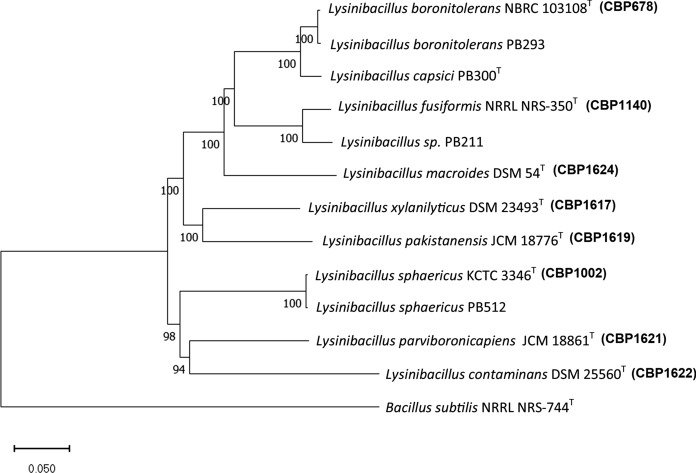
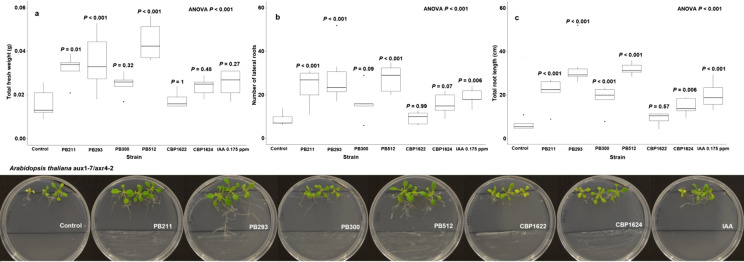
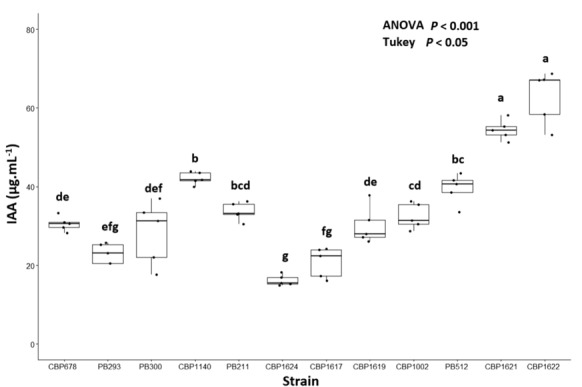
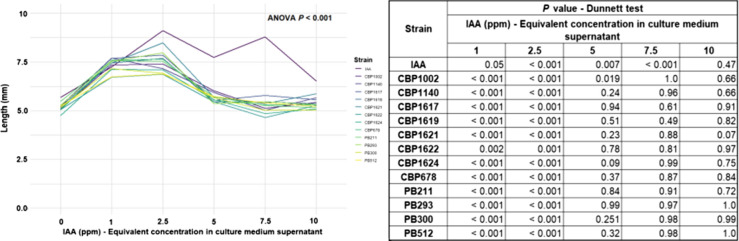
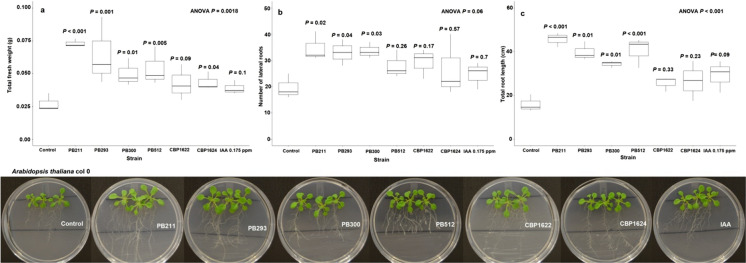
Lysinibacillus is a bacterial genus that has generated recent interest for its biotechnological potential in agriculture. Strains belonging to this group are recognized for their mosquitocidal and bioremediation activity. However, in recent years some reports indicate its importance as plant growth promoting rhizobacteria (PGPR). This research sought to provide evidence of the PGP activity of Lysinibacillus spp. and the role of the indole-3-acetic acid (IAA) production associated with this activity. Twelve Lysinibacillus spp. strains were evaluated under greenhouse conditions, six of which increased the biomass and root architecture of corn plants. In most cases, growth stimulation was evident at 10 CFU/mL inoculum concentration. All strains produced IAA with high variation between them (20-70 µg/mL). The bioinformatic identification of predicted genes associated with IAA production allowed the detection of the indole pyruvic acid pathway to synthesize IAA in all strains; additionally, genes for a tryptamine pathway were detected in two strains. Extracellular filtrates from all strain's cultures increased the corn coleoptile length in an IAA-similar concentration pattern, which demonstrates the filtrates had an auxin-like effect on plant tissue. Five of the six strains that previously showed PGPR activity in corn also promoted the growth of Arabidopsis thaliana (col 0). These strains induced changes in root architecture of Arabidopsis mutant plants (aux1-7/axr4-2), the partial reversion of mutant phenotype indicated the role of IAA on plant growth. This work provided solid evidence of the association of Lysinibacillus spp. IAA production with their PGP activity, which constitutes a new approach for this genus. These elements contribute to the biotechnological exploration of this bacterial genus for agricultural biotechnology.
芽孢杆菌属是一个细菌属,由于其在农业中的生物技术潜力而引起了近期的关注。属于该组的菌株因其杀蚊和生物修复活性而得到认可。然而,近年来一些报告表明其作为植物促生根际细菌(PGPR)的重要性。本研究旨在提供芽孢杆菌属具有植物促生活性的证据,以及与该活性相关的吲哚-3-乙酸(IAA)产生的作用。在温室条件下评估了 12 株芽孢杆菌属菌株,其中 6 株增加了玉米植物的生物量和根系结构。在大多数情况下,在 10 CFU/mL 接种浓度下可见到生长刺激。所有菌株均产生 IAA,其产量差异很大(20-70 µg/mL)。与 IAA 产生相关的预测基因的生物信息学鉴定允许检测到用于合成 IAA 的吲哚丙酮酸途径;此外,在两株菌中检测到色胺途径的基因。所有菌株培养物的胞外滤液以类似于 IAA 的浓度模式增加玉米胚芽鞘的长度,这表明滤液对植物组织具有类似生长素的作用。先前在玉米中显示出 PGPR 活性的 6 株菌中的 5 株也促进了拟南芥(col 0)的生长。这些菌株诱导了拟南芥突变体植物(aux1-7/axr4-2)根系结构的变化,突变体表型的部分恢复表明 IAA 对植物生长的作用。这项工作为芽孢杆菌属 IAA 产生与其 PGPR 活性的关联提供了确凿的证据,这为该属提供了一种新方法。这些元素为该细菌属在农业生物技术中的生物技术探索做出了贡献。