Department of Pharmacology and Toxicology, Faculty of Pharmacy, Ain Shams University, Cairo, 11566, Egypt.
J Neuroimmune Pharmacol. 2023 Sep;18(3):310-326. doi: 10.1007/s11481-023-10062-1. Epub 2023 May 4.
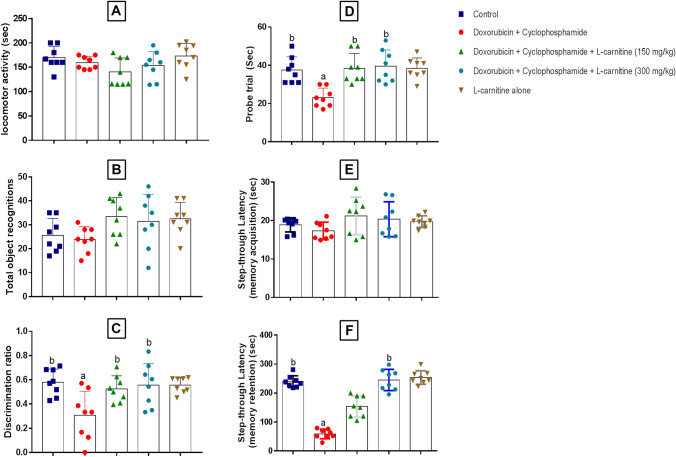
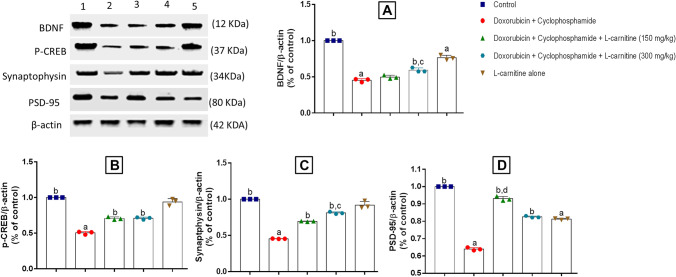
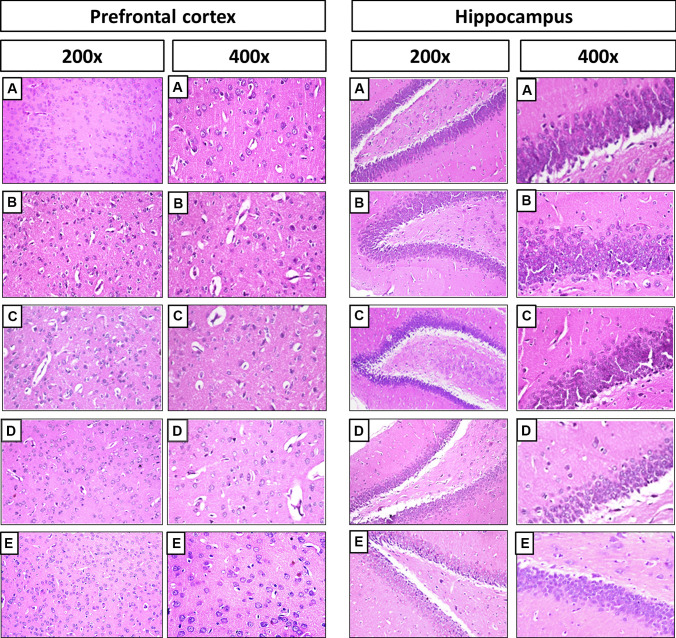
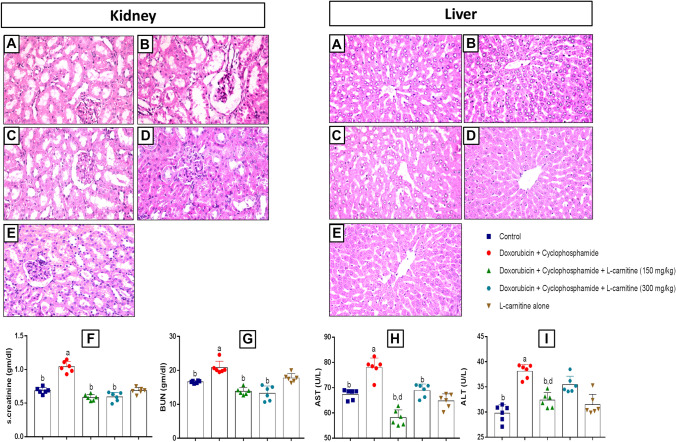
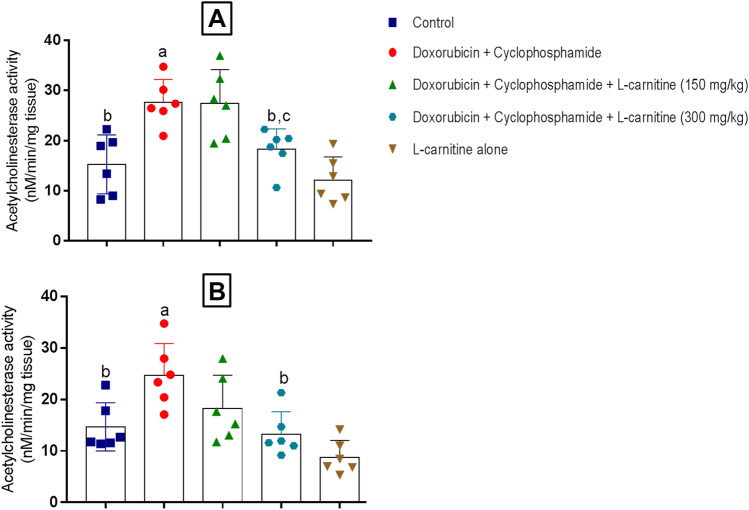
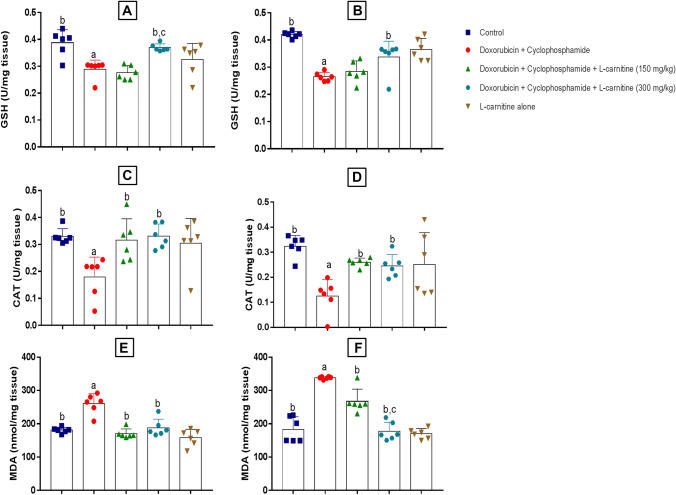
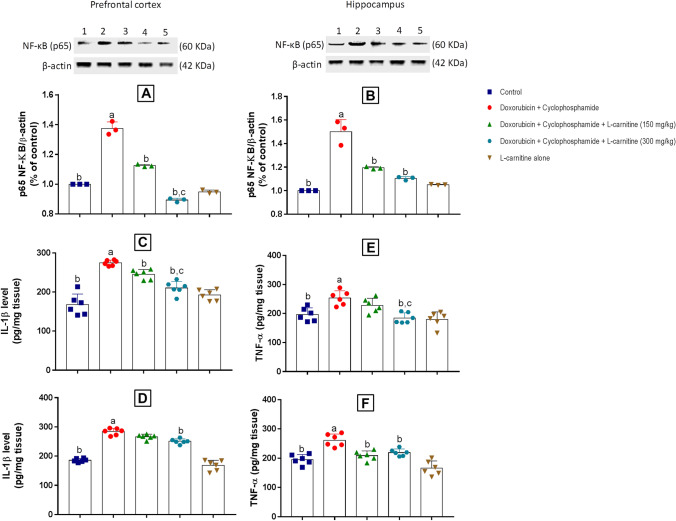
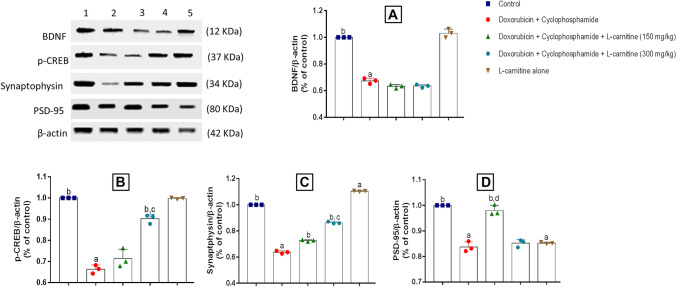
Chemotherapy-induced cognitive impairment in cancer patients is known as "chemobrain". Doxorubicin and Cyclophosphamide are two chemotherapeutic agents used in combination to treat solid tumors. L-carnitine was reported for its anti-oxidant and anti-inflammatory activities. The goal of the present study was to elucidate the neuroprotective effect of L-carnitine against chemobrain induced by Doxorubicin and Cyclophosphamide in rats. Rats were divided into five groups: Control group; Doxorubicin (4mg/kg, IV) and Cyclophosphamide (40mg/kg, IV)-treated group; two L-carnitine-treated groups (150 and 300mg/kg, ip) with Doxorubicin and Cyclophosphamide; and L-carnitine alone-treated group (300mg/kg). Doxorubicin and Cyclophosphamide induced histopathological changes in rats' hippocampi and prefrontal cortices, as well as reduced memory as evidenced by behavioural testing. L-carnitine treatment showed opposite effects. In addition, chemotherapy treatment enhanced oxidative stress via reducing catalase and glutathione levels, and inducing lipid peroxidation. By contrast, L-carnitine treatment showed powerful antioxidant effects reversing chemotherapy-induced oxidative damage. Moreover, chemotherapy combination induced inflammation via their effect on nuclear factor kappa B (p65), interleukin-1β, and tumor necrosis factor-α. However, L-carnitine treatment corrected such inflammatory responses. Furthermore, Doxorubicin and Cyclophosphamide reduced synaptic plasticity via hindering expression of brain-derived neurotrophic factor, phosphorylated cyclase response element binding protein, synaptophysin, and postsynaptic density protein 95 whereas protein expression of such synaptic plasticity biomarkers was enhanced by L-carnitine treatment. Finally, acetylcholinesterase activity was found to be enhanced by chemotherapy treatment affecting rats' memory while L-carnitine treatment reduced acetylcholinesterase activity. L-carnitine also showed hepatoprotective and renal protective effects suggesting liver/brain and kidney/brain axes as possible mechanisms for its neuroprotective effects.
化疗引起的癌症患者认知障碍称为“化疗脑”。多柔比星和环磷酰胺是两种联合用于治疗实体瘤的化疗药物。左旋肉碱因其抗氧化和抗炎活性而被报道。本研究的目的是阐明左旋肉碱对多柔比星和环磷酰胺诱导的大鼠化疗脑的神经保护作用。大鼠分为五组:对照组;多柔比星(4mg/kg,IV)和环磷酰胺(40mg/kg,IV)处理组;左旋肉碱(150 和 300mg/kg,ip)处理组与多柔比星和环磷酰胺合用;以及左旋肉碱(300mg/kg)单独处理组。多柔比星和环磷酰胺诱导大鼠海马和前额叶皮质的组织病理学变化,并通过行为测试证实记忆减少。左旋肉碱治疗显示出相反的效果。此外,化疗治疗通过降低过氧化氢酶和谷胱甘肽水平以及诱导脂质过氧化来增强氧化应激。相比之下,左旋肉碱治疗显示出强大的抗氧化作用,可逆转化疗引起的氧化损伤。此外,化疗联合通过其对核因子 kappa B(p65)、白细胞介素-1β和肿瘤坏死因子-α的影响诱导炎症。然而,左旋肉碱治疗纠正了这种炎症反应。此外,多柔比星和环磷酰胺通过抑制脑源性神经营养因子、磷酸化环化酶反应元件结合蛋白、突触小体和突触后密度蛋白 95 的表达来阻碍突触可塑性,而左旋肉碱治疗增强了这些突触可塑性生物标志物的蛋白表达。最后,发现乙酰胆碱酯酶活性通过影响大鼠记忆而被化疗治疗增强,而左旋肉碱治疗降低乙酰胆碱酯酶活性。左旋肉碱还显示出肝保护和肾保护作用,表明肝/脑和肾/脑轴可能是其神经保护作用的机制。