Department of Population Sciences, Beckman Research Institute of City of Hope, Duarte, California.
Division of Hematology/Oncology, Department of Medicine, University of California, San Francisco, San Francisco, California.
Cancer Res. 2023 Aug 1;83(15):2600-2613. doi: 10.1158/0008-5472.CAN-22-2510.
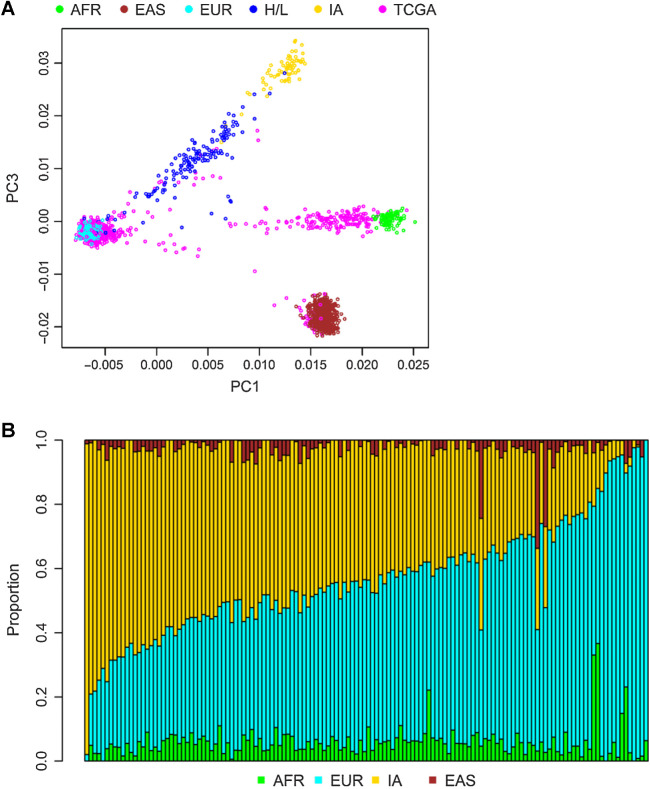
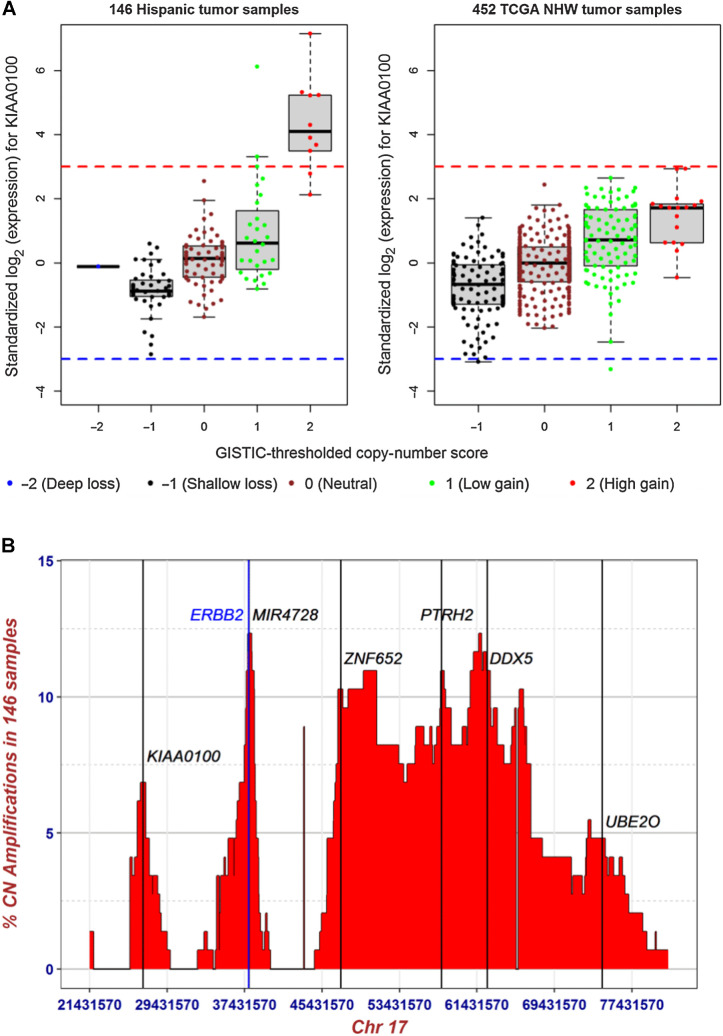
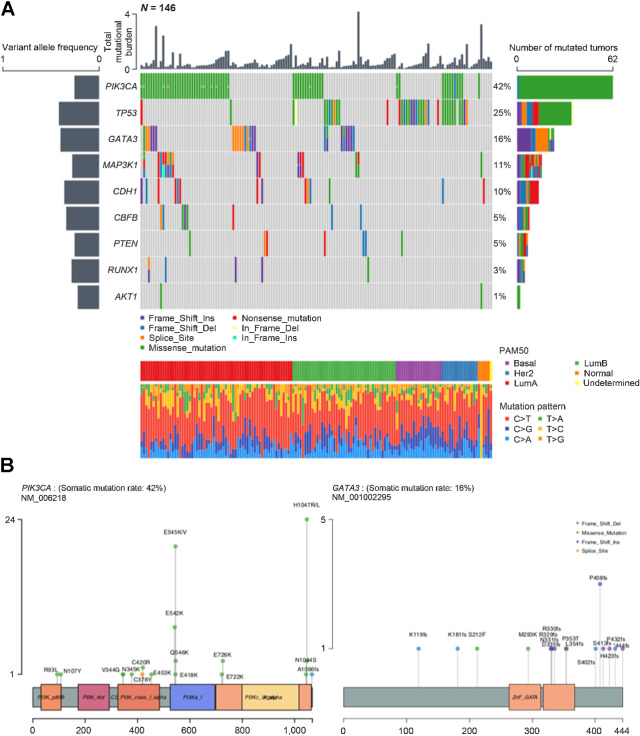
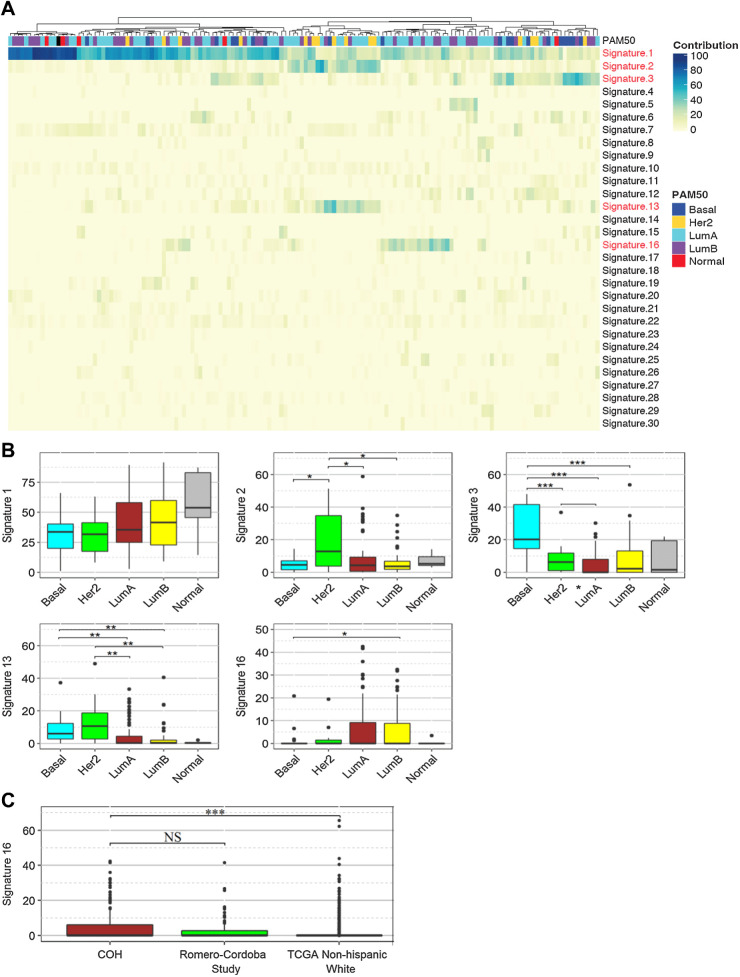
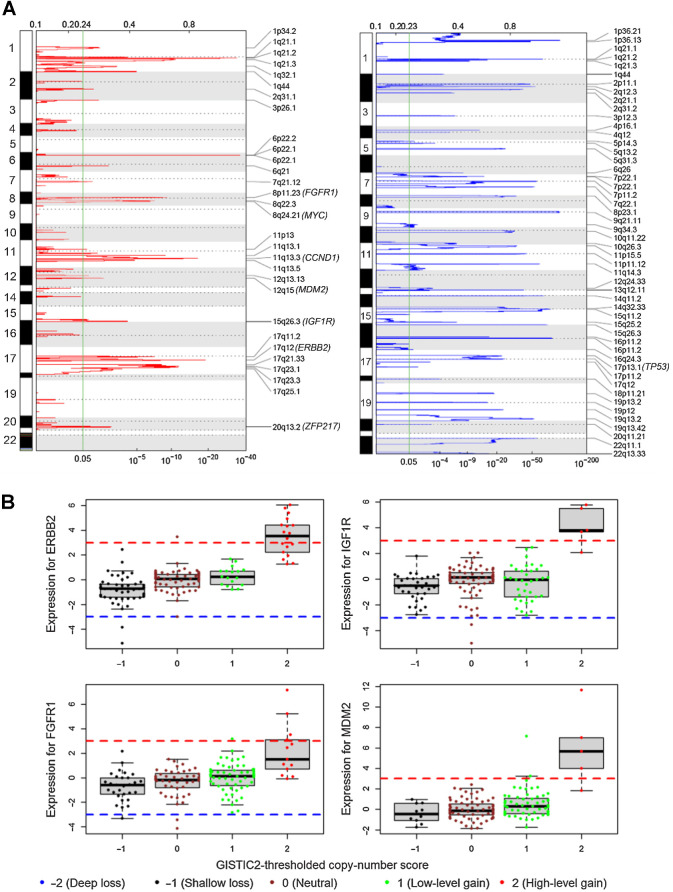
Somatic mutational profiling is increasingly being used to identify potential targets for breast cancer. However, limited tumor-sequencing data from Hispanic/Latinas (H/L) are available to guide treatment. To address this gap, we performed whole-exome sequencing (WES) and RNA sequencing on 146 tumors and WES of matched germline DNA from 140 H/L women in California. Tumor intrinsic subtype, somatic mutations, copy-number alterations, and expression profiles of the tumors were characterized and compared with data from tumors of non-Hispanic White (White) women in The Cancer Genome Atlas (TCGA). Eight genes were significantly mutated in the H/L tumors including PIK3CA, TP53, GATA3, MAP3K1, CDH1, CBFB, PTEN, and RUNX1; the prevalence of mutations in these genes was similar to that observed in White women in TCGA. Four previously reported Catalogue of Somatic Mutations in Cancer (COSMIC) mutation signatures (1, 2, 3, 13) were found in the H/L dataset, along with signature 16 that has not been previously reported in other breast cancer datasets. Recurrent amplifications were observed in breast cancer drivers including MYC, FGFR1, CCND1, and ERBB2, as well as a recurrent amplification in 17q11.2 associated with high KIAA0100 gene expression that has been implicated in breast cancer aggressiveness. In conclusion, this study identified a higher prevalence of COSMIC signature 16 and a recurrent copy-number amplification affecting expression of KIAA0100 in breast tumors from H/L compared with White women. These results highlight the necessity of studying underrepresented populations.
Comprehensive characterization of genomic and transcriptomic alterations in breast tumors from Hispanic/Latina patients reveals distinct genetic alterations and signatures, demonstrating the importance of inclusive studies to ensure equitable care for patients. See related commentary by Schmit et al., p. 2443.
体细胞突变分析越来越多地用于鉴定乳腺癌的潜在靶点。然而,用于指导治疗的西班牙裔/拉丁裔(H/L)有限的肿瘤测序数据尚不可用。为了解决这一差距,我们对加利福尼亚州的 140 名 H/L 女性的 146 个肿瘤进行了全外显子组测序(WES)和 RNA 测序,并对匹配的种系 DNA 进行了 WES。对肿瘤的内在亚型、体细胞突变、拷贝数改变和肿瘤的表达谱进行了特征描述,并与癌症基因组图谱(TCGA)中来自非西班牙裔白人(White)女性的肿瘤数据进行了比较。在 H/L 肿瘤中,有 8 个基因发生了显著突变,包括 PIK3CA、TP53、GATA3、MAP3K1、CDH1、CBFB、PTEN 和 RUNX1;这些基因的突变率与 TCGA 中观察到的 White 女性相似。在 H/L 数据集发现了 4 个先前报道的癌症体细胞突变目录(COSMIC)突变特征(1、2、3、13),以及以前在其他乳腺癌数据集未报道过的特征 16。在乳腺癌驱动基因中观察到反复扩增,包括 MYC、FGFR1、CCND1 和 ERBB2,以及 17q11.2 上的反复扩增与高 KIAA0100 基因表达相关,该基因表达与乳腺癌侵袭性有关。总之,这项研究确定了与 White 女性相比,H/L 女性的乳腺癌肿瘤中更高的 COSMIC 特征 16 发生率和影响 KIAA0100 表达的反复拷贝数扩增。这些结果强调了对代表性不足的人群进行研究的必要性。
对来自西班牙裔/拉丁裔患者的乳腺癌肿瘤的基因组和转录组改变进行全面描述揭示了独特的遗传改变和特征,表明进行包容性研究对于确保患者获得公平的护理至关重要。见 Schmit 等人的相关评论,第 2443 页。