Department of Pharmacology, Northwestern University Feinberg School of Medicine, Chicago, IL 60611, USA.
Department of Pathology, Northwestern University Feinberg School of Medicine, Chicago, IL 60611, USA.
Clin Immunol. 2023 Jul;252:109634. doi: 10.1016/j.clim.2023.109634. Epub 2023 May 5.
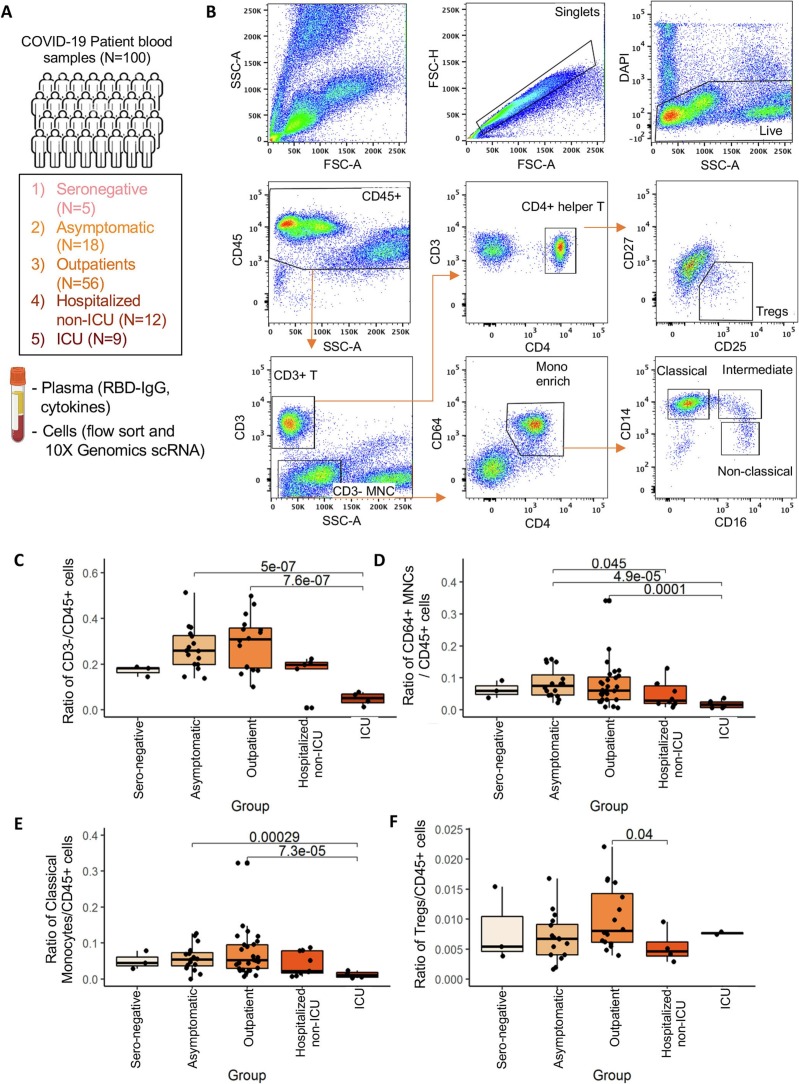
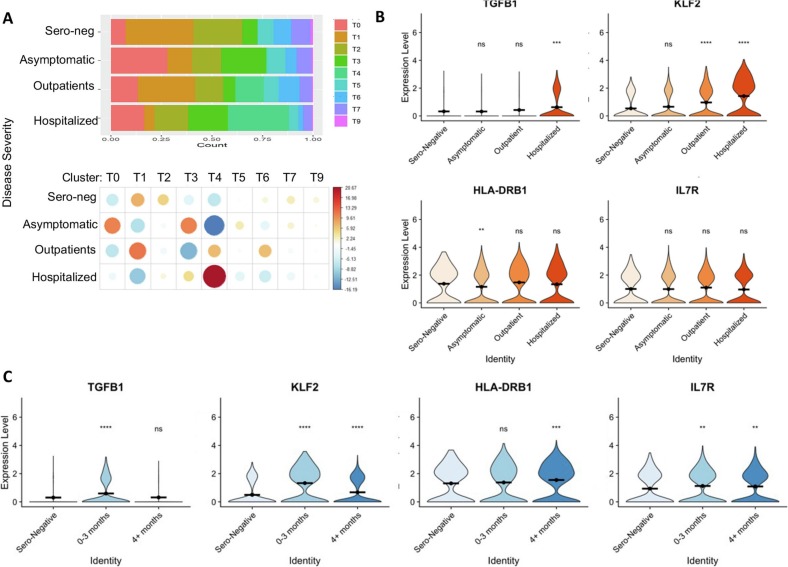
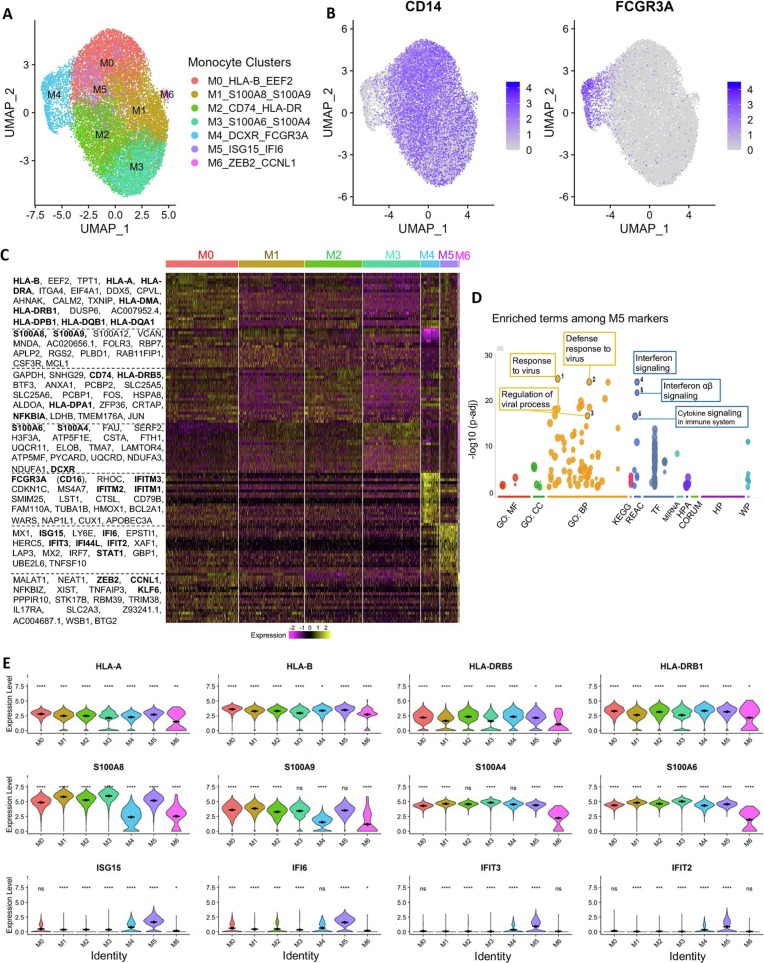
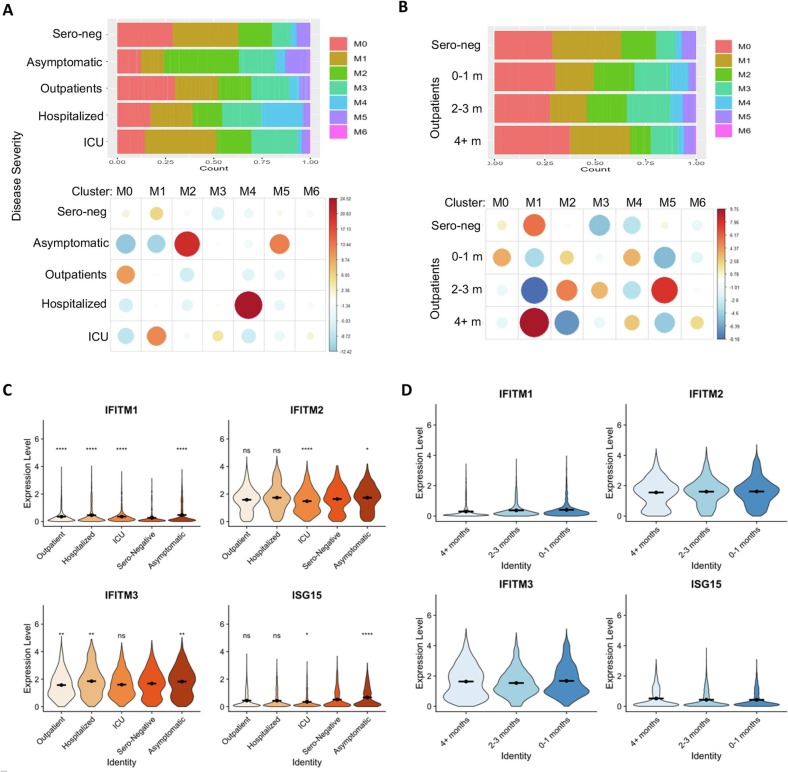
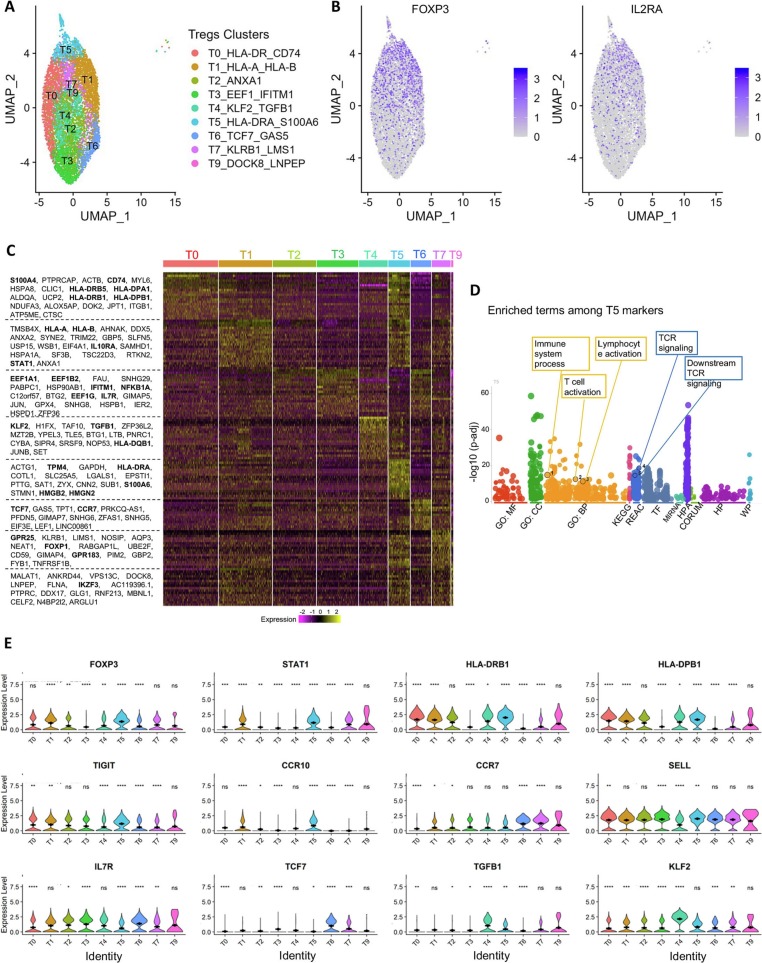
Over two years into the COVID-19 pandemic, the human immune response to SARS-CoV-2 during the active disease phase has been extensively studied. However, the long-term impact after recovery, which is critical to advance our understanding SARS-CoV-2 and COVID-19-associated long-term complications, remains largely unknown. Herein, we characterized single-cell profiles of circulating immune cells in the peripheral blood of 100 patients, including convalescent COVID-19 and sero-negative controls. Flow cytometry analyses revealed reduced frequencies of both short-lived monocytes and long-lived regulatory T (Treg) cells within the patients who have recovered from severe COVID-19. sc-RNA seq analysis identifies seven heterogeneous clusters of monocytes and nine Treg clusters featuring distinct molecular signatures in association with COVID-19 severity. Asymptomatic patients contain the most abundant clusters of monocytes and Tregs expressing high CD74 or IFN-responsive genes. In contrast, the patients recovered from a severe disease have shown two dominant inflammatory monocyte clusters featuring S100 family genes: one monocyte cluster of S100A8 & A9 coupled with high HLA-I and another cluster of S100A4 & A6 with high HLA-II genes, a specific non-classical monocyte cluster with distinct IFITM family genes, as well as a unique TGF-β high Treg Cluster. The outpatients and seronegative controls share most of the monocyte and Treg clusters patterns with high expression of HLA genes. Surprisingly, while presumably short-lived monocytes appear to have sustained alterations over 4 months, the decreased frequencies of long-lived Tregs (high HLA-DRA and S100A6) in the outpatients restore over the tested convalescent time (≥ 4 months). Collectively, our study identifies sustained and dynamically altered monocytes and Treg clusters with distinct molecular signatures after recovery, associated with COVID-19 severity.
在 COVID-19 大流行两年多后,人们对 SARS-CoV-2 在疾病活跃期的人体免疫反应进行了广泛研究。然而,康复后的长期影响对于深入了解 SARS-CoV-2 和与 COVID-19 相关的长期并发症至关重要,目前仍知之甚少。在此,我们对 100 名患者(包括从重症 COVID-19 中康复的患者和血清阴性对照者)外周血循环免疫细胞的单细胞图谱进行了特征分析。流式细胞术分析显示,从重症 COVID-19 中康复的患者体内短暂存活的单核细胞和长寿命调节性 T(Treg)细胞的频率均降低。sc-RNA 测序分析确定了七个异质单核细胞簇和九个 Treg 簇,这些簇与 COVID-19 的严重程度相关,具有独特的分子特征。无症状患者包含表达高 CD74 或 IFN 反应性基因的最多的单核细胞和 Treg 簇。相比之下,从严重疾病中康复的患者表现出两种具有炎症特征的主导性单核细胞簇,其特征是 S100 家族基因:一个 S100A8 和 A9 表达高的单核细胞簇与高 HLA-I 相关,另一个 S100A4 和 A6 表达高的 HLA-II 基因的单核细胞簇,一个具有独特 IFITM 家族基因的特定非经典单核细胞簇,以及一个独特的 TGF-β高 Treg 簇。门诊患者和血清阴性对照者与高 HLA 基因表达共享大多数单核细胞和 Treg 簇模式。令人惊讶的是,虽然推测短暂存活的单核细胞似乎在 4 个月以上的时间内持续发生改变,但门诊患者中长寿命 Treg(高 HLA-DRA 和 S100A6)的频率降低在测试的恢复期(≥4 个月)内得到恢复。总的来说,我们的研究确定了在康复后存在持续且动态改变的具有独特分子特征的单核细胞和 Treg 簇,这些改变与 COVID-19 的严重程度有关。