Surgery Branch, National Cancer Institute, National Institutes of Health (NIH), Bethesda, MD 20892, USA.
Center of Cell-based Therapy, National Cancer Institute, NIH, Bethesda, MD 20892, USA.
Cell Rep Methods. 2023 Apr 24;3(4):100460. doi: 10.1016/j.crmeth.2023.100460.
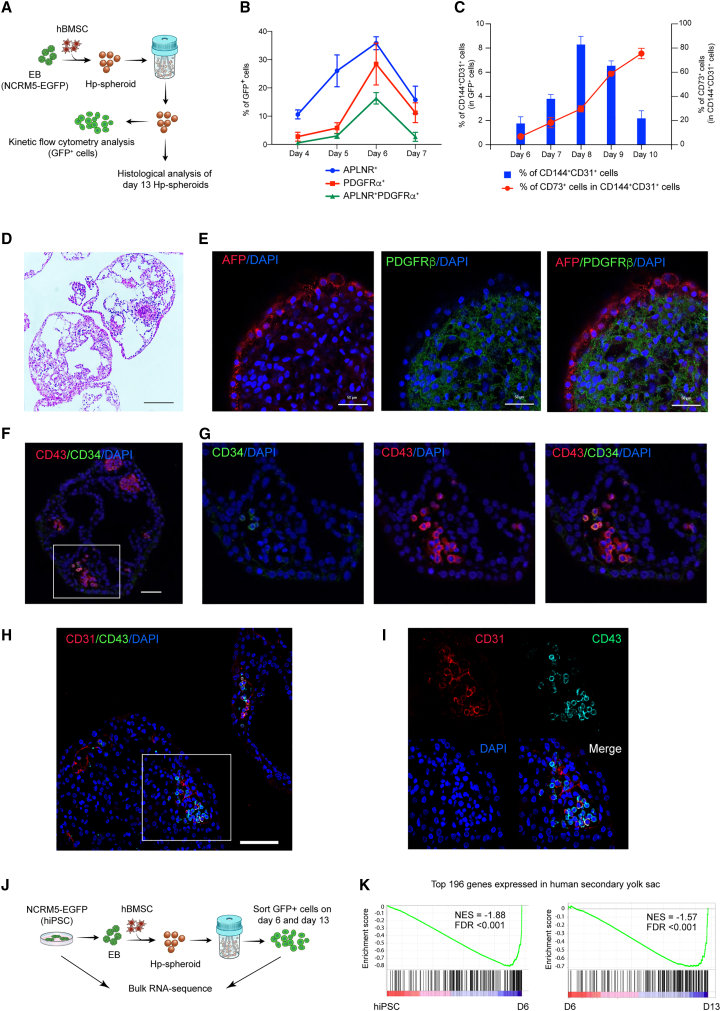
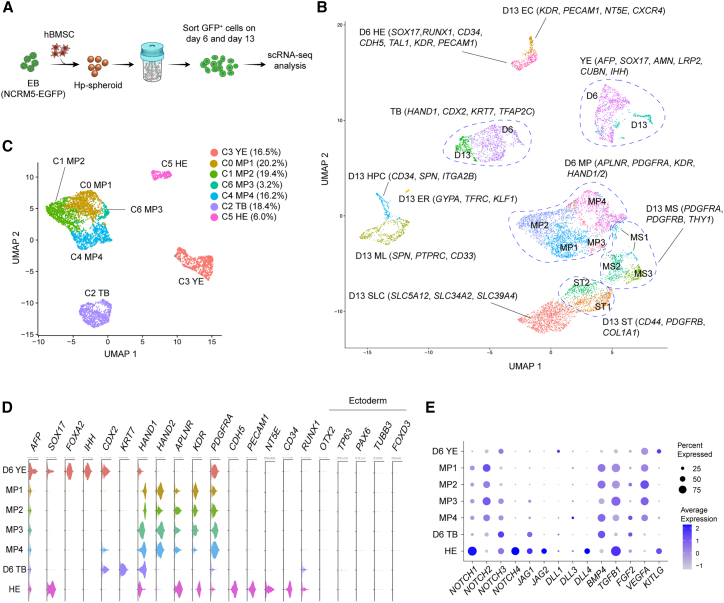
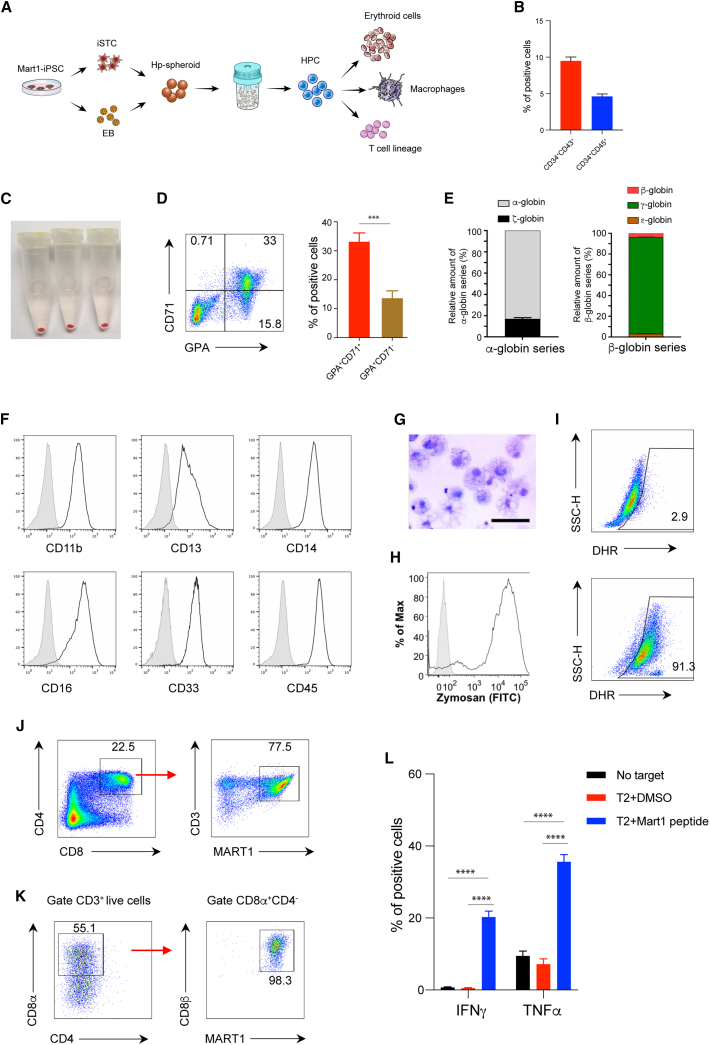
Although the differentiation of human induced pluripotent stem cells (hiPSCs) into various types of blood cells has been well established, approaches for clinical-scale production of multipotent hematopoietic progenitor cells (HPCs) remain challenging. We found that hiPSCs cocultured with stromal cells as spheroids (hematopoietic spheroids [Hp-spheroids]) can grow in a stirred bioreactor and develop into yolk sac-like organoids without the addition of exogenous factors. Hp-spheroid-induced organoids recapitulated a yolk sac-characteristic cellular complement and structures as well as the functional ability to generate HPCs with lympho-myeloid potential. Moreover, sequential hemato-vascular ontogenesis could also be observed during organoid formation. We demonstrated that organoid-induced HPCs can be differentiated into erythroid cells, macrophages, and T lymphocytes with current maturation protocols. Notably, the Hp-spheroid system can be performed in an autologous and xeno-free manner, thereby improving the feasibility of bulk production of hiPSC-derived HPCs in clinical, therapeutic contexts.
虽然已经证实人类诱导多能干细胞(hiPSCs)可分化为多种类型的血细胞,但临床规模生产多能造血祖细胞(HPCs)的方法仍然具有挑战性。我们发现,与基质细胞共培养的 hiPSCs 可以作为球体(造血球体 [Hp-spheroids])在搅拌式生物反应器中生长,并在没有添加外源性因子的情况下发育成卵黄囊样类器官。Hp-spheroid 诱导的类器官再现了卵黄囊特征的细胞成分和结构,以及生成具有淋巴-骨髓潜能的 HPC 的功能能力。此外,在类器官形成过程中还可以观察到顺序的造血血管发生。我们证明,通过当前的成熟方案,类器官诱导的 HPC 可分化为红细胞、巨噬细胞和 T 淋巴细胞。值得注意的是,Hp-spheroid 系统可以自体和无动物进行,从而提高了临床、治疗环境中大量生产 hiPSC 衍生 HPC 的可行性。