Leicester Real World Evidence Unit, Diabetes Research Centre, University of Leicester, Leicester, LE5 4PW, UK.
Diabetes Research Centre, Leicester General Hospital, University of Leicester, Leicester, LE5 4PW, UK.
J R Soc Med. 2023 Aug;116(8):263-273. doi: 10.1177/01410768231168377. Epub 2023 May 10.
To estimate the risk of Long COVID by socioeconomic deprivation and to further examine the inequality by sex and occupation.
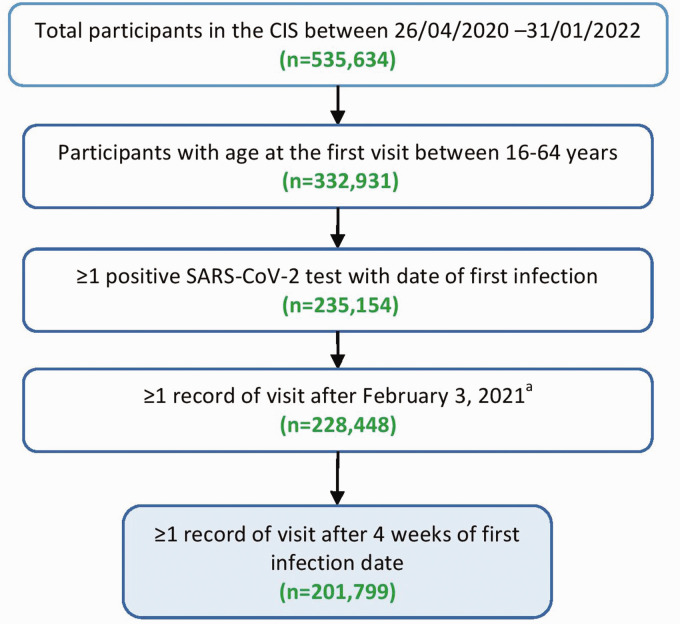
We conducted a retrospective population-based cohort study using data from the ONS COVID-19 Infection Survey between 26 April 2020 and 31 January 2022. This is the largest nationally representative survey of COVID-19 in the UK with longitudinal data on occupation, COVID-19 exposure and Long COVID.
Community-based survey in the UK.
A total of 201,799 participants aged 16 to 64 years and with severe acute respiratory syndrome coronavirus 2 (SARS-CoV-2) infection.
The risk of Long COVID at least 4 weeks after SARS-CoV-2 infection by index of multiple deprivation (IMD) and the modifying effects of socioeconomic deprivation by sex and occupation.
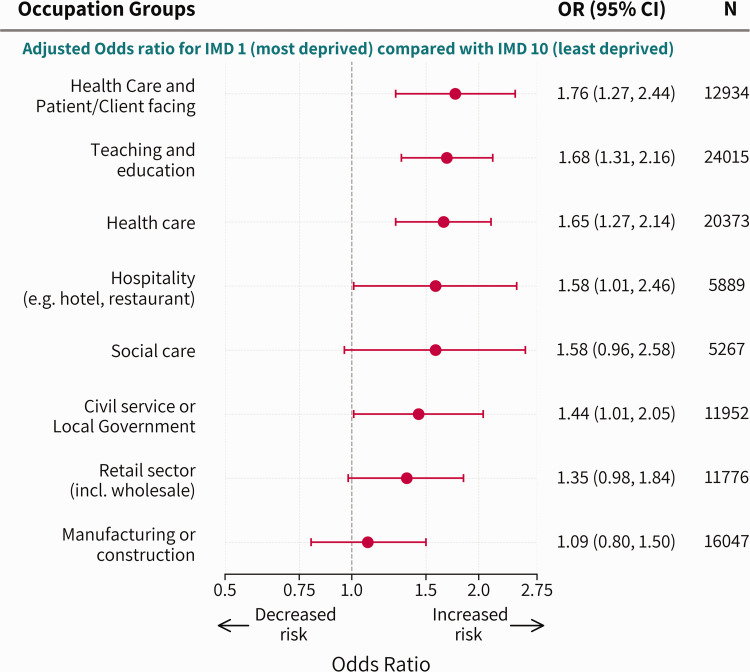
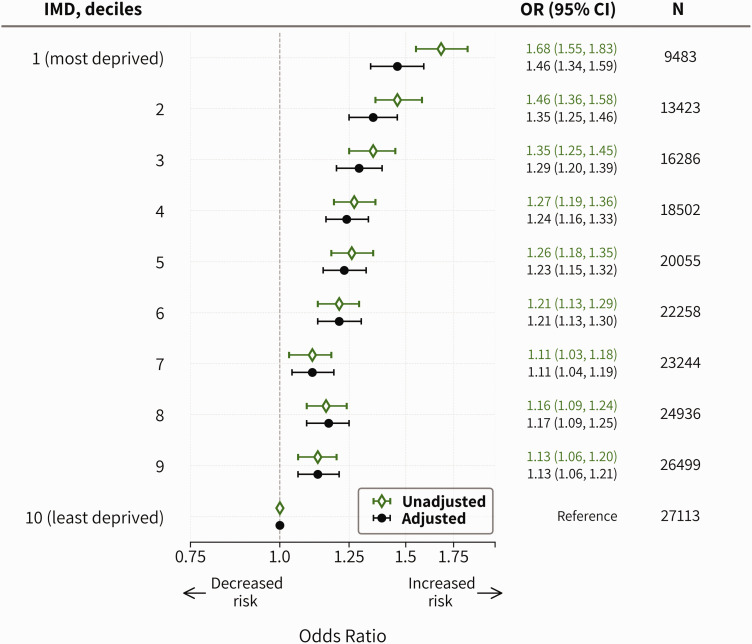
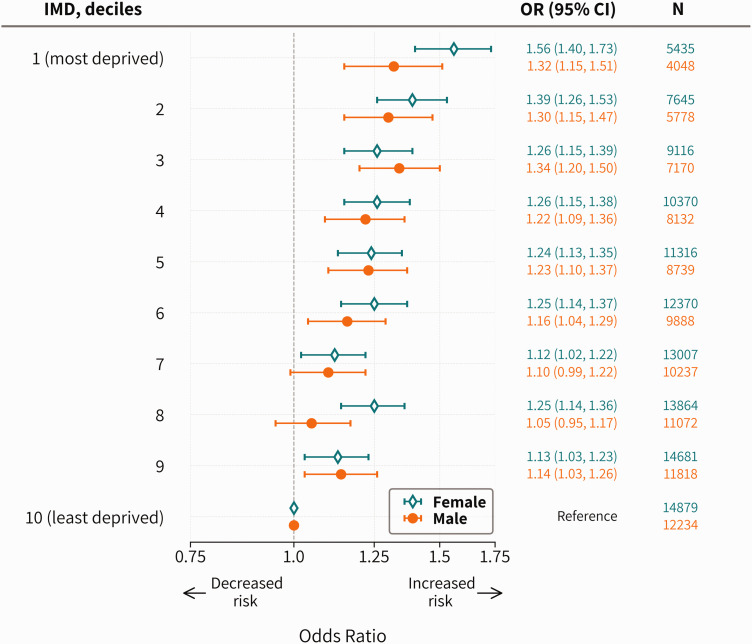
Nearly 10% ( = 19,315) of participants reported having Long COVID. Multivariable logistic regression models, adjusted for a range of variables (demographic, co-morbidity and time), showed that participants in the most deprived decile had a higher risk of Long COVID (11.4% vs. 8.2%; adjusted odds ratio (aOR): 1.46; 95% confidence interval (CI): 1.34, 1.59) compared to the least deprived decile. Significantly higher inequalities (most vs. least deprived decile) in Long COVID existed in healthcare and patient-facing roles (aOR: 1.76; 95% CI: 1.27, 2.44), in the education sector (aOR: 1.68; 95% CI: 1.31, 2.16) and in women (aOR: 1.56; 95% CI: 1.40, 1.73) than men (aOR: 1.32; 95% CI: 1.15, 1.51).
This study provides insights into the heterogeneous degree of inequality in Long COVID by deprivation, sex and occupation. These findings will help inform public health policies and interventions in incorporating a social justice and health inequality lens.
评估社会经济剥夺对长新冠的风险,并进一步按性别和职业检查不平等现象。
我们使用 2020 年 4 月 26 日至 2022 年 1 月 31 日期间进行的 ONS COVID-19 感染调查的纵向数据进行了一项基于人群的回顾性队列研究。这是英国最大的全国性 COVID-19 代表性调查,对职业、COVID-19 暴露和长新冠有纵向数据。
英国社区调查。
共 201799 名年龄在 16 至 64 岁之间且感染严重急性呼吸综合征冠状病毒 2(SARS-CoV-2)的参与者。
根据多种剥夺指数(IMD)评估 SARS-CoV-2 感染后至少 4 周时长新冠的风险,以及社会经济剥夺对性别和职业的修饰作用。
近 10%( = 19315)的参与者报告患有长新冠。多变量逻辑回归模型调整了一系列变量(人口统计学、合并症和时间)后显示,处于最贫困十分位的参与者患长新冠的风险更高(11.4%比 8.2%;调整后的优势比(aOR):1.46;95%置信区间(CI):1.34,1.59)与最不贫困十分位相比。在医疗保健和面向患者的角色(aOR:1.76;95%CI:1.27,2.44)、教育部门(aOR:1.68;95%CI:1.31,2.16)和女性(aOR:1.56;95%CI:1.40,1.73)中,长新冠的不平等程度(最高与最低贫困十分位)明显高于男性(aOR:1.32;95%CI:1.15,1.51)。
本研究深入了解了长新冠在社会经济剥夺、性别和职业方面的异质性不平等程度。这些发现将有助于为公共卫生政策和干预措施提供信息,以纳入社会公正和健康不平等的视角。