Multiscale Imaging Center, University of Münster, Münster, Germany.
PLoS Genet. 2023 May 11;19(5):e1010526. doi: 10.1371/journal.pgen.1010526. eCollection 2023 May.
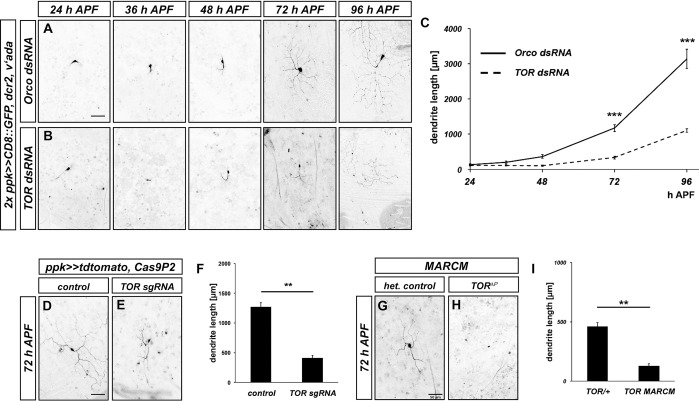
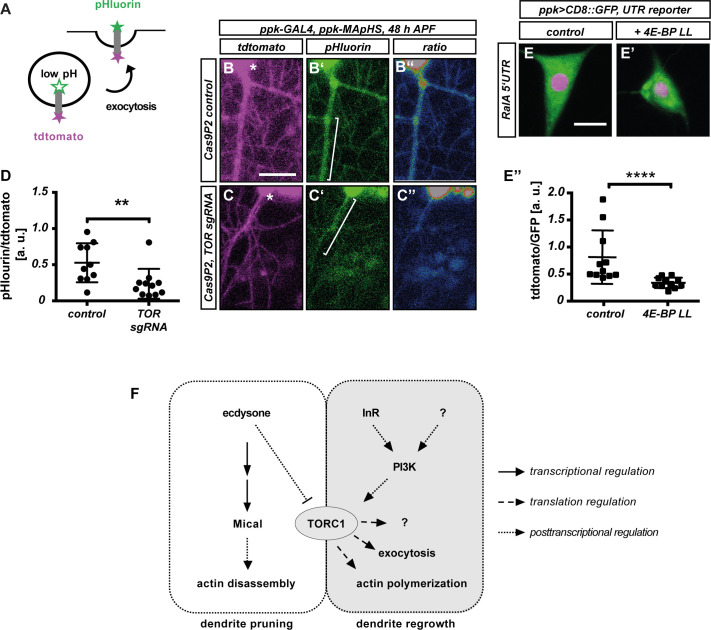
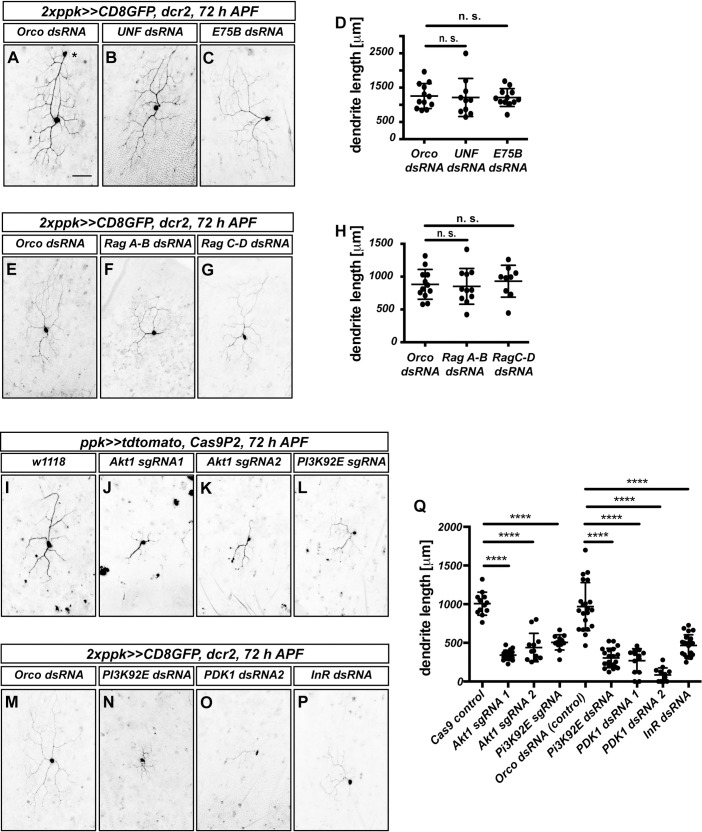
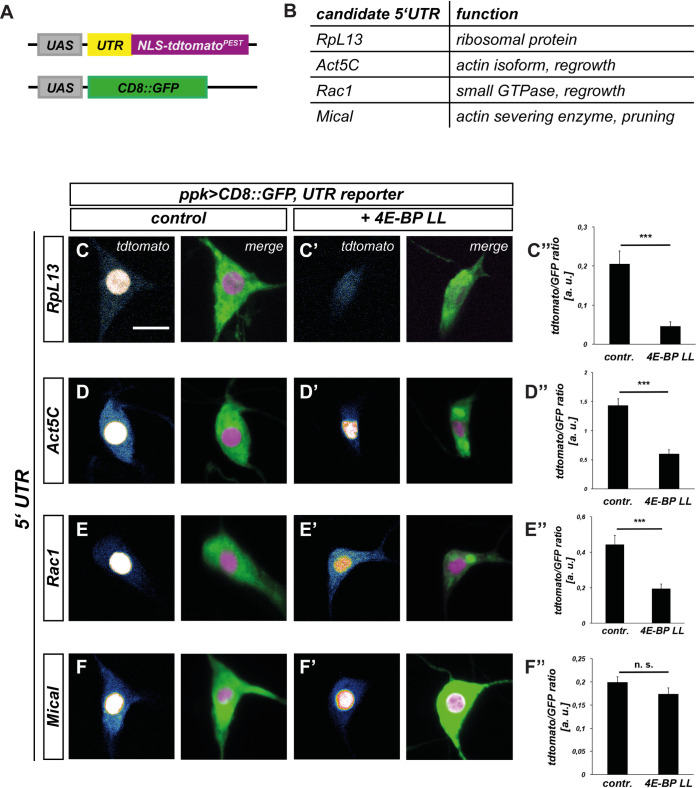
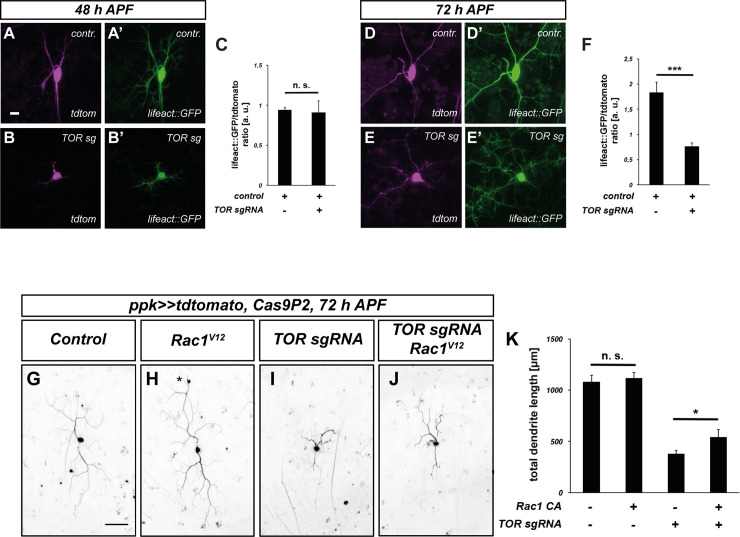
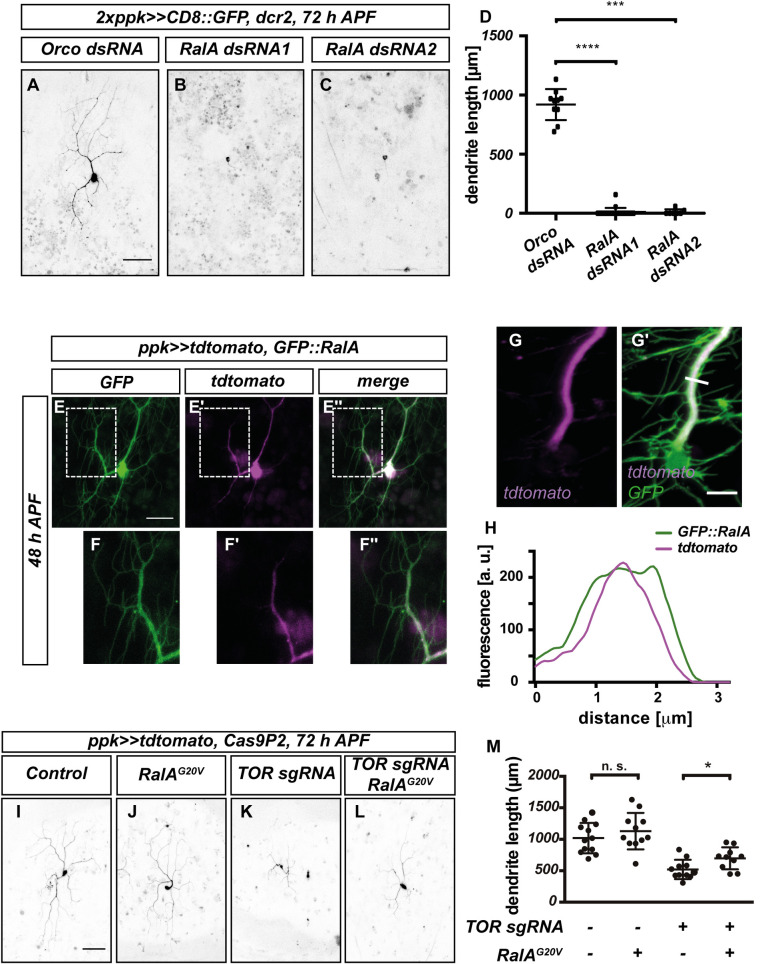
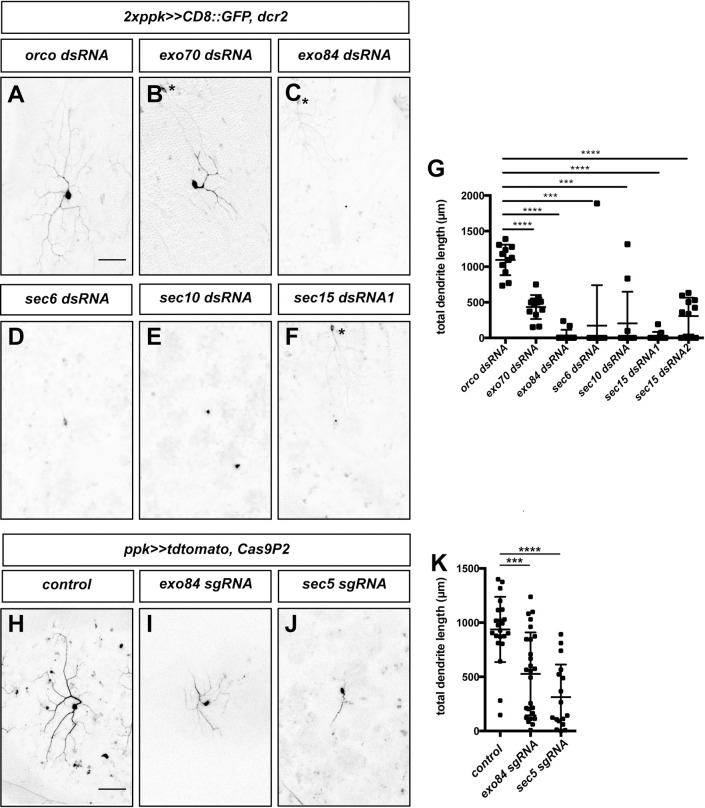
Neurite pruning and regrowth are important mechanisms to adapt neural circuits to distinct developmental stages. Neurite regrowth after pruning often depends on differential regulation of growth signaling pathways, but their precise mechanisms of action during regrowth are unclear. Here, we show that the PI3K/TORC1 pathway is required for dendrite regrowth after pruning in Drosophila peripheral neurons during metamorphosis. TORC1 impinges on translation initiation, and our analysis of 5' untranslated regions (UTRs) of remodeling factor mRNAs linked to actin suggests that TOR selectively stimulates the translation of regrowth over pruning factors. Furthermore, we find that dendrite regrowth also requires the GTPase RalA and the exocyst complex as regulators of polarized secretion, and we provide evidence that this pathway is also regulated by TOR. We propose that TORC1 coordinates dendrite regrowth after pruning by coordinately stimulating the translation of regrowth factors involved in cytoskeletal regulation and secretion.
神经突修剪和再生是使神经回路适应不同发育阶段的重要机制。修剪后神经突的再生通常取决于生长信号通路的差异调节,但它们在再生过程中的确切作用机制尚不清楚。在这里,我们发现在果蝇外周神经元在变态期间,PI3K/TORC1 途径对于修剪后树突的再生是必需的。TORC1 影响翻译起始,我们对与肌动蛋白相关的重塑因子 mRNA 的 5'非翻译区(UTR)的分析表明,TOR 选择性地刺激再生因子的翻译,而不是修剪因子。此外,我们发现树突的再生还需要 GTPase RalA 和外泌体复合物作为极化分泌的调节剂,并且我们提供的证据表明该途径也受 TOR 调节。我们提出 TORC1 通过协调刺激参与细胞骨架调节和分泌的再生因子的翻译来协调修剪后树突的再生。